

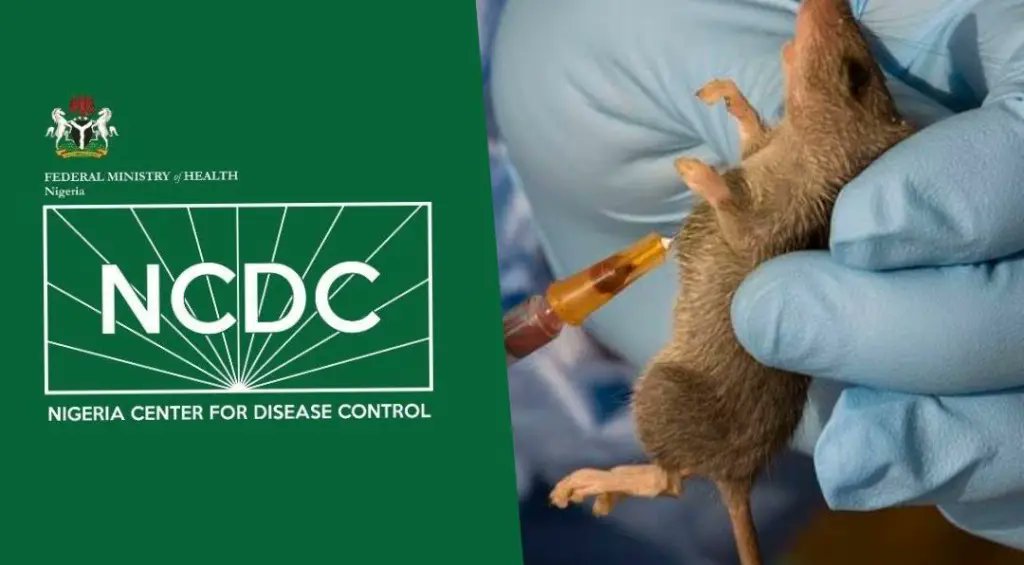
The Nigeria Centre for Disease Control and Prevention (NCDC) has reported 215 deaths from Lassa fever in 2025, with the case fatality rate (CFR) rising sharply to 18.7 per cent—up from 16.3 per cent during the same period in 2024.
In its Lassa Fever Situation Report for Epidemiological Week 52 (December 22–28, 2025), published on its official website, the NCDC disclosed that the country recorded 1,148 confirmed cases out of 9,389 suspected cases throughout the year. While the total number of both suspected and confirmed cases declined compared to 2024, the higher fatality rate has emerged as a major public health concern.
The disease affected 22 states and 107 Local Government Areas, highlighting its persistent threat as a viral haemorrhagic illness.
“In week 52 alone, 27 new confirmed cases and nine deaths were reported across Bauchi, Ondo, Ebonyi, Taraba and Nasarawa states,” the NCDC stated. The agency noted that this marked an increase from 21 cases in the previous week, signalling sustained transmission in hotspot areas.
Four states dominated the caseload, accounting for 89 per cent of all confirmed cases nationwide. “Ondo State led with 35 per cent, followed by Bauchi with 26 per cent, Edo with 16 per cent and Taraba with 12 per cent,” the report said.
Demographic data showed that young adults aged 21 to 30 years were the most affected group, with confirmed cases spanning ages one to 96 years and a median age of 30 years. The male-to-female ratio among confirmed cases stood at 1:0.8.
The NCDC attributed the elevated fatality rate primarily to late presentation of cases at health facilities, poor health-seeking behaviour, and the high cost of treatment, especially in high-burden communities. It also pointed to persistent challenges such as poor environmental sanitation and low awareness levels as key drivers of the disease’s spread.
Despite the challenges, the agency highlighted intensified response efforts through a multi-partner, multi-sectoral approach. These included the deployment of 10 National Rapid Response Teams to affected states, training of healthcare workers, strengthening of infection prevention and control (IPC) measures, distribution of Ribavirin, personal protective equipment (PPEs), and other commodities, as well as expanded risk communication and community engagement activities.
The NCDC reported that no new healthcare worker infections occurred in week 52, crediting improved IPC compliance in treatment centres.
Looking forward, the agency urged states to maintain year-round community engagement on Lassa fever prevention, especially ahead of a new outbreak season. It advised healthcare workers to sustain a high index of suspicion and ensure timely referral and treatment of suspected cases, while calling on partners to continue bolstering state capacities for prompt prevention, detection, and response to outbreaks.
Lassa fever is an acute viral haemorrhagic illness transmitted to humans mainly through contact with food or household items contaminated with urine or faeces of infected rodents, particularly the multimammate rat.
Human-to-human transmission can also occur through contact with the bodily fluids of infected persons.
The NCDC continues to emphasise prevention through improved hygiene, rodent control, and early medical care as critical measures to curb the disease’s impact.