

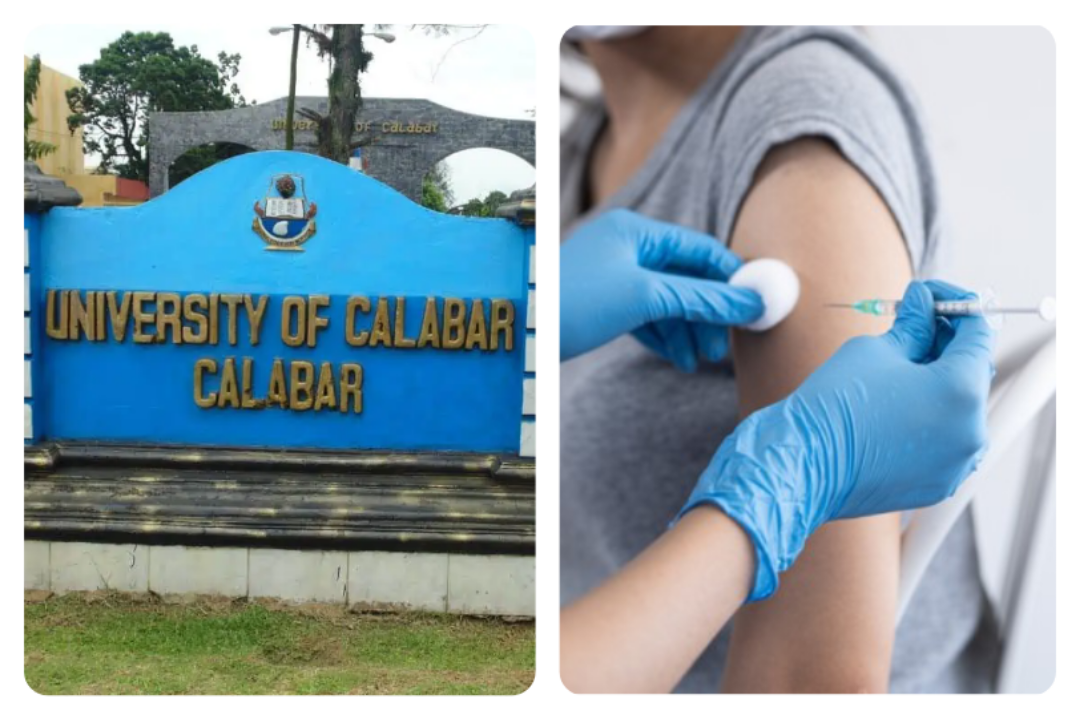
NIGERIA, SOUTH SOUTH – Public health authorities and tertiary institutions across Cross River and Akwa Ibom states have intensified coordinated government-backed directives, announcing mass vaccination campaigns, mandatory health insurance enrollment, and compulsory institutional attendance within January and February 2026.
The Cross River State Government formally announced the commencement of the 2026 Measles, Rubella and Human Papilloma Virus vaccination campaign through an official notification dated January 12, 2026, issued by the Primary Health Care Development Agency.
According to the letter signed by the Director General of the agency, Dr. (Mrs.) Vivien Mesembe Otu, the campaign targets children aged nine months to fourteen years, alongside adolescent girls eligible for HPV vaccination.
The notification stated that the vaccination exercise would run from Wednesday, February 4, to Sunday, February 15, 2026, covering all eighteen local government areas of Cross River State.
“The Cross River State Primary Health Care Development Agency, in collaboration with the Ministry of Health and development partners, announces the commencement of the Measles–Rubella Vaccination Campaign,” the letter explicitly stated.
Health authorities explained that the campaign also integrates routine immunization services for children aged zero to twenty-three months, reinforcing broader child health protection strategies across communities.
Officials warned that measles and rubella remain life-threatening diseases capable of causing severe fever, blindness, miscarriage among pregnant women, and death, emphasizing the urgency of comprehensive immunization coverage.
“That is why every child from nine months to fourteen years must receive the measles-rubella vaccine,” the agency stated, adding that “every nine-year-old girl must receive the HPV vaccine.”
The letter further explained that the HPV vaccine aims to prevent cervical cancer, describing it as part of a nationwide vaccination drive supported by the Federal Government of Nigeria.
Vaccination teams, according to the agency, will operate across health facilities, schools, mosques, churches, recreational centers, markets, palaces, motor parks, shopping malls, and other public locations.
Authorities assured parents and guardians that all vaccines are free, safe, effective, and already fully funded by the government to eliminate financial barriers to participation.
“Please be assured that all vaccines are free, safe, effective, and already paid for by the government,” the statement read, reinforcing public confidence amid persistent vaccine misinformation.
Routine immunization services, the agency added, will continue after the campaign, with health workers remaining available across designated facilities in various communities statewide.
Residents were advised not to delay participation, as officials stressed the importance of timely vaccination to prevent outbreaks and long-term health complications.
Most Viewed Posts
- Supporting Siminalayi Fubara: Why Rivers People Deserve Continuity Of Purpose In 2027 – Dr William Omuna
- President Tinubu’s Achievements That Strengthen Case For Second Term – Amuna
- EFCC Arraigns Gombe Magistrate Over Alleged ₦1.4m Bribery
- Just In: APC Announces Date For Presidential Primary, Fixes Nomination Form At ₦100m
- William Omuna Declares Bid For Rivers East Senate, Says It Deserves Senator Who Shows Up
Meanwhile, in Akwa Ibom State, tertiary education authorities have declared mandatory student participation in the state’s health insurance enrollment process.
The Akwa Ibom State Polytechnic, Ikot Osurua, announced the sensitization and enrollment of students into the Akwa Ibom State Health Insurance Scheme, AKSHIS.
In a circular dated January 13, 2026, and issued by the Office of the Registrar, management directed all students to attend the enrollment exercise without exception.
“In furtherance of the directive of the State Government for the enrollment of students of tertiary institutions,” the circular stated, “I am directed to inform you that the sensitization and enrollment has been scheduled.”
The enrollment exercise is scheduled for Monday, January 19, 2026, at exactly 1:00 p.m., at the Polytechnic Library Conference Hall.
Officials disclosed that representatives of the State Health Insurance Agency would conduct the exercise to ensure full compliance and accurate registration.
“Consequently, all students are expected to participate in the exercise,” the notice stated, emphasizing that participation is mandatory and institutionally enforced.
Management also declared the date a lecture, test, and examination-free day from 1:00 p.m., enabling full student attendance without academic conflict.
“Students are to note that participation in the sensitization and enrollment exercise is mandatory,” the circular stressed, underlining zero tolerance for absenteeism.
The document was signed by Ekerette A. Esu, Desk Officer of AKSHIS, on behalf of the Acting Registrar, lending official administrative authority to the directive.
Institutional sources explained that the insurance scheme aims to improve students’ access to quality healthcare while reducing out-of-pocket medical expenses.
Similarly, the University of Calabar has announced compulsory attendance at an interdenominational service scheduled for all undergraduate and postgraduate students.
The directive was contained in a memo issued by the Student Affairs Division and dated January 14, 2026 and circulated all over social media.
Signed by the Dean of Student Affairs, Professor Eyo Offiong Mensah, the memo instructed students to attend the service without exception.
“This is to inform all undergraduate and postgraduate students that an interdenominational service has been scheduled,” the memo stated.
“All students are required to attend, as attendance is compulsory,” the directive further emphasized.
The service is scheduled for Monday, January 19, 2026, by 10:00 a.m. prompt, at the Godswill Akpabio International Conference Centre in Calabar.
Students were advised to be seated before the commencement of the service, suggesting enforcement of attendance and punctuality measures.
University authorities did not immediately clarify sanctions for non-compliance, but sources indicated attendance would be monitored.
Observers note that the convergence of compulsory health, insurance, and institutional directives reflects a broader policy push toward compliance-driven governance.
Public health analysts argue that mandatory participation improves coverage and reduces systemic health risks, particularly among vulnerable populations.
However, civil society advocates caution that enforcement must respect ethical communication, transparency, and informed consent to maintain public trust.
In Cross River State, Truth live news correspondents reports that health officials insist the vaccination campaign prioritizes child welfare, disease prevention, and long-term societal health benefits.
In Akwa Ibom, government officials maintain that mandatory health insurance enrollment strengthens the state’s healthcare delivery framework.
University administrators, on their part, describe compulsory interdenominational services as part of character development and institutional tradition.
As January progresses, thousands of residents and students across both states are expected to comply with the announced directives.
Authorities continue to urge calm, cooperation, and responsible participation, emphasizing that the initiatives serve collective public interest and societal wellbeing.