
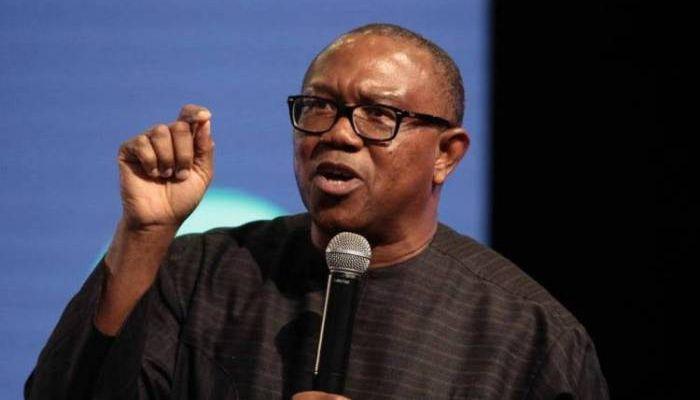
The former labour party presidential candidate, Peter Obi has warned that Nigeria risks sliding deeper into economic difficulty as its rising debt is not matched by growth, describing the situation as “debt without growth”.
The former Anambra State governor and Labour Party presidential candidate made the remarks on Tuesday in a post on social media platform X, reacting to figures from the World Bank which indicate that Nigeria is now the third-largest borrower from the institution, with debts estimated at about $18.7bn. Bangladesh ranks first, with obligations of roughly $23bn.
Mr Obi said borrowing is not inherently wrong, noting that many nations rely on loans to finance development and stimulate economic expansion. However, he argued that debt becomes a burden when it is used to fund consumption or is lost to inefficiency and corruption, rather than invested in productive sectors.
“There’s nothing inherently wrong with borrowing. Nations borrow to improve productivity and stimulate growth. Debt becomes a problem only when it finances consumption, inefficiency, or corruption rather than investment,” he wrote.
Drawing a comparison between Nigeria and Bangladesh, Mr Obi said that around 2015 Bangladesh had a nominal gross domestic product (GDP) of about $195bn and a per capita income slightly above $1,200. He said that by 2024–2025, its GDP had grown to between $460bn and $500bn, while per capita income had risen to around $2,700. He attributed this progress to investments in manufacturing, textiles, energy and human capital, arguing that borrowed funds were directed towards productive sectors.
In contrast, he said Nigeria’s economy has declined over the same period. According to him, Nigeria’s GDP stood at about $490bn in 2015, with per capita income between $2,600 and $2,700. He said current estimates place GDP below $250bn, with per capita income ranging from $850 to $1,000. He blamed weak productivity growth, currency instability, structural inefficiencies and corruption for the downturn.
Mr Obi said the central issue is not the size of the debt itself but how borrowed funds are utilised. He argued that loans invested in infrastructure, industry and human development can drive growth, while borrowing tied to consumption and financial leakages deepens economic stagnation.
He expressed optimism that Nigeria can still change direction if future borrowing is linked to productivity and long-term economic expansion, saying a different outcome remains possible if resources are managed effectively.