
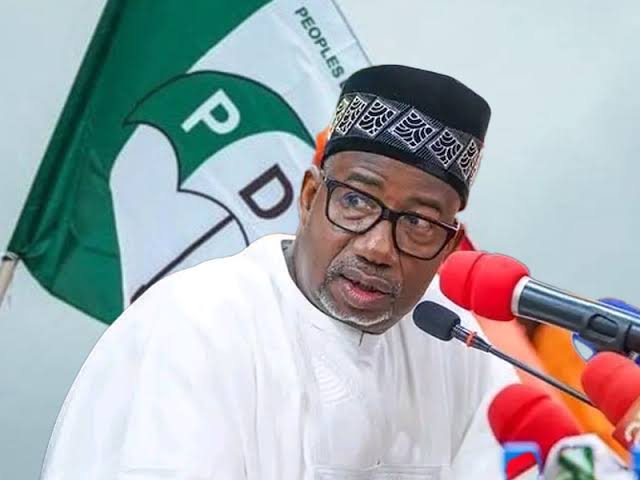
Fresh indications have emerged that Bauchi State Governor and Chairman of the Peoples Democratic Party (PDP) Governors’ Forum, Bala Mohammed, may defect to the ruling All Progressives Congress (APC) this week following high-level negotiations with President Bola Ahmed Tinubu.
Investigations revealed that the governor has already communicated his intention to align with the ruling party during a meeting with the president and APC leadership, though final terms of his defection are still being negotiated.
Sources familiar with the talks disclosed that Mohammed was offered the APC senatorial ticket for Bauchi and other privileges similar to those granted to governors who previously defected to the ruling party. However, unlike earlier defectors, he may not be given full control of the APC structure in the state.
According to insiders, President Tinubu reportedly made it clear that while Mohammed could pursue a return to the Senate under the APC platform, he would not be allowed to nominate his successor in the 2027 governorship race.
“Unlike the privileges extended to earlier defectors, Bala Mohammed cannot get the full APC structure in Bauchi,” a source close to the negotiations said. “The best he could get is a Senate ticket if he wants it, but he cannot dictate who becomes the next governor.”
The planned defection is also believed to be connected to the legal troubles of the Bauchi State Commissioner for Finance, Yakubu Adamu, who is reportedly facing terrorism and money laundering allegations involving about ₦4.6 billion. Sources claim the commissioner allegedly threatened to implicate the governor if he remained in custody.
Another controversial condition reportedly placed before the governor involves an apology to Seyi Tinubu following a public dispute last year.
The dispute began in March 2025 when Mohammed’s son, Shamsudeen Bala Mohammed, criticised Seyi Tinubu for distributing Ramadan food palliatives in Bauchi State, arguing that sustainable empowerment initiatives such as job training and business support would have been more beneficial than handouts. The criticism reportedly caused embarrassment within the presidency, prompting APC leaders to demand an apology as part of the reconciliation process.
Despite reportedly tendering the apology, sources say Mohammed remains uncomfortable with other conditions imposed on his defection, particularly the refusal to allow him influence over succession politics in Bauchi State.
To renegotiate these terms, the governor is said to have approached APC National Chairman, Nentawe Yilwatda, seeking intervention with the president to secure a 60/40 power-sharing arrangement within the party structure in the state.
Meanwhile, the development has reportedly sparked anger and disappointment within the PDP camp led by Seyi Makinde, with party insiders describing the move as a betrayal.
Members of Makinde’s political bloc reportedly expressed shock that the chairman of the PDP Governors’ Forum could contemplate leaving the party at a time when efforts were underway to rebuild and reposition the opposition ahead of future elections.
Some party loyalists warned that Mohammed’s departure, if confirmed, could further weaken the already struggling PDP and diminish its ability to function as a credible opposition force.
“If the chairman of the PDP Governors’ Forum cannot remain to fight for the party he leads, then the hope of rebuilding the PDP becomes slimmer,” one party source lamented.
Should the defection materialise, the APC would increase its tally of governors to 32, further consolidating its dominance in Nigeria’s political landscape. The PDP would be left with only a few governors, including Makinde in Oyo, while other parties retain isolated governorship positions — such as Alex Otti of the Labour Party, Chukwuma Soludo of the All Progressives Grand Alliance (APGA), and Ademola Adeleke of the Accord Party.