
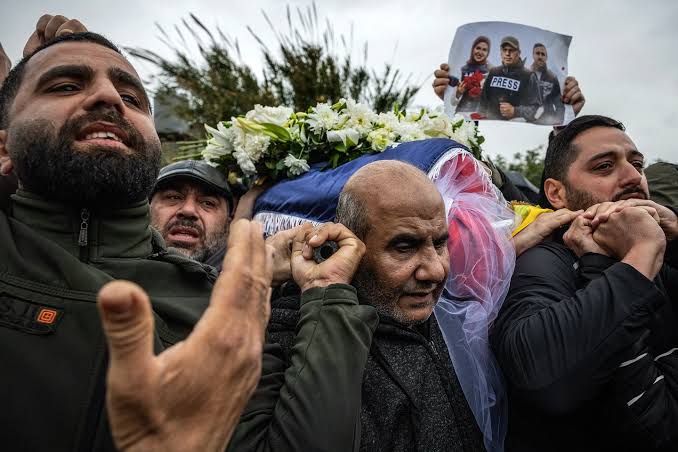
Hundreds of mourners gathered in Beirut for the funerals of three journalists killed during Israeli strikes in southern Lebanon.
Truth Live News International learnt from Sky News that the victims — Ali Shoaib, Fatima Fatouni, and Muhammad Fatouni were covering ongoing military operations when their vehicle was hit near Jezzine.
Emotional scenes unfolded during the funerals, with mourners holding images of the journalists in their press gear. One attendee said:
“They’re killing the messengers of this war.”
The strike has drawn strong condemnation from media and rights groups. Elsy Moufarrej of the Union of Journalists in Lebanon described the incident as a serious violation, stating:
“We’ve seen this in Gaza where they tried to undermine Palestinian journalists by linking them to Hamas.”
She added:
“Now they’re trying to do the same to Lebanese journalists by linking them to Hezbollah… This is a war crime.”
According to reports, the journalists were travelling along a highway when their vehicle was struck. Witnesses said a second strike hit the area as people attempted to assist the victims. Lebanon’s health ministry also reported that an ambulance responding to the scene was hit.
An Israeli military spokesperson confirmed the strike but claimed that one of the journalists, Shoaib, was linked to Hezbollah. However, no evidence was provided to support the allegation.
The Committee to Protect Journalists emphasised that journalists are protected under international humanitarian law. Regional director Sara Qudah said:
“Journalists are not legitimate targets, regardless of the outlet they work for.”
The incident comes amid intensified fighting in southern Lebanon, with increasing reports of strikes affecting healthcare facilities and emergency responders.
Lebanon’s health authorities have rejected claims that ambulances are being used for military purposes, insisting there is no evidence to support such accusations.
Health Minister Rakan Nassereddine condemned the attacks, stating:
“These are war crimes.”
The ongoing conflict has worsened humanitarian conditions in the country, with over a million people displaced and daily casualties continuing to rise.