

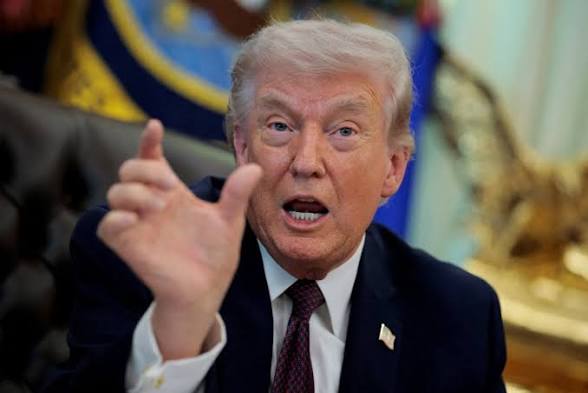
United States President Donald Trump on Wednesday, April 1, 2026, said the war with Iran was approaching its final phase, even as he warned that heavy military strikes would continue in the coming weeks.
In a televised address from the White House, Trump maintained that the US was close to achieving its objectives more than a month after joining Israel in launching attacks on February 28. However, he offered little detail on how the conflict would ultimately end.
“We are going to finish the job, and we’re going to finish it very fast. We’re getting very close,” Trump said, adding that the US would sustain “extremely hard” strikes on Iran for another two to three weeks.
The president, whose approval ratings have declined amid the conflict and rising oil prices, also defended his decision to enter the war, citing efforts to dismantle Iran’s military capabilities, curb its support for armed groups in the region, and prevent it from acquiring nuclear weapons.
“I’m pleased to say that these core strategic objectives are nearing completion,” he said during the 19 minute speech.
Trump also referenced the early phase of the conflict, during which Iran’s supreme leader, Ali Khamenei, was reportedly killed, alongside other senior Iranian figures.
Despite US claims of progress, Iran has responded forcefully, including moves to assert control over the Strait of Hormuz, a critical route for global oil shipments. The disruption has contributed to a surge in fuel prices, with gasoline in the United States rising above four dollars per gallon for the first time in years.
Financial markets reacted negatively to Trump’s remarks, as oil prices climbed and stock markets fell amid fading hopes of a swift resolution to the conflict.
Democratic Senator Chris Murphy criticised the president’s speech, saying it left Americans uncertain about the direction of the war. “Anyone watching that speech has no idea whether Trump is escalating or deescalating the war with Iran,” he wrote on X.
Trump reiterated that failure by Iran to reach an agreement could lead to expanded attacks, including strikes on its energy infrastructure, a move widely considered a violation of international law.
There was little focus on diplomacy in his address, as earlier claims by Trump that Iranian President Masoud Pezeshkian was seeking a ceasefire were quickly denied by Tehran. Iran’s foreign ministry instead accused Washington of making “maximalist and irrational” demands.
Reaffirming US military strength, Trump said, “We have all the cards. They have none,” while also urging Gulf allies and European nations to take greater responsibility for securing oil routes through the Strait of Hormuz.