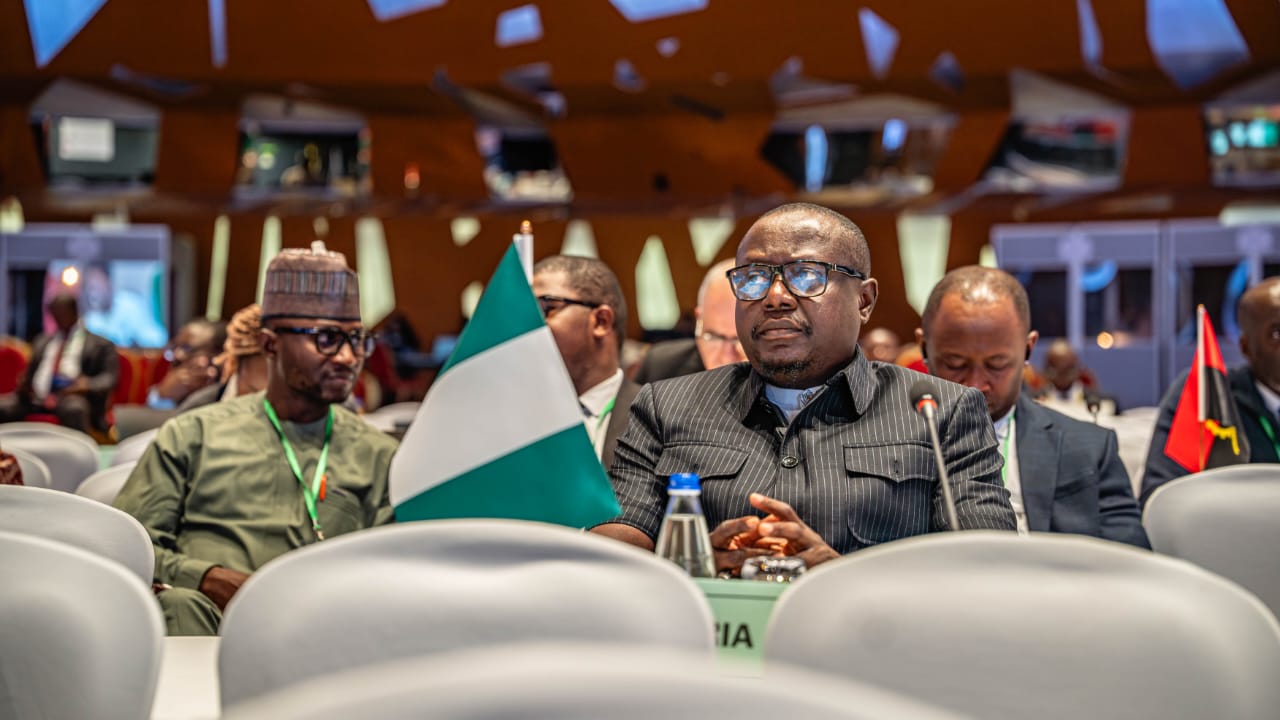


Fresh allegations of political interference have rocked Nigeria’s electoral umpire, with prominent human rights activist Prof. Chidi Odinkalu claiming that Independent National Electoral Commission (INEC) Chairman Prof. Joash Amupitan issued a controversial statement delisting key leaders of the African Democratic Congress (ADC) only after being threatened with the release of a pre-signed resignation letter.
The INEC statement, released on Wednesday by National Commissioner and Chairman of the Information and Voter Education Committee, Mohammed Kudu Haruna, announced that the commission would remove Senator David Mark — the ADC’s National Chairman — and former Osun State Governor Rauf Aregbesola — its National Secretary — from its official portal. It further declared that INEC would suspend recognition of any faction or leadership of the party pending the final determination of a leadership dispute at the Federal High Court in Abuja.
The move was said to follow “preservatory orders” issued by the Court of Appeal in Appeal No. CA/ABJ/145/2026 involving Senator Mark and Nafiu Bala Gombe.
But Odinkalu, a former Chairman of the National Human Rights Commission, dismissed the official explanation late Wednesday night, alleging the decision was extracted under extreme duress.
In a post on X (formerly Twitter), he revealed that the statement followed a whirlwind of high-level meetings in the past 60 hours involving senior INEC leaders, the Presidency, the Court of Appeal and the Federal High Court.
“I have it on the most impeccable authority that there is a pre-signed resignation letter by Chairman Amupitan. It was a pre-condition for his appointment,” Odinkalu wrote. “The threat of releasing it did the magic.”
The legal scholar, himself a Professor of Law, expressed astonishment that a Senior Advocate of Nigeria (SAN) would allow the commission to interpret a Court of Appeal judgment rather than seeking formal clarification from the court.
“It should be evident to a professor of law and SAN that it is not the business of INEC to interpret the decision of the Court of Appeal,” he noted.
Odinkalu warned that the episode signals a dangerous subversion of democratic institutions barely a year before the 2027 general elections.
“The country stares down a barrel,” he cautioned, adding that the political climate now leaves citizens with a stark choice: those willing only to “enable” or “dare” the system.
The claims have ignited widespread debate about the independence of INEC and the integrity of the electoral process ahead of NigeriaDecides2027.