
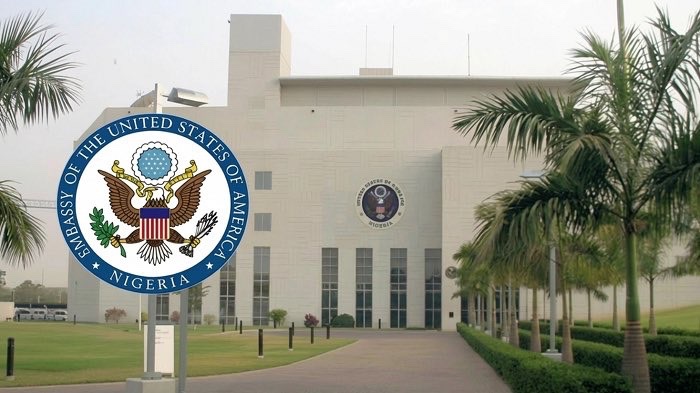
The United States government has taken a significant step in its assessment of Nigeria’s security situation. On April 8, 2026, the U.S. Department of State authorised the voluntary departure of non-emergency U.S. government employees and family members from U.S. Embassy Abuja due to the deteriorating security situation.
The U.S. Embassy in Abuja will remain open but will have limited ability to provide emergency services to U.S. citizens in Nigeria, while the U.S. Consulate General in Lagos will continue to provide routine and emergency services.
The updated travel advisory also expanded Nigeria’s “Do Not Travel” list, adding Plateau, Jigawa, Kwara, Niger, and Taraba states, bringing the total number of states under the strongest travel warning to 23.
According to the U.S. Embassy in Nigeria, the full list of Level 4 “Do Not Travel” states now includes Borno, Jigawa, Kogi, Kwara, Niger, Plateau, Taraba, Yobe, and northern Adamawa states due to terrorism, crime, and kidnapping; Bauchi, Gombe, Kaduna, Kano, Katsina, Sokoto, and Zamfara states due to unrest, crime, and kidnapping; and Abia, Anambra, Bayelsa, Delta, Enugu, Imo, and Rivers states with the exception of Port Harcourt due to crime, kidnapping, and unrest.
Newsweek reports that Nigeria’s overall Travel Advisory remains at Level 3 Reconsider Travel, with the advisory citing crime, terrorism, unrest, kidnapping, and inconsistent availability of health care services as the key risk factors.
The advisory warned that violent crime is common throughout Nigeria, including kidnapping for ransom, with kidnapping gangs frequently targeting individuals perceived to be wealthy, including foreign nationals and dual citizens returning to Nigeria.
U.S. citizens who choose to remain in or travel to Nigeria were advised to enrol in the Smart Traveler Enrollment Program, maintain low profiles, vary their routines, avoid demonstrations, and prepare evacuation plans that do not rely on U.S. government assistance.
The development represent a visible diplomatic signal of Washington’s growing concern over Nigeria’s security environment and is expected to draw a response from Nigerian authorities.