
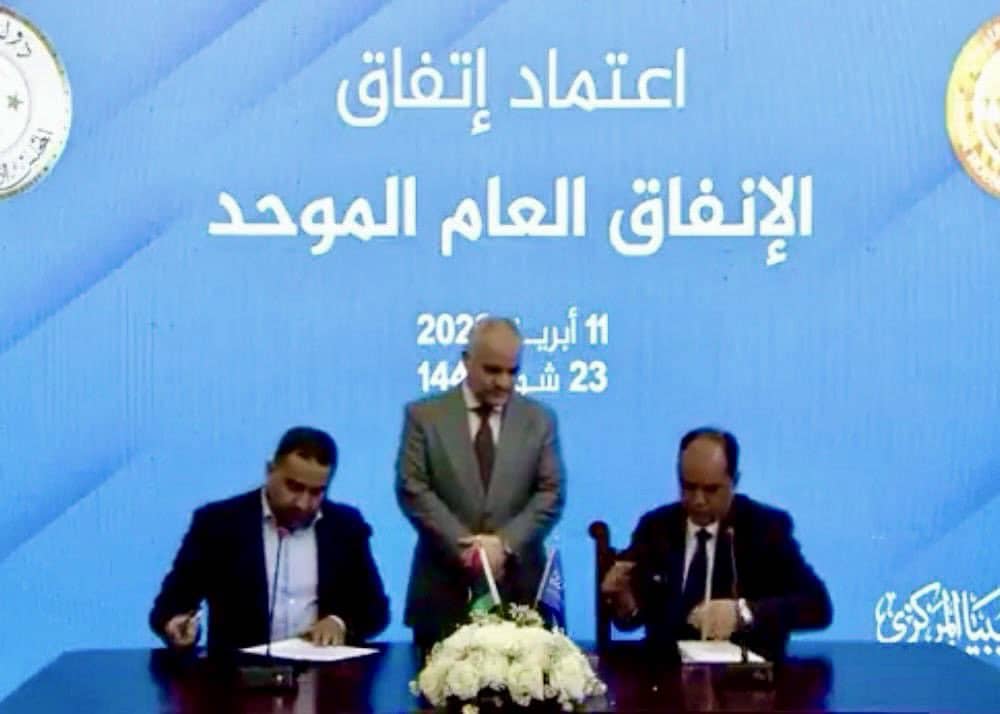
Libya’s rival eastern and western legislative bodies have signed a US-mediated agreement to unify public spending across the divided country for the first time in over a decade, the central bank announced on Sunday, 12 of April, 2026.
Representatives agreed on a budget totalling 190 billion Libyan dinars approximately $29.95 billion with the central bank describing it as an important move toward ending years of financial division.
Central bank Governor Naji Issa, who supervised the signing ceremony in Tripoli, declared that the deal was “a clear declaration that Libya is capable of overcoming its differences when a unified vision for its future is forged.”
Libya has been divided since a 2014 civil war that spawned two rival administrations in the west and east, with its last unified national budget having been agreed in 2013.
The country remains split between a UN-recognised government led by Prime Minister Abdulhamid Dbeibah in Tripoli and an eastern administration in Benghazi backed by military leader Khalifa Haftar.
The fiscal fragmentation has taken a severe economic toll: despite generating $22 billion in oil revenues last year up more than 15% from the year before Libya faces a foreign currency deficit of $9 billion, and the central bank was forced to devalue the dinar by nearly 15% for the second time in less than a year, citing the lack of a unified budget as a key contributing factor.
US Senior Adviser for Arab and African Affairs Massad Boulos congratulated Libya on the signing, crediting “months of US facilitation as part of a broader roadmap toward peace and national unification,” and said the new budget would support development projects nationwide and help finance the National Oil Corporation to boost energy production.
The timing underscores Libya’s growing importance in global energy markets, where demand for its crude has risen amid broader regional disruptions.
Still, Prime Minister Dbeibah cautioned that “the true test remains the serious commitment of all parties, so that it translates into tangible results for citizens in their daily lives.”