
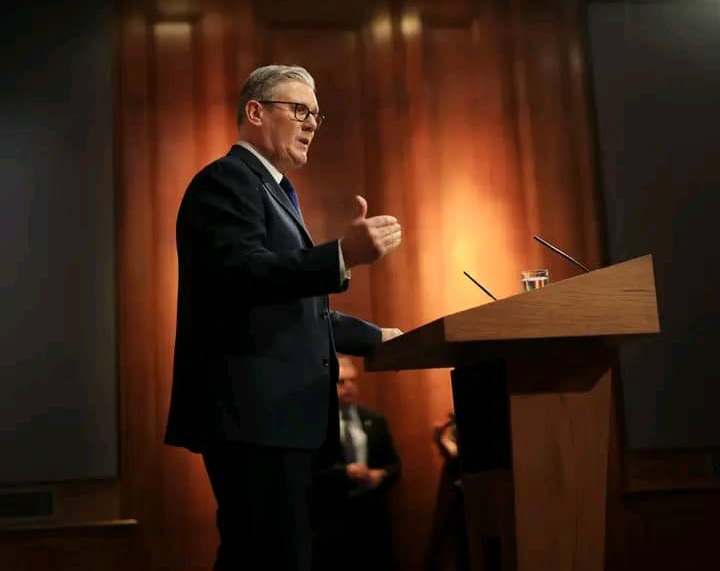
The United Kingdom Government has declared they will not take part in the proposed US blockade of the Strait of Hormuz, setting up yet another point of contention between President Donald Trump and Prime Minister Keir Starmer over the conflict in Iran.
The move came after the collapse of prolonged nuclear negotiations between the US and Iran, which reportedly lasted 21 hours without reaching a breakthrough, prompting Trump to announce the blockade via a social media post.
A UK government spokesperson emphasised the country’s commitment to open maritime routes, saying: “We continue to support freedom of navigation and the reopening of the Strait of Hormuz, which is vital for the global economy and the cost of living domestically. The strait should not be subject to tolling. We are actively engaging with France and other partners to form a broad coalition to safeguard maritime movement.”
Starmer has been working to build a diplomatic coalition with like-minded nations, including France, in a broader effort to avoid military escalation while ensuring maritime security through multilateral engagement.
While the UK has discussed deploying autonomous mine-hunting drones in the strait if a viable plan emerges in conjunction with allies to reopen it, that is a separate proposal to Trump’s blockade, and most countries taking part in coalition talks are unwilling to commit naval assets until a lasting peace agreement is reached.
The refusal signals a strategic split between Washington and its closest military ally at the very moment the blockade takes effect, with London and Paris building a coalition around open passage rather than enforcement a direct counter to the US approach.
Trump responded by renewing his attacks on Starmer in a Fox News interview, again comparing the British prime minister to Neville Chamberlain, the 1930s leader whose name is synonymous with appeasement.
British Health Secretary Wes Streeting pushed back sharply, describing Trump’s posts as “incendiary, provocative, outrageous” and acknowledging that UK-US relations were under significant strain.