
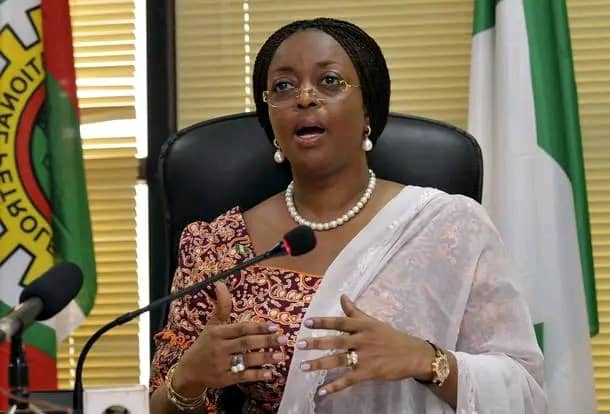
Former Nigerian petroleum minister Diezani Alison-Madueke, 65, took the stand at Southwark Crown Court in London on Monday, flatly denying allegations that she accepted bribes in return for government oil contracts.
Prosecutors allege that several Nigerian businessmen funded a string of expenses on her behalf, including over £2 million spent at luxury retailer Harrods and approximately £4.6 million toward refurbishing properties in London and Buckinghamshire.
She faces five counts of accepting bribes and a charge of conspiracy to commit bribery, while her brother, former archbishop Doye Agama, 69, and Nigerian oil company owner Olatimbo Ayinde, 54, face related bribery charges of their own all of which they deny.
Opening her defence, Alison-Madueke told the court she never abused her office or solicited anything of value, describing her ministerial role as limited in practice. “The minister is just a rubber stamp,” she said, noting that key decisions were made by committees and the Nigerian National Petroleum Corporation rather than by her directly.
She also told the court that the logistics and financial dealings of her work trips were handled by the NNPC, and insisted that any services arranged for her were subsequently reimbursed.
She additionally denied any knowledge of an alleged £100,000 cash delivery to her London residence, stating she only became aware of the claim during trial disclosures.
In a broader account of her time in office, Alison-Madueke told the jury she had become a target after entering politics from outside Nigeria’s traditional political class and pushing for change in a notoriously corrupt industry.
She described Nigeria as “a very patriarchal and sadly misogynistic society,” and said that the combination made her position as a female oil minister particularly fraught. She also recalled the security challenges she faced, including threats of kidnapping and reported abductions of family members.
Alison-Madueke made history in 2015 as the first female president of the Organisation of the Petroleum Exporting Countries (OPEC), a role she held during her tenure as Nigeria’s minister of petroleum resources from April 2010 to May 2015.