
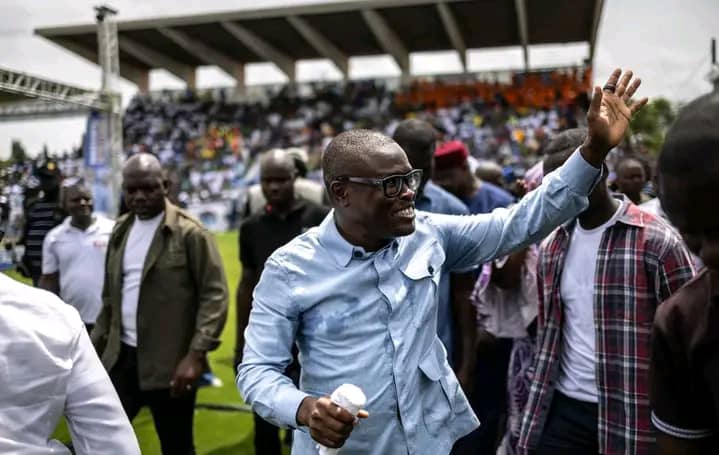
Benin Republic Opposition candidate Paul Hounkpe conceded defeat to favourite Romuald Wadagni in Benin’s presidential election on Monday, even as votes from Sunday’s poll were still being counted.
Hounkpe offered “republican congratulations” to the 49-year-old finance minister, who had been widely tipped to win after receiving the endorsement of outgoing president Patrice Talon, who stood down after two five-year terms.
Official results were not expected before Tuesday, but Wadagni’s track record of driving economic growth in the face of jihadist attacks in the country’s north had given him a commanding lead, even as the eight million-strong electorate showed little enthusiasm for either candidate, particularly in the cities.
In his concession statement, Hounkpe said: “To Romuald Wadagni, I offer my republican congratulations. Democracy requires mutual respect and the ability to rise above partisan divides.”
He had only made it onto the ballot with the help of majority lawmakers to secure the required parliamentary endorsements, and ran a low-key campaign throughout. Turnout was notably thin in the capital Porto-Novo, where some polling stations recorded between just 20 and 40 percent participation.
The ECOWAS election observation mission praised “a peaceful atmosphere” and the smooth conduct of the vote, though a civil society monitoring platform reported around one hundred incident alerts, including cases of polling stations that opened early or where voting boxes appeared full before voting had begun.
Wadagni embodies continuity with the Talon era, which has seen Benin enjoy rapid economic growth, an expansion in tourism, and the completion of numerous infrastructure projects.
Major challenges remain, however, including a wide wealth gap with the poverty rate estimated above 30 percent and worsening jihadist violence in the north, carried out mainly by al-Qaeda’s Sahel branch, the Group for the Support of Islam and Muslims.
The next elections are not scheduled until 2033, after a constitutional reform passed last year extended the presidential term from five years to seven and synchronised all elections to be held at the same time.