
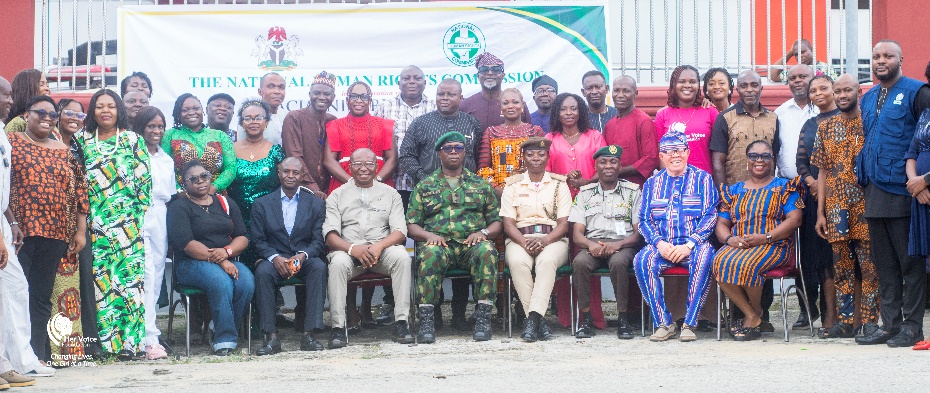
CALABAR, CROSS RIVER – Roseline Unimuke, who represented Gender and Development Action (GADA), has described the recent state consultation meeting organized by the National Human Rights Commission in Calabar as a critical reflection point for strengthening human rights protection, while drawing attention to existing reporting gaps and the urgent need for grassroots sensitization.
Speaking in a post-meeting interview with Truth Live News International shortly after attending the consultation in Calabar, the Gender Desk/Programme Officer said the engagement exposed significant structural challenges in the implementation of the National Action Plan for the Promotion and Protection of Human Rights, particularly at the local government level.
She noted that one of the most pressing concerns raised during the meeting was the absence of accessible reporting channels for victims of human rights abuses in many communities.
“We read through the report and discovered concerns around the toll-free reporting line. The issue raised was whether the line exists nationally or at the state level, because many states do not yet have accessible structures for citizens to report abuse,” Unimuke said.
According to the GADA representative, discussions during the consultation revealed that the lack of operational reporting mechanisms in many states is largely linked to budgetary constraints.
The programme officer explained that officials of the National Human Rights Commission stated that while the Commission has constitutional responsibility for protecting human rights, implementation at state and grassroots levels requires stronger institutional funding and decentralization.
She reflected that the meeting underscored a major gap in how vulnerable persons, particularly women and children in rural communities, can access justice.
“How do women and children in remote communities report abuse when there are no clear reporting structures within local government areas?” she asked.
The interview also highlighted concerns over digital rights violations and privacy breaches.
Citing examples discussed during the consultation, the GADA official said cases involving the unauthorized circulation of private content on social media have become increasingly alarming.
“It was clearly stated during the deliberations that circulating a person’s private content without consent is a violation of human rights and dignity,” she noted.
The CCMT programme officer stressed that stronger public awareness is needed to help citizens understand their digital rights and available legal remedies.
Reflecting further on the deliberations, she said the meeting drew attention to several recurring rights violations affecting women, including gender-based violence, rape, harmful traditional practices and false accusations of witchcraft in some communities.
“One of the major challenges affecting women is abuse rooted in harmful social beliefs and practices that continue to expose them to discrimination and violence,” Unimuke said.
She also pointed to discussions around access to emergency healthcare, noting that denying urgent medical attention over financial demands constitutes a violation of fundamental rights.
The GADA representative said recent incidents cited during the consultation reflected the urgent need for stronger enforcement of existing legal protections.
Assessing the overall impact of the meeting, she described the consultation as timely, engaging and highly educative.
According to the Gender Desk officer, the quality of stakeholder participation demonstrated increasing awareness of the National Action Plan, with many participants seeking clarity on issues they had not previously understood.
“The questions raised showed that stakeholders were genuinely interested in understanding the framework and how it can be implemented in practical terms within our communities,” she said.
She added that the meeting provided practical knowledge that participants are expected to take back to their respective institutions and communities.
“Our responsibility now is to step down this knowledge, educate our beneficiaries, and ensure that human rights issues are properly documented and addressed at the grassroots,” the programme officer stated.
She called for sustained collaboration between the National Human Rights Commission, civil society organizations and government institutions to ensure effective implementation of the action plan.
The consultation ended with renewed stakeholder commitment to strengthening awareness, documentation and accountability mechanisms for the protection of human rights across Cross River State and beyond.
Most Viewed Posts
- Supporting Siminalayi Fubara: Why Rivers People Deserve Continuity Of Purpose In 2027 – Dr William Omuna
- President Tinubu’s Achievements That Strengthen Case For Second Term – Amuna
- William Omuna Declares Bid For Rivers East Senate, Says It Deserves Senator Who Shows Up
- Budget Without Representation: Outrage as Senator Natasha Alleges Institutional Marginalisation – By Darlington Okpebholo Ray
- Praying for Survival: Inside Nigeria’s Unchecked Violence Against Christians — By Darlington Okpebholo Ray