

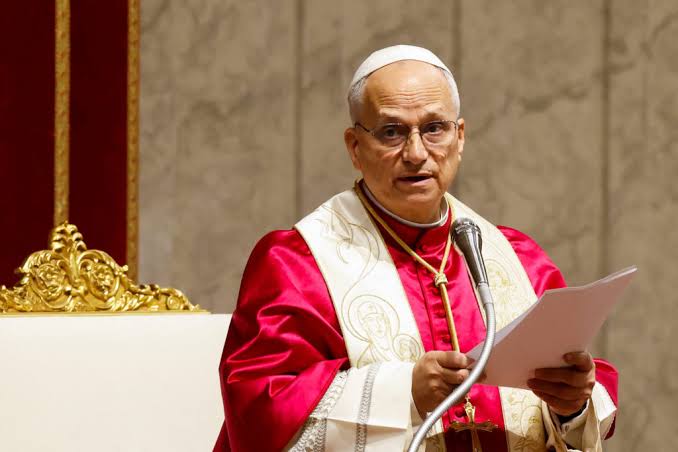
Pope Leo XIV has issued a historic apology for the Catholic Church’s role in slavery, acknowledging that the Vatican took centuries to fully condemn the practice and had previously authorised forms of human subjugation.
The apology was made in the Pope’s first encyclical, Magnifica Humanitas (“Magnificent Humanity”), released on Monday.
In the document, the pontiff admitted that the Holy See had, during the early modern period, responded to requests from European rulers by permitting actions linked to slavery and domination.
“Already in the early modern period, the Apostolic See of Rome, responding to the requests of sovereigns, intervened several times in order to regulate and legitimize forms of subjugation, and, in certain cases, including the enslavement of ‘infidels,’” Pope Leo wrote.
The Pope described the Church’s historical involvement in slavery as “a wound in Christian memory”, while insisting that the institution must not attempt to minimise its failures.
“Yet neither can we deny or diminish the delay with which both society and the Church came to denounce the scourge of slavery,” he stated.
Although Pope Leo noted that historical decisions could not be judged entirely by modern standards, he acknowledged that it took the Church centuries to clearly declare slavery incompatible with Christian teaching.
He said the Church had always defended the dignity of every human being, “even if it took eighteen centuries for its full incompatibility with slavery to be explicitly recognised.”
The encyclical marks the first known occasion a pope has publicly acknowledged the role earlier popes played in granting European powers authority to enslave people.
Previous pontiffs had apologised for Christians’ involvement in the transatlantic slave trade, but had not directly addressed the actions of the papacy itself.
Pope Leo also recalled that Pope Leo XIII, his namesake, became the first pope to openly condemn slavery in 1888, decades after several countries had already abolished it.
He further admitted that some Church institutions themselves once owned slaves.
Beyond the issue of slavery, the encyclical also focused on the protection of human dignity in an era increasingly influenced by artificial intelligence and modern technology.