
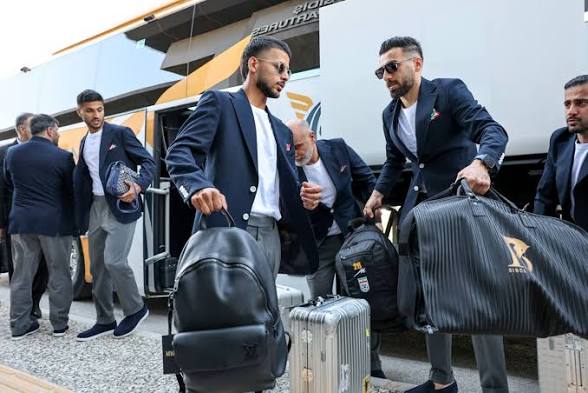
Iran’s national football team has arrived in Mexico ahead of the 2026 FIFA World Cup, entering the tournament under the shadow of ongoing political tensions between Tehran and Washington.
The squad landed in the border city of Tijuana early Sunday after completing a training camp in Turkey. Security was visible at the airport as players and officials were escorted to their hotel, while a small group of supporters welcomed the team with Iranian flags.
Iran’s participation in the tournament has attracted unusual international attention due to the continuing conflict involving the United States and Iran. The political backdrop has transformed what is typically a sporting event into a stage where diplomacy, national identity and international relations intersect.
According to Iranian officials, uncertainty over visa approval and broader political concerns led the federation to relocate its World Cup base camp from Arizona to Mexico. The move was intended to reduce the team’s time on U.S. soil while ensuring preparations for the tournament could continue.
Head coach Amir Ghalenoei expressed frustration over the logistical challenges faced by the team, saying the players would have preferred to arrive earlier to adjust to local conditions and time differences before their opening match.
Defender Ehsan Hajsafi acknowledged that recent months have been difficult for the squad but insisted the players remain focused on football and are physically prepared for the competition.
Iran is scheduled to begin its campaign against New Zealand before facing Belgium and Egypt in the group stage. A potential meeting with the United States later in the tournament remains possible depending on results.
The team also faces pressure beyond the pitch. Political unrest inside Iran, combined with the ongoing conflict involving the country, has placed athletes under intense public scrutiny. Analysts say players are navigating expectations from different sections of society while attempting to concentrate on their performances.
Questions surrounding travel documents added to the uncertainty before the team’s arrival. While U.S. authorities approved visas for players and essential support personnel, Iranian officials said several members of the wider delegation were denied entry permits, prompting criticism from the federation.
Despite the challenges, Iran’s players have sought to keep attention on football as they prepare for one of the most politically charged World Cup appearances in the country’s history.