
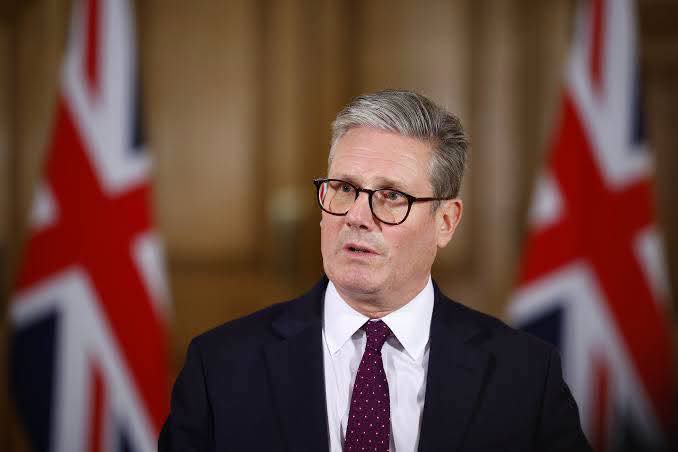
British Prime Minister Keir Starmer announced his resignation as Prime Minister and Labour Party leader on Monday, bowing to intense pressure from within his own party following a series of electoral setbacks and a growing revolt among Labour lawmakers.
Recall that Truth Live News International broke the story on Saturday of Starmer’s scheduled resignation, with senior Labour figures anticipating a clear statement on his future as early as Monday.
Starmer, who led Labour to a landslide victory in the 2024 general election, has faced mounting discontent over his leadership style, policy delivery, and handling of internal party dynamics. The crisis intensified sharply after his rival, Andy Burnham the popular former Mayor of Greater Manchester won a parliamentary seat in a by-election last week, clearing the path for a formal leadership challenge.
More than 100 elected Labour lawmakers roughly a quarter of the party’s representatives in the House of Commons had publicly called for Starmer to quit or set out a timetable for his exit.
In a defiant statement on Friday, Starmer had vowed to fight any challenge, urging his party “not to tear itself apart with infighting.”
However, reports indicated he had been discussing the matter with his wife at Chequers, the Prime Minister’s official country residence, over the weekend before reaching a final decision.
A government source had earlier pushed back against the speculation, insisting Starmer “remained focused on getting on with the job of governing.”
Starmer’s exit paves the way for a leadership contest, with Burnham widely seen as the frontrunner to succeed him. Burnham is due to be sworn in as an MP today.
The developments mark a dramatic turn for Starmer, who has overseen a period of instability at the top of British politics despite Labour’s historic win. His resignation comes amid broader challenges for the government, including recent local election setbacks and internal divisions.
As Britain awaits further details on the timetable for his departure, the coming days will shape not only the future of the Labour Party but the stability of the UK government. Political observers note this could usher in another chapter of leadership transition without a general election.