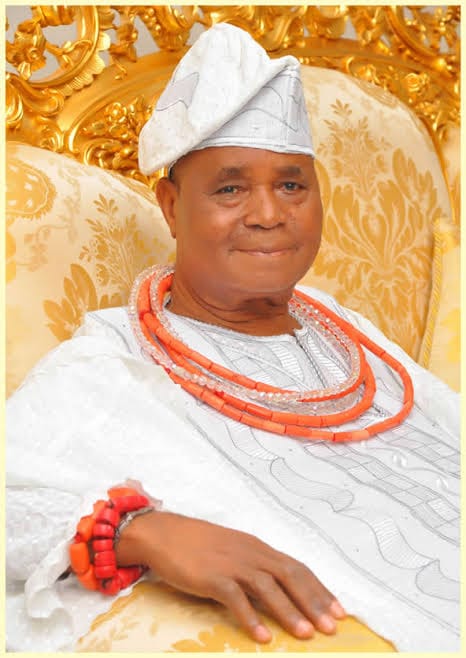

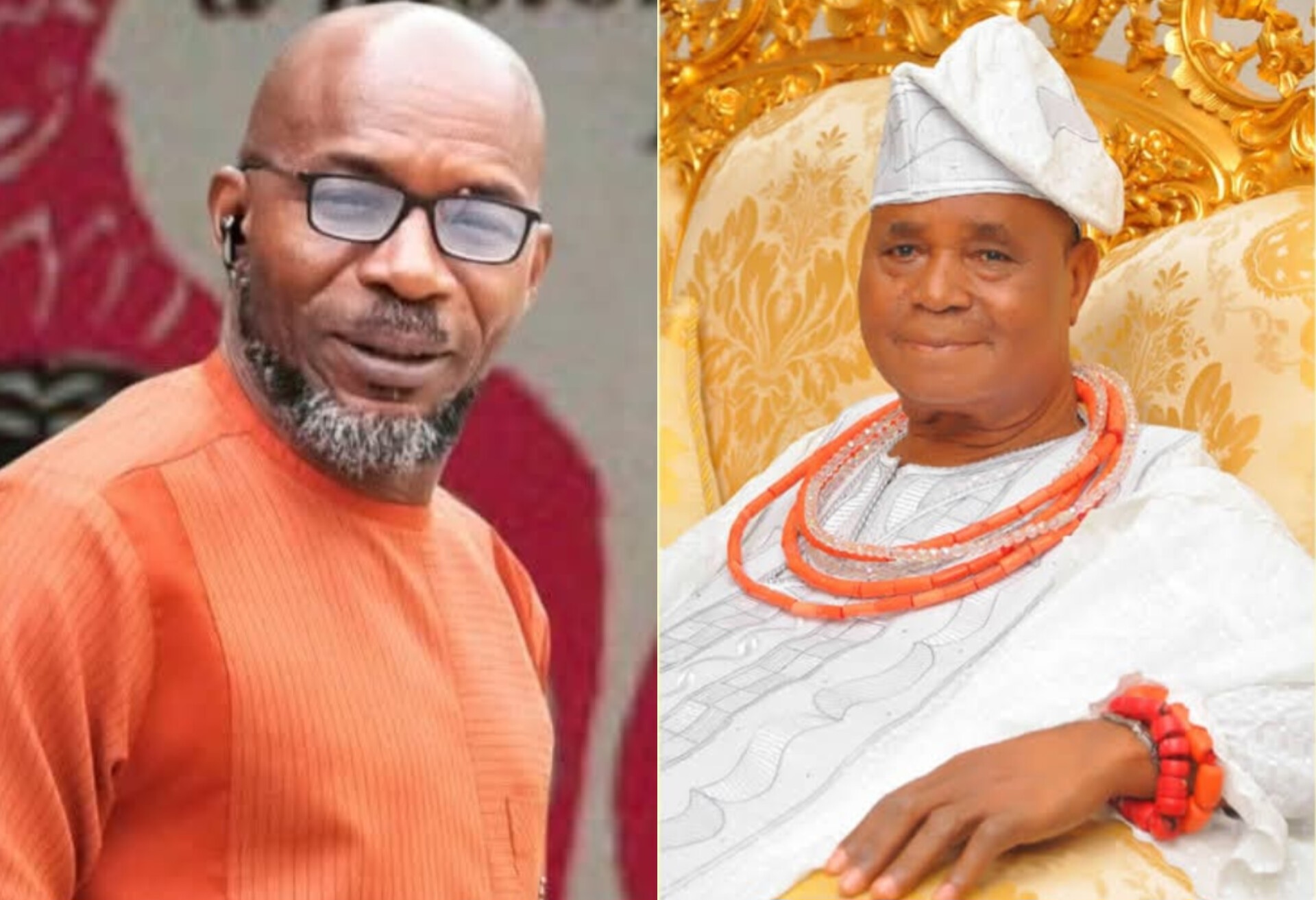
A Birthday Tribute to Chief Gabriel Osawaru Igbinedion, CFR, CON, The Esama of Benin Kingdom
There are men who live within history, and there are men through whom history itself passes. Chief Gabriel Osawaru Igbinedion belongs unmistakably to the second and rarer order. Nigeria did not merely contain him. Nigeria was rerouted by him — the way a great rock in the middle of a river does not stop the water, but teaches it a new geography.
As he turns ninety-two on the 11th of September, we are not merely counting the years of an extraordinary man. We are measuring a distance travelled.
On that day in 1934, in Okada — then an obscure clearing of farmers in what is now Ovia North-East — a boy was born into the ordinary dust of Edo soil. There were no drums in the palace that morning, no prophecy on the wind, no diviner running through the compound with news. Only a small community going about its patient labour. Ninety-two years later, that village name is spoken every single day, in every market and every motor park from Sokoto to Sapele, by millions of Nigerians who have never once set foot in Edo State.
That is not fame. Fame is loud and forgetful. That is a man entering the language itself — and no man buys that with money.
What Was Quarried
Our young people have been sold a lie about greatness: that it descends, ready-made, like rain. It does not. It is quarried.
Before the forty aircraft, there were blocks of wet cement hardening in the sun beside his uncle’s yard. Before the empire, rubber and timber, and a young man learning the merciless arithmetic of trade. Before “His Excellency,” a police officer standing at attention in a uniform the Crown had cut for other purposes entirely. He left the Force in 1963. And in 1968, while this nation was tearing itself apart in civil war, he was quietly assembling something instead of dismantling it — Mid Motors, the first indigenous motor assembly plant in Nigeria. While others counted the dead, he was already counting the unborn: the jobs, the artisans, the apprentices, the families that would eat because one man refused to believe that Africans could only import their destiny.
Then came 1983, and the sky. Understand what Okada Air meant in that era. To fly in Nigeria was to submit to a national humiliation; you did not take a flight, you waited for one, camped on plastic chairs, hostage to a state airline that regarded punctuality as an insult to its dignity. Then a Benin man put aircraft in the air and gave this country a phrase it had never possessed: the next available flight. He did not enter aviation. He humbled it. He took the sky, which had been the private garden of governments and foreign carriers, and cut a gate into its fence for ordinary Nigerians. And when the riders of Lagos needed a word for the thing that carries you past every obstruction and gets you there when nothing else will, they did not invent one. They reached for his: Igbinedion’s “OKADA”.
The catalogue is almost indecent in its abundance. The first privately owned airline. The first indigenous assembly plant. The first private broadcasting licence in Nigeria, at a time when the airwaves were still the personal property of whoever held the presidential palace, and to ask for a microphone was to be suspected of treason. And then, on the tenth of May, 1999, Certificate Number 001 — Igbinedion University, Okada. Not the tenth. Not the third. The first private university this Republic ever licensed, planted deliberately not in Lagos or Abuja but in the very village that had once been too small for the map.
Consider the poetry of that act. A man denied the full sweetness of formal education went out into the world, gathered wealth in his two hands, carried it home, and built in his birthplace the very thing he had been denied. He did not climb the ladder and pull it up after himself. He melted it down and recast it as a staircase, wide enough for a generation.
Where others saw limits, he saw horizons. His life became, in every respect, an argument against smallness.
The Nigerian Republic noticed. It decorated him with two of the nation’s highest honours — Commander of the Order of the Niger, conferred at his seventieth, and Commander of the Order of the Federal Republic. The ancient Benin Kingdom had noticed long before: on the 5th of April, 1974, the revered Omo N’Oba N’Edo Uku Akpolokpolo, Akenzua II, raised him to the title of Esama, and he was barely forty, among the youngest ever so honoured. Note what the kingdom named him for. Not for his wealth. Esama — son of the people, the one whose hand is open. The kingdom, in its immemorial wisdom, named him for what he does with it.
Yet there are honours no President can confer and no gazette can adequately record. They live in human memory: in the lives a man has lifted, the doors he has opened, the destinies he has quietly redirected.
On that measure, I do not speak as an observer. I speak as a beneficiary — twice over, and I will not pretend otherwise.
Two Debts
In 1987 I was barely twenty years old, a young graduate standing at that uncertain threshold between academic achievement and the intimidating vastness of the world beyond the university gate. In this country we applaud excellence and then abandon it; we clap for the first-class graduate and leave him to walk home in the rain. Chief Igbinedion learnt of the excellence of my result, and he did not clap. He bought me a brand-new Skoda car.
Almost four decades later, it is not the car I remember. It is what the gesture said, without uttering a word: excellence deserves to be seen. He had never met my father’s compound. I was nobody’s investment. He simply believed that a nation which does not reward its bright young must not be surprised when they grow dim. Some gifts depreciate with time; others appreciate in memory, because their true value was never material. That one was wind beneath a young man’s sail, and every reel of film I have shot since, every page I have written, was set in motion by it.
Then, nearly forty years later, life completed one of those extraordinary circles that only providence designs.
On the twenty-eighth of December, 2025, in Benin City, hoodlums laid their hands on me — assault and abduction, the twin abominations. I sought redress, and I was within my rights to seek it. I had the law, I had the evidence, and I had fire in my chest. I wanted the full iron of the state.
The Esama intervened again. This time he did not come bearing the keys to a motor car. He came bearing something weightier: the wisdom of peace.
Only a man of ninety-one years could have talked me down from that ledge, because only such a man has watched anger arrive and depart a hundred times, has seen quarrels outlive their causes, and knows how vengeance eats the avenger. He counselled mercy — not the cowardly mercy that is merely fear in a borrowed gown, but the sovereign mercy that only the strong can afford. I withdrew the case because he asked me to.
That decision was not weakness. It was homage. For how does one lightly dismiss the counsel of a man who encouraged you at twenty and, four decades on, still cared enough about your peace to intervene when you were wounded? In 1987 he gave me a vehicle; in 2026 he gave me a direction. The one carried my body. The other saved my soul from becoming a courthouse.
This is what longevity, at its noblest, becomes: not the accumulation of years, but the accumulation of moral authority.
Bronzes Cast in Men
The Esama’s greatest achievement may therefore not be any company he founded, any institution he built, any aircraft he acquired or any title he received. Buildings fall. Businesses change hands. Fortunes rise and recede. But a life planted in other human beings becomes exceedingly difficult to erase.
There is something profoundly Benin about that. We come from an ancient civilisation whose bronze casters understood, centuries before Europe came asking, that immortality does not mean defeating time. It means leaving behind forms that time cannot easily destroy. Walk down Igun Street today and the hammers are still speaking.
The Esama has spent a lifetime casting his own bronzes. Not in metal — in men. In institutions. In opportunity. In memory.
And that is why it feels inadequate simply to say happy birthday. One does not casually congratulate an iroko for surviving another season. One stands beneath its branches, remembers how many found shade there, looks upward, and gives thanks. Ninety-two harmattans have combed his head to silver, and still the tree does not stoop; the wind may argue with the branches, but it has never once won a case against the root.
So today I celebrate Chief Gabriel Osawaru Igbinedion, CFR, CON — entrepreneur, builder, benefactor, elder, and one of the most luminous figures Edo has given to modern Nigeria. I celebrate the man who encouraged me when I was young. I honour the elder whose counsel I respected when I was wounded. And I salute the Nigerian whose life insists that greatness is measured finally not by what a man possesses, but by how much possibility becomes available to others because he lived.
We will not wish him many happy returns. Returns are for travellers, and he has arrived. We wish him instead what our fathers wished the truly great: a body that does not betray the mind, a mind that does not betray the memory, children who make his name heavier, and a name that carries no shame in any room in the world.
At ninety-two, the Esama is no longer merely counting years. He has become one of the years by which an age is remembered.
Happy 92nd Birthday, Sir. Long life, Lion of Okada. Long life, Sun of the people.
Esama gha to kpere. Ise.
Dr. Don Pedro Agbonifo-Obaseki is a scholar, broadcaster, filmmaker, playwright and pioneer President of the Filmmakers Cooperative of Nigeria (FCON). He writes from a position of open and grateful indebtedness to the subject of this tribute.