
Nigeria’s manufacturing sector is growing, but its contribution to the nation’s economy is shrinking, exposing a difficult industrial paradox as the Federal Government targets a 20–25 per cent GDP share for the sector by 2030.
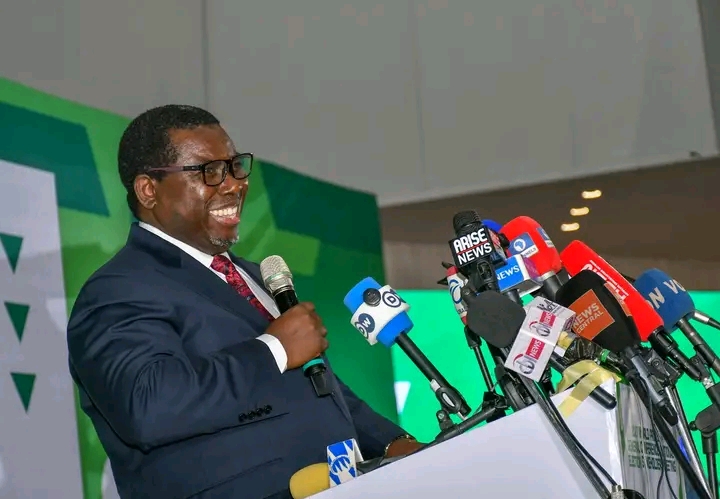
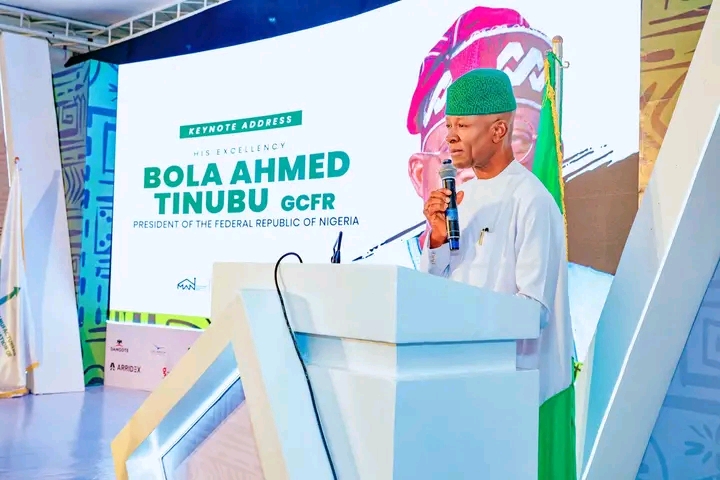
President Bola Ahmed Tinubu, represented by the Minister of State for Industry, Trade and Investment, John Owan Enoh, disclosed this at the 54th Annual General Meeting of the Manufacturers Association of Nigeria in Lagos.
The President said manufacturing output grew by 3.29 per cent in the first quarter of 2026 and 3.24 per cent in the second quarter, even as the sector’s share of real GDP declined.
Available NBS data show that manufacturing accounted for 9.57 per cent of real GDP in the first quarter before falling to 7.72 per cent in the second quarter.
Tinubu also highlighted the pressure created by unsold goods, saying manufacturers’ inventory had risen to just under ₦2 trillion.
“A government that cannot face its numbers cannot change them,” the President said, stressing the need to confront the structural challenges confronting the manufacturing sector.
Despite the challenges, Tinubu said the government’s economic reforms were beginning to create a more stable environment for production, citing exchange-rate unification, easing inflation, a lower policy rate, stronger reserves and increased non-oil exports.
He, however, cautioned that stability alone would not solve the country’s industrial challenges.
“Stability is not the destination. It is the runway,” he said.
The President said the Federal Government was targeting an increase in manufacturing’s contribution to GDP to between 20 and 25 per cent by 2030 under the Nigeria Industrial Policy.
The policy was formally launched in February 2026 with a target of raising manufacturing’s contribution to as much as 25 per cent of GDP by 2030.
Tinubu said the administration had also established an Industrial Revolution Work Group to translate the industrial ambition into measurable outcomes, including factories, production capacity, jobs and shipments.
He further pledged government support in areas identified as critical to industrial competitiveness, including energy, capital, markets and security along industrial corridors.
According to him, the government would also introduce a published scorecard and maintain a quarterly delivery dialogue with MAN to monitor progress.
Under the Renewed Hope Nigeria First Policy, Tinubu said government would prioritise locally produced goods where Nigerian manufacturers could meet the required standards.
He also challenged manufacturers to respond by investing in production capacity, deepening backward integration, improving product standards and preparing for the wider African market.
Tinubu said Nigeria’s immediate regional market remained underutilised, noting that only 3.4 per cent of the country’s record non-oil exports in 2025 went to ECOWAS countries.
The government’s industrial push comes amid continuing concern over the composition of Nigeria’s economic growth. While manufacturing grew by 3.24 per cent in the second quarter, the broader industrial sector grew by 3.96 per cent, down from 7.46 per cent in the corresponding quarter of 2025.
The President said the objective was therefore not merely to produce policy documents but to translate industrial reforms into increased productive capacity and jobs.
“Where Nigerians make it well, government will buy it here,” Tinubu said, reaffirming the administration’s commitment to local production under the Nigeria First policy.
The 54th MAN AGM, held from October 5 to 7 in Lagos, is themed “Leveraging National Industrial Policy to Position Nigeria as Africa’s Industrial Hub.”
Most Viewed Posts
- Supporting Siminalayi Fubara: Why Rivers People Deserve Continuity Of Purpose In 2027 – Dr William Omuna
- President Tinubu’s Achievements That Strengthen Case For Second Term – Amuna
- William Omuna Declares Bid For Rivers East Senate, Says It Deserves Senator Who Shows Up
- EFCC Arraigns Gombe Magistrate Over Alleged ₦1.4m Bribery
- Budget Without Representation: Outrage as Senator Natasha Alleges Institutional Marginalisation – By Darlington Okpebholo Ray