

Lucky Obukohwo, Reporting
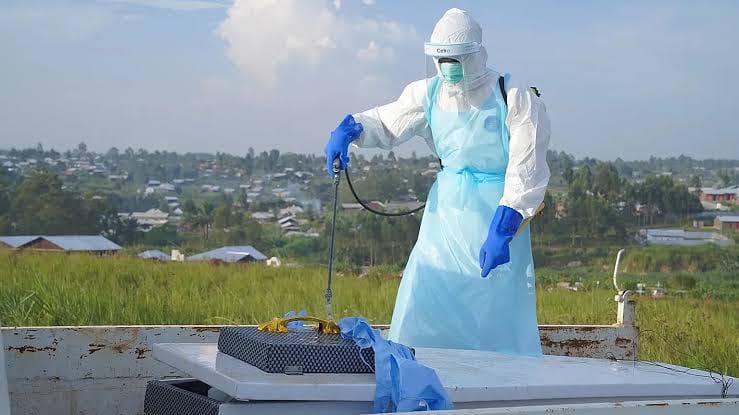
Nigeria has intensified its Ebola containment measures as the number of people under monitoring following a confirmed case of Ebola Bundibugyo virus infection rises from 44 to 53.
The increase has prompted stepped-up contact tracing and tighter airport surveillance in Lagos.
The Nigeria Centre for Disease Control and Prevention (NCDC) clarified that the additional nine contacts do not represent new infections but individuals whose potential exposure to the virus is being investigated.
The contacts will be monitored for 21 days from their last possible exposure to the virus.
The confirmed case involves a 42-year-old woman who arrived in Nigeria from Uganda through Addis Ababa on October 3.
She developed symptoms four days later, and laboratory tests confirmed the infection on October 20.
She remains in isolation and is reportedly responding well to treatment.
NCDC Director-General, Jide Idris, revealed that the Federal Government would provide individuals placed in isolation or quarantine with a weekly stipend of N100,000 to support their basic needs and families.
Accommodation and feeding are also being covered.
In Lagos, the government has intensified passenger screening at the Murtala Muhammed International Airport and strengthened disease surveillance across health facilities.
Commissioner for Health, Akin Abayomi, said no suspected Ebola case had been recorded in the state but urged residents to remain vigilant.
The NCDC also confirmed that a suspected case reported in Rivers State tested negative.
Meanwhile, hospitals nationwide have been directed to strengthen screening, prepare isolation facilities and enforce infection prevention measures.
Health authorities have urged Nigerians to maintain proper hand hygiene, avoid contact with the body fluids of sick people and stay away from sick or dead wild animals.
Travellers have also been advised to cooperate with health screening and provide accurate travel and health information.
Anyone who suspects exposure should contact health authorities before visiting a healthcare facility.
Lagos residents can report suspected cases or exposure concerns through 112 or 767, or call the Directorate of Epidemiology, Biosecurity and Global Health on 0802 316 9485.
The NCDC urged the public to avoid spreading misinformation or stigmatising affected individuals, stressing that early detection, contact tracing, prompt isolation and public cooperation remain critical to containing the outbreak.
Ebola spreads through direct contact with the blood and other body fluids of infected symptomatic persons, contaminated materials or infected animals.
Symptoms include fever, severe weakness, headache, muscle pain, vomiting, diarrhoea and abdominal pain.
Unexplained bleeding may occur in some cases.
Most Viewed Posts
- Supporting Siminalayi Fubara: Why Rivers People Deserve Continuity Of Purpose In 2027 – Dr William Omuna
- President Tinubu’s Achievements That Strengthen Case For Second Term – Amuna
- Just In: APC Announces Date For Presidential Primary, Fixes Nomination Form At ₦100m
- Nationwide Relief as Dangote Reduces PMS Ex-Depot Price to ₦699
- EFCC Arraigns Gombe Magistrate Over Alleged ₦1.4m Bribery