

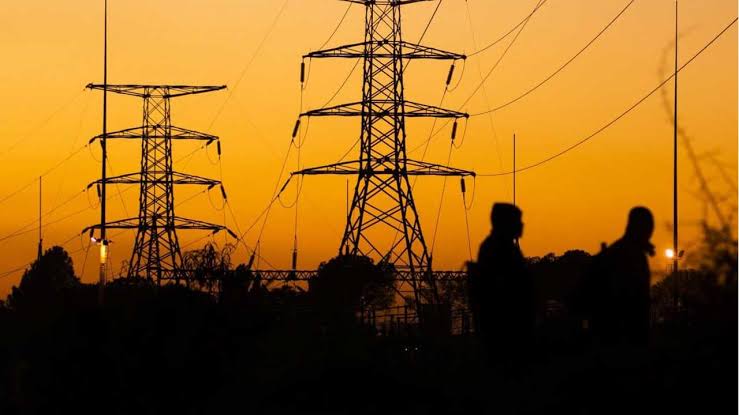
Millions of Nigerians across several states are facing growing hardship due to worsening electricity supply, with prolonged blackouts disrupting daily activities and crippling businesses, Truth Live News International reports.
Residents in states including Kano, Kaduna, Sokoto, Enugu, Benue, Oyo, Akwa Ibom, Taraba, Lagos and Ogun said the erratic power supply had forced many households and businesses to abandon reliance on public electricity and depend heavily on generators and solar systems.
The situation has become more difficult as the country experiences a severe heatwave, leaving many residents struggling to cope with rising temperatures and limited access to electricity.
Investigations revealed that several communities now receive electricity for only a few hours daily, with some areas getting less than one hour of power supply.
In Kano State, residents of Unguwa Uku and Hotoro Dan Marke complained that electricity had dropped drastically in recent weeks.
One of the residents, Ahmad Ibrahim, said electricity supply had reduced to barely one hour per day.
“We hardly get electricity for more than one hour. Sometimes it may last two hours, but most times it comes late at night,” he said.
Another resident, Habibu Abdullahi, said the situation had forced many households to seek alternative sources of power.
“I cannot even count the number of houses that have installed solar systems because of the outage. Many people have already lost hope in public electricity supply,” he said.
Residents in Sokoto State described the situation as even worse, saying some communities now receive less than one hour of electricity daily.
Communities affected include Mabera, Tamaje, Old Airport, Sahara, Emir Yahya and Tudun Wada.
A resident of Mabera, Musa Abdullahi, said the blackout had made life especially difficult during the Ramadan fasting period.
“Because of the heat and fasting, people now depend on neighbours who have solar power to buy ice blocks or cold water,” he said.
Despite the introduction of the Band A electricity tariff, which is expected to guarantee at least 20 hours of electricity daily, many consumers complained that the reality on the ground falls far short of expectations.
In Enugu State, residents said they were paying higher tariffs but still receiving limited electricity.
A resident of Emene, Chinedu Okafor, said households sometimes received between four and 10 hours of electricity daily.
“How can people pay the highest tariff when electricity comes for only four hours?” he asked.
Small business owners also lamented the impact of the outages on their operations.
A trader in Nsukka, Amaka Nwosu, said the rising cost of fueling generators had severely affected productivity.
“The cost of running generators is killing our business. Production has slowed and expenses keep rising,” she said.
In Benue State, residents said unreliable electricity had forced several businesses to shut down.
A resident of Adeke area in Makurdi, identified simply as Attah, said his wife’s frozen food business collapsed because of the poor power supply.
“My wife sells frozen meats but the business collapsed because the electricity supply became too unreliable,” he said.
Another resident of George Akume Road, Madam Debby, said electricity supply in the area had become extremely inconsistent.
“Before now, our area had not been enjoying power supply, we only have power for like two hours in two or three days,” she said.
“But since January, I doubt if we have had power supply for three hours.”
She added that several businesses had closed down as a result of the prolonged outages.
Residents in Akwa Ibom State also reported irregular electricity supply, with some communities receiving less than three hours of power daily.
Affected areas include Aka Etinan, parts of Uyo metropolis, Oron Road, and Nwaniba Road.
A resident of Aka Etinan, Ekaete Akpan, said the situation had become a serious challenge for traders and small businesses.
“The electricity supply here in Aka Etinan is very inconsistent. Even when it comes, it hardly lasts up to three hours,” she said.
“Normally, they bring it around 3am and by 6 or 7am it is taken away again.”
In Ibadan, Oyo State, residents of Moniya, Ojoo, Orogun, Mokola, Sango and Oke-Itunu also complained about the worsening power supply.
A resident, Kunle Ajala, said businesses were struggling to survive.
“It has been almost a week since we had stable electricity here. Even when power comes, it may not last up to three hours,” he said.
A barber, Bisi Adeoye, said the poor electricity supply had seriously affected his livelihood.
“I depend on electricity for my business, which has not been moving well for some time now but despite the poor supply the electricity company still sends high bills,” he said.
Similarly, a welder, Musbau Muritala, said some artisans had abandoned their trades and turned to commercial motorcycle riding.
“I cannot do anything without electricity. Sometimes power comes around midnight and disappears before morning,” he said.
Experts say Nigeria’s electricity crisis reflects deeper structural problems in the power sector.
Although the country has an installed generation capacity of more than 12,000 megawatts, actual electricity generation often falls below 4,000 megawatts, far less than what is needed for a population exceeding 220 million people.
Energy analysts estimate that Nigeria requires at least 30,000 megawatts of stable electricity to support its population and industrial development.
Industry insiders also blamed the worsening outages on gas supply shortages affecting power plants.
The Kaduna Electricity Distribution Company confirmed that reduced gas supply had affected electricity distribution across its franchise areas.
“We are currently experiencing a reduction in power supply due to gas supply constraints affecting power generation,” the company said.
Meanwhile, the Presidential Villa in Abuja is reportedly still testing its newly installed solar power system despite earlier plans to disconnect from the national grid.
Officials said the solar facility, which forms part of a N17bn solarisation project, had not yet reached full operational capacity.
“We are still in the testing phase. When the solar system becomes fully operational, then we will see the savings,” a senior official said.
The Federal Government approved the solar project as part of efforts to reduce the high cost of electricity and diesel used to power generators at the State House.