
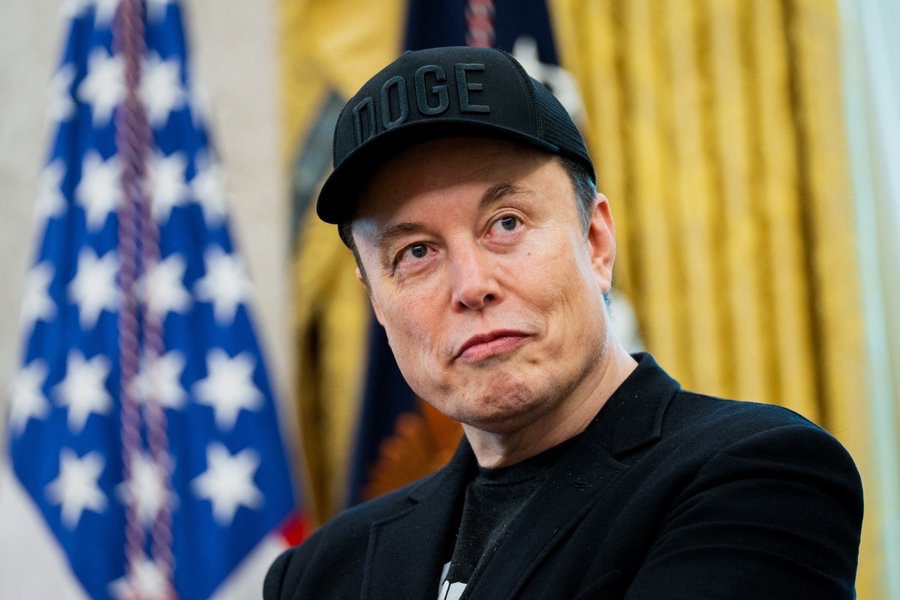
SpaceX chief executive and owner of X, Elon Musk, has again attacked his country of birth, accusing the South African government of blocking his satellite internet service Starlink from operating on racial ground.
In a series of posts on X, the South Africa-born billionaire claimed that Starlink is being denied an operating licence on the basis that he is not Black. He wrote: “South Africa won’t allow Starlink to be licensed, even though I was born there, simply because I am not black!”
Musk also alleged that his company had repeatedly been approached with offers to circumvent the rules through corrupt means. “We were offered many times the opportunity to bribe our way to a licence by pretending that a Black guy runs Starlink SA, but I have refused to do so on principle,” he wrote.
Leon Musk condemned South African officials directly, writing: “Racism should not be rewarded no matter to which race it is applied. Shame on the racist politicians in South Africa.”
At the heart of the dispute are South Africa’s Broad-Based Black Economic Empowerment (B-BBEE) laws. The B-BBEE rules require communications businesses operating in South Africa to maintain at least 30% local Black ownership. Because SpaceX is an international company that does not meet this threshold, it has been unable to secure a licence, a requirement that applies to all foreign telecoms operators, not specifically to Musk.
South African authorities have pushed back firmly. South Africa’s Head of Public Diplomacy, Clayson Monyela, responded on X: “Starlink is welcome to operate in South Africa provided there’s compliance with local laws. There are over 600 USA companies investing and operating in South Africa all complying and thriving.”
According to TechAfrica News, South African authorities have also clarified that Starlink has not formally applied for a licence and that approvals are determined by regulatory compliance, not the race of company founders.
Meanwhile, regulatory movement is afoot. According to The South African, South Africa’s B-BBEE ICT Sector Council has announced a full review of the 2016 ICT Sector Code, with the public invited to submit comments by May 20, 2026. At the centre of discussions is a framework that could allow foreign companies like Starlink to meet empowerment targets through investment programmes rather than ownership transfers.
Despite the regulatory deadlock, at least 14,000 South Africans are estimated to be accessing Starlink illegally through roaming packages registered in neighbouring countries, with Starlink warning that users breaching its roaming terms could have their services terminated by the end of April.