
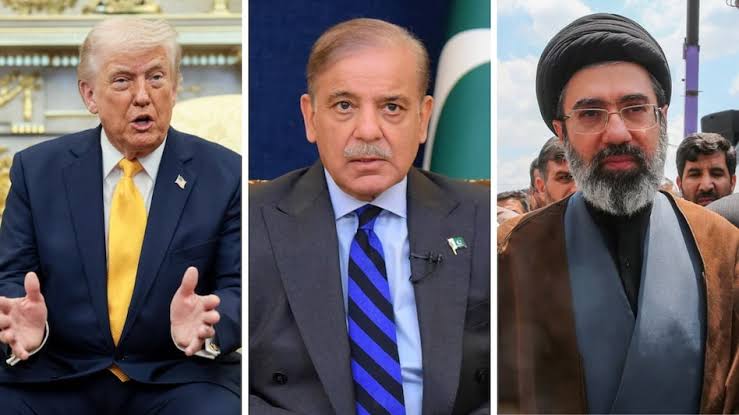
Pakistan is quietly positioning itself at the center of high-stakes diplomacy as tensions continue between the United States and Iran. Alongside Turkey and Egypt, Islamabad is playing a significant role in efforts to de-escalate the conflict, Truth Live News International learnt from Sky News.
According to sources, the three countries were instrumental in facilitating the recently announced five-day pause by Donald Trump.
Pakistan, in particular, has opened discreet backchannel communications with Iran, despite Tehran maintaining that it has not yet agreed to direct talks with Washington. A source familiar with the discussions stated, “We are trying to convince them.”
The Pakistan Foreign Office reiterated its readiness to mediate, noting that Islamabad is always willing to host negotiations if both sides agree. It emphasized its long-standing commitment to dialogue and regional stability.
Pakistan has effectively become a conduit for communication between both sides. Its military chief, Asim Munir, recently held a phone conversation with Trump, underscoring the country’s growing diplomatic relevance.
Prime Minister Shehbaz Sharif has also engaged diplomatically, extending greetings to Iran’s president, Masoud Pezeshkian, during the Persian New Year while reaffirming Pakistan’s willingness to support peace efforts.
Iran’s Foreign Ministry spokesperson, Esmaeil Baqaei, confirmed that Tehran has received messages from “friendly countries” indicating a U.S. interest in negotiations, adding that appropriate responses have been issued.
Over the past year, ties between Trump, Sharif, and Munir have strengthened significantly. Notably, Trump hosted Munir for a rare private lunch at the White House, signaling renewed U.S.–Pakistan security cooperation.
Sharif has publicly supported Trump’s diplomatic initiatives, even nominating him for the Nobel Peace Prize over efforts related to India-Pakistan tensions and Gaza. He also endorsed Trump’s “Board of Peace” charter aimed at post-war governance and reconstruction in Gaza, though Pakistan stopped short of committing troops.
In addition to political alignment, economic ties have expanded. Earlier this year, Pakistan signed an agreement with a firm linked to Trump family interests, World Liberty Financial, focusing on cross-border crypto payment systems. The deal involved Pakistan’s finance ministry and the company’s CEO, Zach Witkoff.
Pakistan’s involvement is also driven by strategic necessity. The country relies heavily on energy supplies passing through the Strait of Hormuz, making stability in the region critical to its economy.
Geopolitically, Pakistan’s position is complex. While it shares a long border with Iran, relations have historically been delicate due to sectarian and strategic differences. At the same time, Islamabad maintains a strong military and economic alliance with Saudi Arabia, including a Strategic Mutual Defence Agreement signed last year.
Although the agreement has not yet been tested, it could theoretically draw Pakistan into a broader regional conflict if tensions escalate.
With reports suggesting Islamabad could host future peace negotiations, Pakistan is increasingly emerging as a pivotal player in efforts to broker dialogue between Washington and Tehran.