
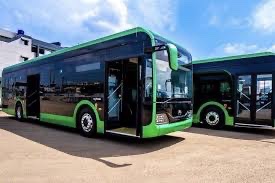
The Federal Government has approved the acquisition of electric buses for civil servants, with a clear directive that all buses must be sourced from local assemblers
The development was disclosed in Abuja by Joseph Osanipin, Director-General of the National Automotive Design and Development Council, who said the buses would be sourced from local assemblers to strengthen domestic production and stimulate growth in Nigeria’s automotive sector. “The initiative is aimed at encouraging the transition to cleaner mobility while creating opportunities for local manufacturers,” he said.
Punch Newspapers reports that Osanipin made the announcement during a media briefing for journalists in Abuja on Tuesday 17th, March 2026 adding that the government had also procured charging infrastructure that would be installed across parts of the country to support the deployment and adoption of electric vehicles.
The decision to source exclusively from local assemblers is the most significant aspect of the announcement and the most consequential for Nigeria’s automotive industry. Government agencies are now mandated to prioritise locally assembled electric vehicles for their fleets, creating the initial guaranteed demand that analysts say is necessary to attract private investment in charging infrastructure and scale up domestic production.
The Federal Executive Council had approved N58 billion in December 2025 to purchase 200 electric buses for public transportation, setting the stage for today’s civil servant fleet announcement.
Osanipin urged Nigerians to support locally assembled vehicles, noting that increased patronage would help create jobs and drive economic growth.
He also stated that the NADDC is providing training to manufacturers and stakeholders to enhance local production of vehicle components such as batteries and tyres. “The move will reduce import dependence, create employment opportunities, and contribute to the country’s Gross Domestic Product,” he said.
Osanipin also said NADDC was working toward forwarding a bill to the National Assembly to strengthen the council’s operations in line with global best practices, and reiterated the council’s commitment to repositioning Nigeria’s automotive industry while calling for continued support from investors and stakeholders.