
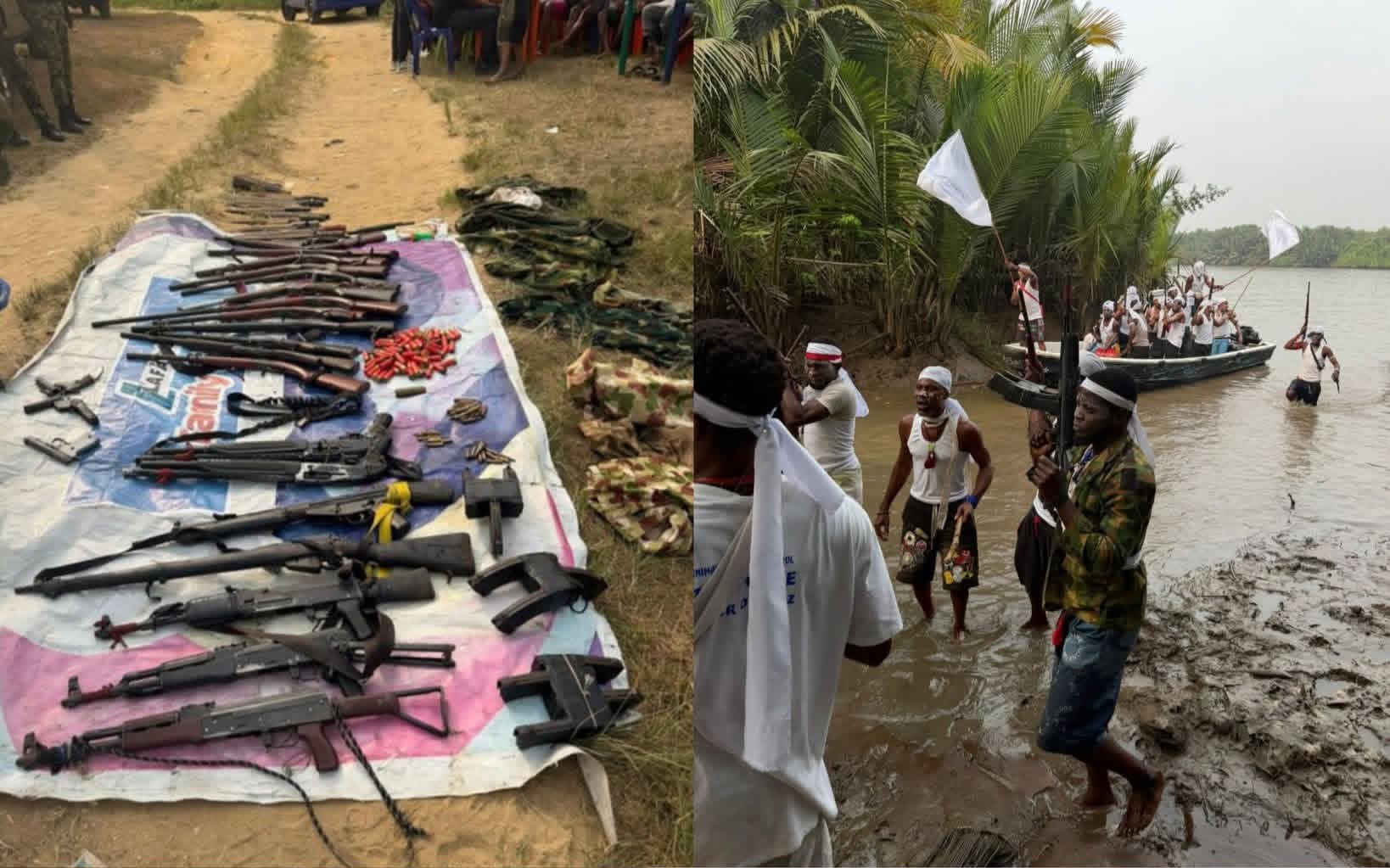
No fewer than 80 militants operating in the creeks of Akpabuyo Local Government Area of Cross River State have voluntarily surrendered their arms and embraced the state government’s peace and reintegration amnesty framework, marking a major breakthrough in the fight against coastal militancy and maritime crime in southern Cross River.
The militants emerged in large numbers on Friday from their hideouts at the Atimbo Rear Area under Operation OKWOK, within the Area of Responsibility of Headquarters 13 Brigade of the Nigerian Army. Security sources described the mass surrender as a strategic win for ongoing efforts to restore peace, safety and economic activity along the state’s coastal corridors.

Truth Live News gathered that the development followed months of sustained military pressure, coupled with discreet dialogue involving community leaders, government officials and security agencies, aimed at encouraging non-violent resolution and reintegration.
In a rare coordinated move, two notorious militant camps dismantled themselves simultaneously. The first camp, led by ThankGod Ebikontei, popularly known as Ayibanuagha, presented 39 fighters. Officials disclosed that four additional members of the group are expected to report in the coming days.
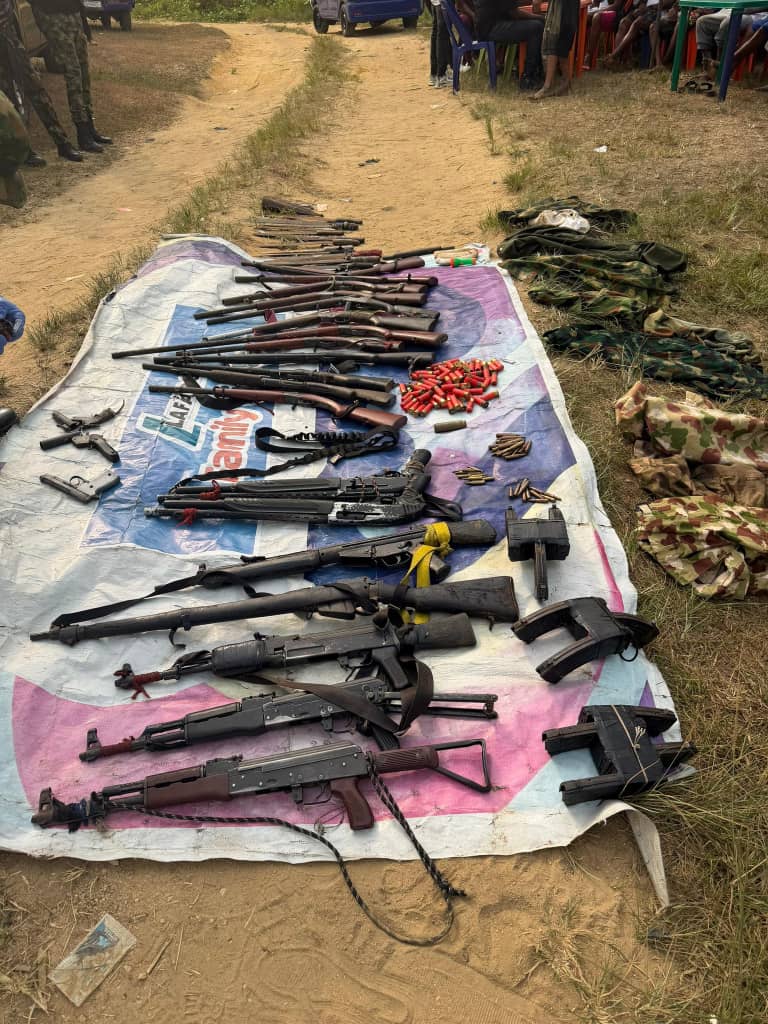
The second camp, commanded by John Isaac, alias Akpokolo, produced 41 fighters. His group, widely known along the waterways as the Akpokolo Marine Forces or “Border Boys,” had long controlled vast stretches of creeks linking Cross River State to neighbouring coastal routes, making them a major player in maritime insecurity.
Security officials further revealed that ten more fighters loyal to Akpokolo are expected to join the amnesty process, bringing the total number of militants who have stepped out of the creeks and into the state-supervised disarmament, rehabilitation and reintegration programme to 80.

Authorities say the surrender underscores growing confidence in the government’s amnesty framework and signals a turning point in efforts to stabilise the coastal communities, enhance maritime security and open up the region for legitimate economic activities.