

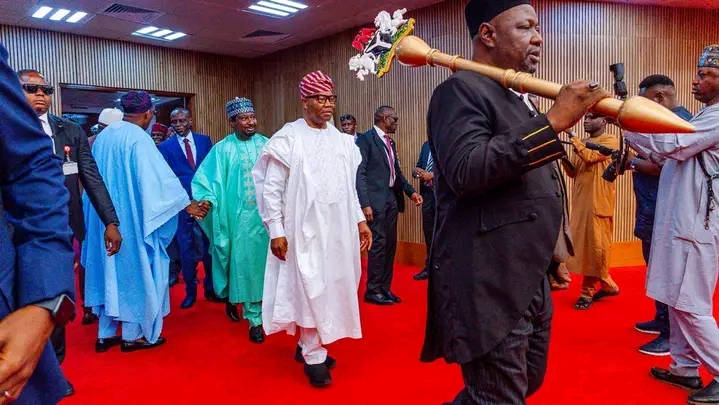
NIGERIA, ABUJA – Senate President Godswill Obot Akpabio presided over plenary where lawmakers unanimously passed the Electoral Bill empowering INEC to electronically transmit results.
The bill authorizes the Independent National Electoral Commission to deploy electronic transmission of election results with manual backup where necessary.
Akpabio disclosed the development through his verified social media handle, a statement sighted by Truth Live News on Tuesday.
He stated that the decision reflected lawmakers’ commitment to strengthening Nigeria’s electoral system through technological reforms and institutional safeguards.
According to him, the electronic transmission framework will enhance transparency while retaining manual alternatives for areas with limited connectivity challenges.
The Senate President did not indicate when the House of Representatives would conclude deliberations on the harmonization process.
The legislation arrives amid sustained public debates about electoral transparency following controversies surrounding the 2023 general elections.
Observers note that previous disputes over result transmission fueled nationwide protests and intensified calls for comprehensive digital electoral reforms.
NEC Conference and Renewed Hope Agenda
Beyond the plenary session, Akpabio represented President Bola Ahmed Tinubu at the second day of the National Economic Council Conference.
The conference convened at the State House, Abuja, focusing on the Renewed Hope National Development Plan and economic transformation strategies.
President Tinubu, according to Akpabio’s post, emphasized that reform demands courage, patience, and consistent implementation across governance institutions.
“Let me be clear, reform is not an event. It is a process,” Tinubu declared at the gathering of policymakers and stakeholders.
He added that decisions reached at the conference must translate into visible improvements in Nigerians’ daily lives and economic realities.
The NEC conference brought together ministers, governors, legislators, and development partners seeking pathways toward national growth and prosperity.
Sources at the conference confirmed that deliberations centered on fiscal reforms, economic diversification, and institutional accountability frameworks.
Mixed Public Reactions Trail Senate Decision
The Senate’s decision immediately generated diverse reactions from citizens across social media platforms monitored by Truth Live News.
Jerry Okafor described absolute real-time electronic transmission as achievable, urging INEC to partner with Starlink for improved rural connectivity.
He argued that INEC’s reported N1.01 trillion 2026 budget allocation eliminates excuses for technological deficiencies nationwide.
- Court Orders Final Forfeiture of $13m Linked to Lagos Socialite
- Spark-A- Spectrum To Mark World Autism Day With Free Screening In Edo, Calls For Improved Data
- NBA Criticises Sowore Over Courtroom Incident in Abuja
- NDDC Admonish Edo Host Communities On Taking Ownership Of Projects
- Breaking: PDP Moves to Heal Internal Rift as Reconciliation Talks Gain Momentum
Fortune Idion welcomed the development but insisted that electronic voting and live transmission should function effortlessly over time.
Saddam Daifuru commended the Senate leadership for recognizing network limitations in rural communities across Nigeria.
He observed that approximately 65 percent of villages lack reliable connectivity, making manual backup necessary for credible elections.
Daifuru maintained that combining manual and electronic systems protects democracy while infrastructure gradually improves.
Iboro Uko urged Nigerians to trust the Senate under Akpabio’s leadership, praising INEC’s steady institutional improvements.
He stated that Rome was not built in a day, emphasizing gradual electoral evolution.
Critics Reject Manual Backup Clause
However, several commentators strongly opposed retaining manual backup provisions within the Electoral Bill framework.
Onyebuchi Okudo insisted that only electronic transmission to the INEC Result Viewing Portal should be permitted.
He argued that additional clauses create loopholes for political manipulation and undermine electoral integrity.
Richard Jonah Akpan-Imoh questioned the continued relevance of manual processes in a digitized democratic environment.
Princess Ikwe Chi called for telecommunication companies to expand rural network coverage instead of retaining manual alternatives.
Ebis Okpeke praised Akpabio’s legislative tolerance and maturity, describing the decision as progressive and well-considered.
Aga Samuel Imoter urged the Senate to ensure transparent, free, and fair elections capable of producing credible leadership.
Clement Moses warned against accepting manually transmitted results if accreditation occurs electronically.
He referenced past electoral disputes, stating that conflicting results damage Nigeria’s democratic credibility.
Allegations of Institutional Deception Surface
Idoreyin James delivered one of the most critical responses, describing manual backup as “repackaged rigging.”
He argued that entrusting presiding officers with electronic transmission authority invites bribery, intimidation, and manipulation.
James questioned why digital infrastructure functions in banking and telecommunications but reportedly fails during elections.
He cited examples of mobile banking, fintech operations, and instant transfers operating seamlessly nationwide.
According to him, Nigeria possesses technological capacity but lacks political will for transparent digital democracy.
He asserted that citizens demand direct, real-time, verifiable electronic transmission without human interference or manual alternatives.
James maintained that postponing elections in network-challenged polling units would better protect electoral integrity.
Ekpenyong Egbe echoed concerns about recurring electoral controversies, calling for credible elections devoid of manipulation.
Shadrach Terungwa advocated mandatory electronic transmission without exceptions, proposing cancellation where glitches occur.
Ubong Akpan described manual voting as outdated, insisting that widespread smartphone usage disproves network failure claims.
Electoral Reform Debate Intensifies
The Senate’s passage of the Electoral Bill marks another chapter in Nigeria’s ongoing electoral reform debate.
Policy analysts observe that balancing technological ambition with infrastructural realities remains a persistent governance challenge.
Supporters argue that hybrid systems prevent disenfranchisement in underserved communities lacking stable connectivity.
Critics counter that manual fallback provisions undermine confidence in electoral transparency and digital accountability.
As Nigeria approaches future electoral cycles, implementation details will determine whether reforms rebuild public trust.
The Presidency has not issued an additional official statement clarifying timelines for operational guidelines.
INEC officials also remain silent regarding procurement strategies and digital infrastructure deployment frameworks.
For now, the Senate’s unanimous vote signals legislative intent, but public skepticism continues shaping national discourse.
Stakeholders across political divides agree on one point: Nigerians demand credible elections reflecting their genuine choices.
Whether electronic transmission with manual backup satisfies that demand remains the central question confronting Nigeria’s democracy.
Most Viewed Posts
- President Tinubu’s Achievements That Strengthen Case For Second Term – Amuna
- Supporting Siminalayi Fubara: Why Rivers People Deserve Continuity Of Purpose In 2027 – Dr William Omuna
- William Omuna Declares Bid For Rivers East Senate, Says It Deserves Senator Who Shows Up
- Budget Without Representation: Outrage as Senator Natasha Alleges Institutional Marginalisation – By Darlington Okpebholo Ray
- Praying for Survival: Inside Nigeria’s Unchecked Violence Against Christians — By Darlington Okpebholo Ray