
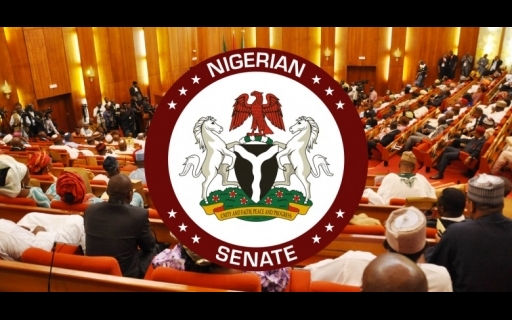
Nigeria’s Senate is to convene an emergency plenary session on Tuesday following mounting public criticism over its recent decision on the electronic transmission of election results.
The move comes after lawmakers passed amendments to the Electoral Act last week that critics say could weaken transparency in future elections. The amendments sparked widespread criticism from civil society groups, opposition figures and members of the public.
Recall that last Thursday, the Senate approved changes that removed a requirement for election results to be transmitted electronically from polling units to the central server of the Independent National Electoral Commission (INEC) “in real time”.
Following the backlash, Senate President Godswill Akpabio summoned senators to an emergency sitting. A notice issued late on Sunday by the Clerk of the Senate, Emmanuel Odo, said the session would begin at 12:00 local time.
The Senate had earlier adjourned plenary until 24 February, shortly after passing the controversial amendment on 5 February.
Senate leaders have since sought to clarify their position amid claims that lawmakers had rejected electronic transmission altogether.
Speaking to journalists after Thursday’s session, the Chairman of the Senate Committee on Information and Public Affairs, Senator Yemi Adaramodu, said the chamber did not oppose electronic transmission of results.
According to him, senators only objected to the phrase “in real time”, citing concerns about poor or non-existent network coverage in some remote parts of the country.
“The Senate did not reject electronic transmission of results,” he said. “What we rejected was the ‘in real time’ clause. In areas where network signals are weak or unavailable, how do you define ‘real time’? Is it five minutes or 30 minutes? That was the challenge.”
The emergency plenary is expected to address the controversy and may determine whether further changes will be made to the amended Electoral Act.
Electronic transmission of results has been a key reform demand by election observers and civil society groups, who argue it would reduce manipulation and improve public confidence in Nigeria’s electoral process.