
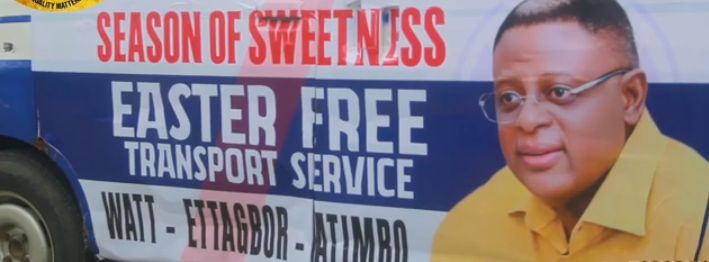
NIGERIA, CALABAR – The Cross River State Government has revealed that its ongoing 63 commercial Buses for Easter free transport scheme is being funded directly by Governor Bassey Edet Otu, as fresh details emerge on sustainability plans.
The disclosure, made during Sparkling FM programme “Let’s Talk Nigeria” and monitored by Truth Live News, comes days after the rollout of the initiative across the state.
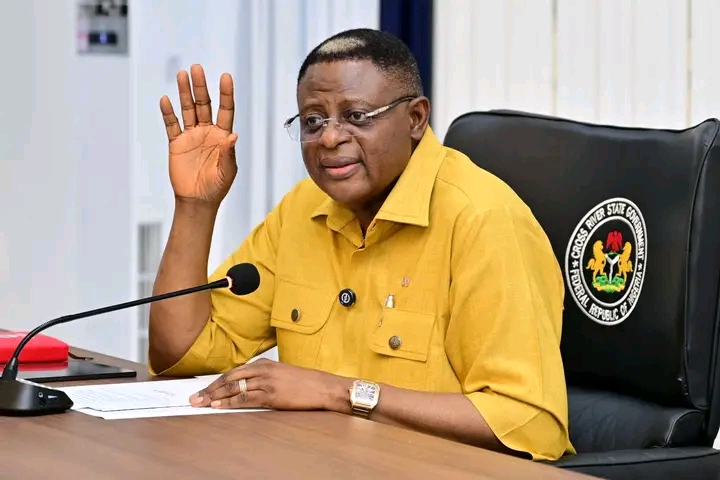
Special Adviser to the Governor on General Duties, Ekpenyong Akiba, said the programme reflects the Governor’s personal intervention to cushion economic pressure on residents.
“The initiative is funded directly by the Governor as part of his personal commitment to supporting citizens during festive seasons,” Akiba stated.
He added that although the scheme has not yet been fully captured as a permanent budget item, discussions are ongoing to institutionalize and sustain it.
Government Eyes Long-Term Sustainability
Akiba disclosed that government officials are currently exploring funding strategies that will enable the programme to continue beyond seasonal interventions like Easter.
According to him, sustaining the scheme will require increased funding, structured planning, and alignment with broader economic and social priorities of the state.
He noted that despite competing demands such as infrastructure development, employment, and public service delivery, efforts are being made to balance resources effectively.
“There are ongoing discussions to develop a long-term structure that will benefit residents continuously,” he said.
63 Buses Deployed Across Key Routes
Beyond funding, the state has maintained full operations of the scheme, with 63 buses currently deployed across multiple routes within and outside Calabar.

The buses operate daily from 7:00 a.m. to 7:00 p.m., conveying passengers to churches, markets, and other destinations during the Easter season.
Akiba explained that the initiative extends beyond Calabar metropolis, covering intercity routes linking Biase, Ogoja, Obanliku, and Yala LGAs.
He emphasized that the scheme supports both mobility and economic activities, particularly the movement of agricultural produce across communities.
Passengers Allowed Luggage, Farm Produce
Officials clarified that passengers are not restricted from travelling with personal belongings, including farm produce and other essential goods.
Akiba noted that families travelling to rural areas often move with food items, while returnees bring back farm produce for consumption or trade.
He said this flexibility enhances local commerce and ensures that the transport intervention supports livelihoods, not just passenger movement.
The programme, he added, has been implemented during previous festive periods to ease transportation challenges and reduce travel costs.
.
Drivers’ Union Confirms Coordination Measures
Chairman of the Unified Commercial Motor Drivers Association, Nta Henshaw, confirmed that operational arrangements have been strengthened following the rollout.
“Officials are being stationed at designated parks to coordinate operations and assist passengers across routes,” Henshaw said during the programme.
He described the partnership between government and commercial drivers as unprecedented, noting that it has improved service delivery and stakeholder engagement.
Henshaw added that drivers and park managers are receiving support packages to ensure safe and efficient transportation throughout the exercise.
Ticket Fees, Fines Reduced for Operators
As part of the initiative, the government has introduced financial relief measures targeting commercial drivers participating in the scheme.
Ticketing fees have been significantly reduced, while operators are exempted from purchasing tickets on weekends and public holidays.
Enforcement fines, previously between ₦80,000 and ₦100,000, have been reduced to about ₦10,000, easing pressure on transport operators.
Traffic-related penalties have also been slashed by 50 percent, a move stakeholders say has improved compliance and reduced conflict.
Improved Relations, Fewer Protests
Henshaw noted that the reforms have strengthened relationships between drivers and government authorities, addressing issues that previously led to protests.
He said dialogue and policy adjustments have replaced confrontation, creating a more stable and cooperative transport environment across the state.
The initiative, according to stakeholders, represents both a welfare intervention and a structural reform within the transport sector.
- Assembly Acts After Reported Council Attack, Suspends Four LGA Lawmakers For 90 Days
- Trump Says US Could Leave NATO, Calls Alliance ‘Paper Tiger’
- INEC Announces Nationwide Voter Registration Ahead of 2027 Elections
- Gov. Otu’s Free Transport Scheme Not Captured In Govt’s Budget – Akiba
- Just In: El-Rufai To Remain In ICPC Custody As Court Adjourns Ruling On Bail Hearing
Branding, Monitoring and Route Efficiency
Authorities have also rebranded vehicles used in the scheme to reflect the state’s tourism identity and improve public awareness.
Passengers are advised to identify official buses through their markings and the presence of uniformed personnel at designated parks.
Monitoring teams have been deployed to locations including Ikom, Ogoja, and Yala to ensure compliance and smooth operations.
Some routes have up to five buses assigned, reducing waiting time and improving efficiency during peak travel hours.
Scheme Duration and Broader Impact
The Easter free transport scheme is expected to run for approximately 16 days, covering peak travel periods associated with the celebration.
Observers say the initiative is already reducing transportation costs, improving mobility, and boosting economic activity across participating communities.
However, attention is increasingly shifting toward sustainability, with stakeholders urging government to formalize funding structures for continuity.
Developing Story
As operations continue, the focus remains on how the government will transition the scheme from a personally funded intervention to a sustainable public programme.
The outcome of ongoing funding discussions could determine whether the initiative becomes a permanent feature or remains a seasonal relief measure.
For now, the programme stands as a significant intervention driven by executive commitment, with thousands of residents benefiting across the state.
This is a developing story. More updates will follow as government outlines concrete funding frameworks and long-term implementation strategies.
Most Viewed Posts
- President Tinubu’s Achievements That Strengthen Case For Second Term – Amuna
- Supporting Siminalayi Fubara: Why Rivers People Deserve Continuity Of Purpose In 2027 – Dr William Omuna
- William Omuna Declares Bid For Rivers East Senate, Says It Deserves Senator Who Shows Up
- Budget Without Representation: Outrage as Senator Natasha Alleges Institutional Marginalisation – By Darlington Okpebholo Ray
- Praying for Survival: Inside Nigeria’s Unchecked Violence Against Christians — By Darlington Okpebholo Ray