

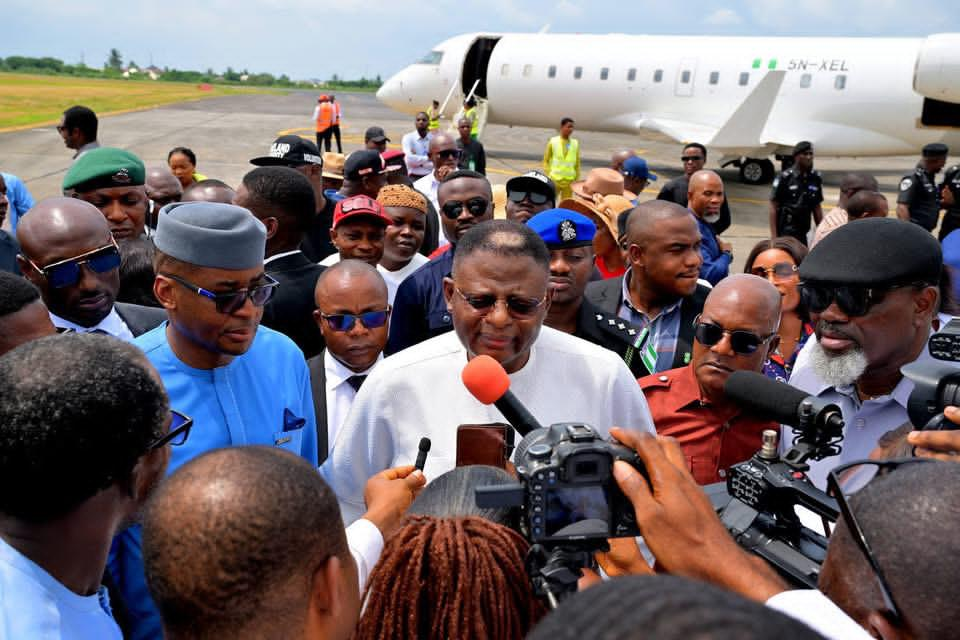
CROSS RIVER, CALABAR – Governor Bassey Otu’s declaration that Cross River will no longer be shortchanged has triggered intense political debate across the state.
Political observers interpret his remarks as a calculated assertion of economic rights within Nigeria’s federal structure.
They argue that reopening conversations around Bakassi and oil wells signals renewed agitation for fiscal justice.
Cross River ceded Bakassi following international adjudication, a decision many residents still consider economically painful.
By referencing that sacrifice, the governor placed historical grievances at the centre of contemporary policy discourse.
Analysts say the statement positions his administration as firm yet constitutionally grounded in its demands.
A senior political analyst in Calabar noted that the speech blends emotional resonance with strategic messaging.
According to him, the governor carefully framed Cross River’s demands as issues of fairness, not confrontation.
He explained that invoking unity and national identity shields the administration from accusations of sectional agitation.
Supporters at the airport described the speech as long overdue and politically reassuring.
A youth leader present at the reception told journalists that the governor “spoke the minds of the people.”
He said many young people feel the state has paid heavily for national peace without commensurate compensation.
Market women interviewed shortly after the event expressed cautious optimism about promised infrastructure renewal.
One trader said bad roads increase transport fares and reduce daily profit margins.
She added that if the governor matches words with action, public trust will deepen.
Leaders of political support groups also welcomed the governor’s renewed emphasis on fairness and development.
They described his return as symbolic, coming amid growing public concern over economic hardship.
Observers believe the timing of the declaration strengthens the administration’s negotiating leverage with federal authorities.
They note that public endorsement provides political capital in intergovernmental engagements.
Government aides, speaking to reporters, confirmed that recent Abuja meetings involved strategic consultations.
They declined to disclose specifics but insisted discussions centred on development partnerships and equitable resource considerations.
The Ministry of Information had earlier shared the governor’s remarks online, reinforcing official communication channels.
- Aiyedatiwa Sacks All Political Aides, Plans Fresh Appointment of 1000
- US Lawmaker Raises Alarm Over Plateau, Kaduna Killings, Warns of Diplomatic Fallout
- Fuel Hike Sparks Protest in Benin as Drivers Block Roads, Increase Fares
- HURIWA Urges DSS to Probe Igboho Over Alleged Threats
- Céline Dion Announces Epic Stage Performance Comeback
Truth Live News sighted the online release and verified the core elements of the speech.
Political commentators argue that amplifying the speech through media platforms widens public engagement.
They say it also signals confidence in transparency and public accountability.
Opposition figures, however, urge caution and demand measurable timelines for promised interventions.
One opposition chieftain stated that rhetoric must translate into visible road rehabilitation and employment opportunities.
He maintained that citizens will judge the administration by performance, not airport declarations.
Despite scepticism from some quarters, many residents view the speech as morale-boosting.
Community leaders emphasised that symbolic statements can galvanise collective confidence during economic strain.
They argue that strong political messaging often precedes decisive administrative action.
Public affairs analysts further observe that the governor’s awards narrative strengthens his credibility.
By presenting honours as collective achievements, he broadened ownership of political success.
This framing, analysts say, reduces partisan tension and encourages shared civic pride.
Youth organisations have since amplified clips of the speech across social media platforms.
Several posts highlight the phrase “We are full-fledged Nigerians” as a rallying point.
Political strategists suggest the phrase may become a recurring theme in future policy communications.
They believe it resonates deeply with citizens who feel economically sidelined.
Civil society actors urge structured dialogue between state and federal institutions on resource equity.
They emphasise constitutional channels as the appropriate pathway for addressing oil well concerns.
Legal experts note that any review of resource allocation requires adherence to established federal laws.
However, they acknowledge that sustained advocacy can influence policy review mechanisms.
As reactions continue, stakeholders expect clearer articulation of the administration’s roadmap.
Many residents anticipate policy briefings detailing infrastructure financing and youth employment frameworks.
For now, the governor’s remarks have redefined political conversation in Cross River.
They have shifted public discourse toward justice, equity, and renewed state assertiveness within Nigeria’s federation.
Most Viewed Posts
- President Tinubu’s Achievements That Strengthen Case For Second Term – Amuna
- Supporting Siminalayi Fubara: Why Rivers People Deserve Continuity Of Purpose In 2027 – Dr William Omuna
- William Omuna Declares Bid For Rivers East Senate, Says It Deserves Senator Who Shows Up
- Budget Without Representation: Outrage as Senator Natasha Alleges Institutional Marginalisation – By Darlington Okpebholo Ray
- Praying for Survival: Inside Nigeria’s Unchecked Violence Against Christians — By Darlington Okpebholo Ray