

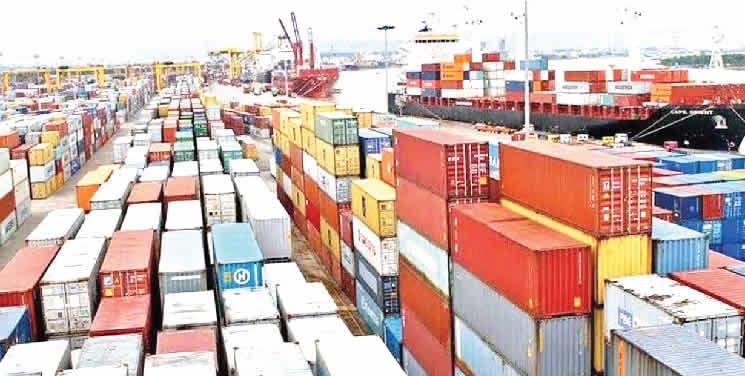
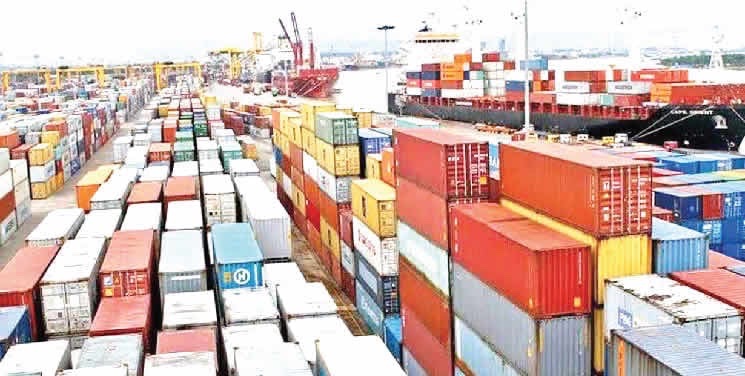
Freight forwarders and clearing agents in Lagos have taken their frustration to the streets physically shutting down operations at three major shipping companies in Apapa over what they describe as arbitrary and unjustifiable increases in port charges that are driving up the cost of imports and squeezing businesses out of existence.
The protest, which began at MSC Shipping’s office along Commercial Road, Apapa on Wednesday 18th of March 2026 was also held at Lagos and Niger Shipping Company and Pacific International Lines, leading to a total shutdown of business operations at the respective shipping companies. The aggrieved freight forwarders maintained that the protests will continue until there is an immediate reversal of the hiked shipping tariffs to the former charges.
Leading the aggrieved freight forwarders, the Zonal Coordinator of the Association of Nigeria Licensed Customs Agents Western Zone, Femi Anifowose, described the actions of the shipping companies as embarrassing, adding that they flouted the Nigerian Shippers Council’s directive to suspend the earlier approved shipping charges increment.
Anifowose also observed that none of these companies held further engagement with their service users as directed by the NSC, which is the port’s economic regulator.
The specific numbers behind the anger are stark. The revised MSC tariffs show that Import Documentation fees for 20-foot containers have risen from N45,000 to N58,500, while those for 40-foot containers jumped from N72,000 to N93,600. Port Additional Charges for 20-foot containers moved from N50,000 to N80,000, and for 40-foot containers from N100,000 to N160,000, all effective January 1, 2026.
The protesting agents argued that the proposed increments are unjustifiable, coming barely three years after shipping companies raised tariffs by more than 400 percent. They further noted that key cost drivers such as foreign exchange rates and diesel prices have relatively stabilised, weakening the basis for another increase.
The broader picture of Nigerian port charges paints a troubling picture of competitiveness. Terminal handling charges in Lagos currently average $457 per container, compared with roughly $284 in Ghana’s Tema and about $180 in Durban, South Africa. Daily demurrage rates are equally steep being that importers in Nigeria may pay as much as N68,500 per day for a 40-foot container, while storage fees in Lomé and Tema typically range between $20 and $30 per day.
The gap is making Nigerian ports increasingly uncompetitive against regional alternatives.
Hidden charges are compounding the official ones. A Lagos-based exporter identified as Ikechukwu Anthony told reporters that many importers and exporters are being forced to pay additional charges not clearly approved by regulatory authorities, including a situation in which he was asked to pay $300 to cancel a booking with a shipping line and an additional $100 that left his company’s online portal blocked for months despite payment. “We are being forced to pay arbitrary charges that are not approved by regulatory authorities. This is exploitation,” he said.
The NSC had earlier intervened following Monday’s shutdown of MSC’s Apapa office. The Council’s Executive Secretary Dr Pius Akutah directed all terminal operators, shipping agents and shipping companies to refrain from implementing any new tariff adjustments until meaningful consultations with stakeholders have been concluded, describing the intervention as aimed at ensuring fair consultation, preventing further disruptions and maintaining harmony in port operations.
That directive was apparently ignored by at least three companies triggering today’s expanded shutdown that swept across multiple firms along Commercial Road.
The protesting groups vowed to sustain the action until shipping companies reverse the planned increases and engage stakeholders on a more transparent and consultative pricing framework.
The ANLCA warned that unchecked increases in shipping fees combined with lingering port inefficiencies are disrupting trade processes and intensifying inflation in Nigeria consequences that ultimately land on ordinary consumers through higher prices for imported goods.