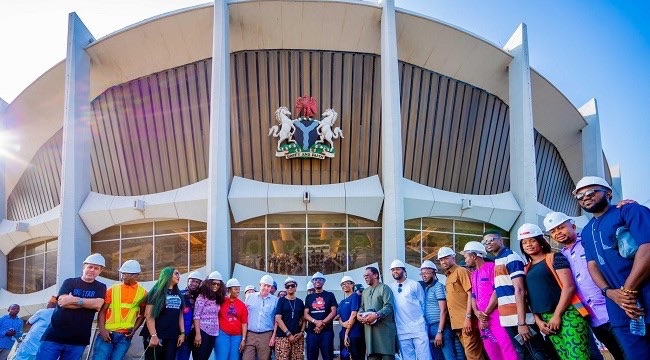

The current management of MOWAA, led by Philip Iheanacho, must also come forward to clarify how the institution is structured, who appoints its board, and to whom it reports. Concerns have been raised that the leadership composition does not reflect the demography of Edo State, with few, if any, indigenes occupying key positions. This imbalance raises valid concerns about whether the people of Edo, whose land and resources birthed the project, are genuine beneficiaries or passive spectators.
If MOWAA is to fulfil its promise, it must also serve as a true employment hub for Edo people. How many local curators, researchers, and conservators are currently on its payroll? How many artisans from Benin’s historic bronze-casting communities have been integrated into its programs? These questions go to the heart of equity, ownership, and inclusion. The network of foreign partners, ranging from the German and Nigerian governments to the Gerda Henkel Foundation, GIZ, the Open Society Foundation, the Ford Foundation, and the Mellon Foundation, adds prestige to the project. Yet, the specific nature of their involvement remains unclear. Are these purely philanthropic relationships, or are there clauses that could compromise Edo State’s cultural sovereignty? Transparency here is non-negotiable. The world’s attention will soon turn to Benin City as MOWAA opens. But the actual test of its success will not be measured by architecture or global acclaim, but by its integrity, inclusiveness, and tangible benefits to the people of Edo State, the locals. As former United Nations Secretary-General Kofi Annan once observed, “Accountability is the glue that binds commitment to results.”A genuine cultural renaissance cannot exist without local participation. Edo’s artisans, sculptors, and historians are the living custodians of the very heritage MOWAA seeks to celebrate. Their expertise must not be sidelined in favour of external actors. If their voices and hands are missing, the project risks becoming an imported symbol of cultural pride rather than a homegrown legacy.
To prevent this, the management of MOWAA must operate under the direct supervision of the Edo State Ministry of Culture and Tourism, working closely with the Office of the Adviser to the Governor on Culture and Tourism. Such oversight will ensure that the museum retains authentic local content, accountability, and alignment with the cultural aspirations of the Edo people. Truth Live News International believes that inclusivity must be the bedrock of sustainability. The museum should publicly release its employment data, recruitment process, and plans for local training and capacity building. This would demonstrate the sincerity of purpose and strengthen public confidence. Handled with transparency, MOWAA could yet become one of Africa’s most powerful cultural and economic assets, a place of learning, innovation, and employment for Edo youth, and a model of how heritage can drive development. But first, it must open its books before it opens its doors. As James Russell Lowell wisely noted, “Democracy gives every man the right to be his own oppressor.” Silence, therefore, is not an option. Governor Okpebholo has a rare opportunity to turn a moment of uncertainty into one of pride and progress. By demanding accountability and insisting on Edo participation, he can ensure that MOWAA truly belongs to the people whose history it was built to honour. By Truth Live News International Editorial Board. Email: info@truthlivenews.com © 2025. All Rights Reserved.