
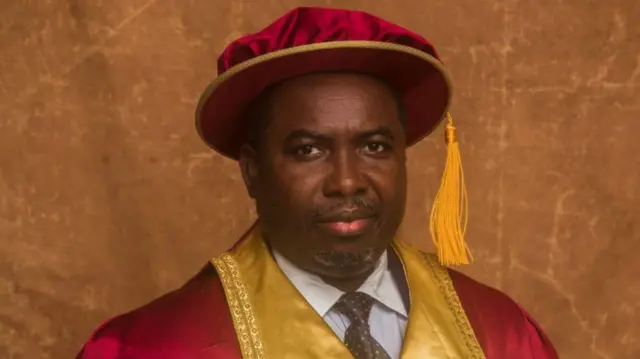
The challenge before him is monumental. He must lead an institution burdened by history and haunted by distrust. He must rebuild systems that have been weakened by internal compromise, bureaucratic inertia, and external manipulation. To achieve this, he must strengthen internal mechanisms of accountability, professionalise electoral management, and uphold transparency as the guiding principle of every process under his watch.
Public confidence is the soul of democracy. Without it, the most elaborate reforms dissolve into cynicism. Nigerians will measure Professor Amupitan’s performance not by his eloquence or academic achievements but by the integrity of the elections conducted under his leadership. The 2027 general elections will be his defining test, a moment when both the nation and history will weigh his conduct on the scales of fairness. To succeed, he must cultivate an inner detachment from political noise and external pressure. The independence of INEC will only be as strong as the will of the man who leads it. He must be seen, both at home and abroad, as a custodian of electoral morality who places country above comfort, and principle above politics. His decisions must reflect the quiet strength of truth and the discipline of conscience.The Editor-in-Chief’s research further reveals that the recurring crisis of trust in Nigeria’s elections is less about technology or logistics and more about perception. Citizens no longer doubt the possibility of credible elections; they question the sincerity of those who manage them. Professor Amupitan’s mission, therefore, is to humanise the institution he leads, to make transparency visible, and to rebuild through example the moral foundation upon which democracy must stand.
Every reform he initiates, every appointment he makes, and every pronouncement he issues must reinforce one message that INEC belongs to Nigerians, not to those who temporarily hold power. The Commission must be seen as the voice of national conscience, a neutral guardian of the people’s will, and not an instrument of partisan convenience. As the 2027 elections approach, Professor Amupitan’s leadership will either inspire renewed faith in the process or deepen the cynicism that has long shadowed Nigeria’s democracy. Neutrality is not optional; it is the essence of his duty. The integrity he brings into the office will determine the credibility that emerges from it. The world is watching, and Nigerians are hopeful that this appointment will mark a turning point in the story of their democracy. Should he rise above fear and favour, Professor Amupitan will not only strengthen an institution but also redeem a nation’s belief in the sanctity of its vote. Truth Live News International maintains that democracy thrives only when truth prevails over propaganda and when institutions are anchored on men and women of conscience. Professor Joash Ojo Amupitan now has the opportunity to demonstrate that moral authority can still triumph in a world dominated by expedience. The burden of trust is heavy, but history has shown that integrity, when consistently upheld, can outlive politics and silence cynicism. In the end, what will matter most is not the controversy that surrounded his nomination, but the conduct that defines his tenure. Nigeria awaits a new chapter in its electoral story, and the pen that will write it now rests in the steady hands of Professor Joash Ojo Amupitan.