

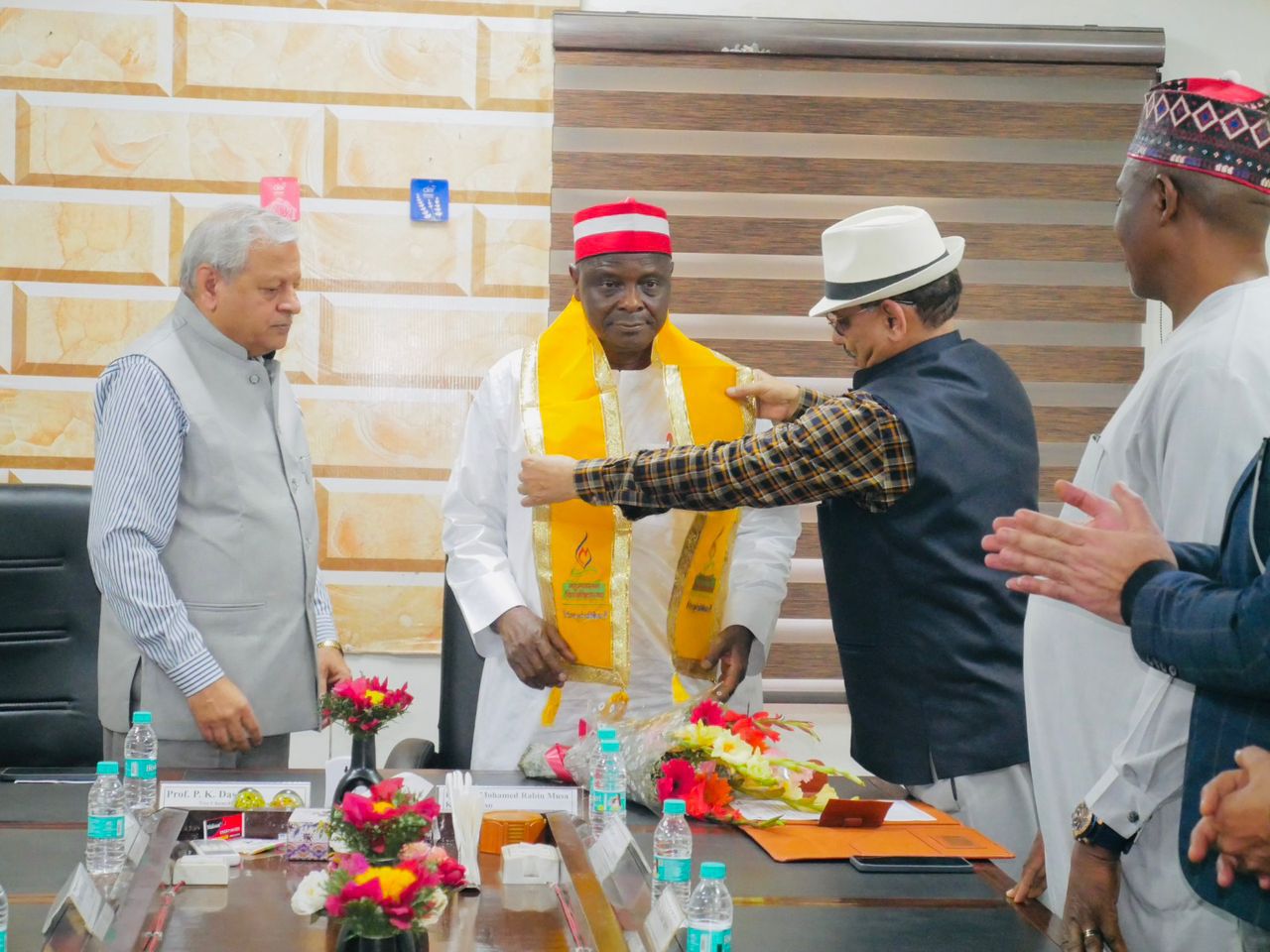
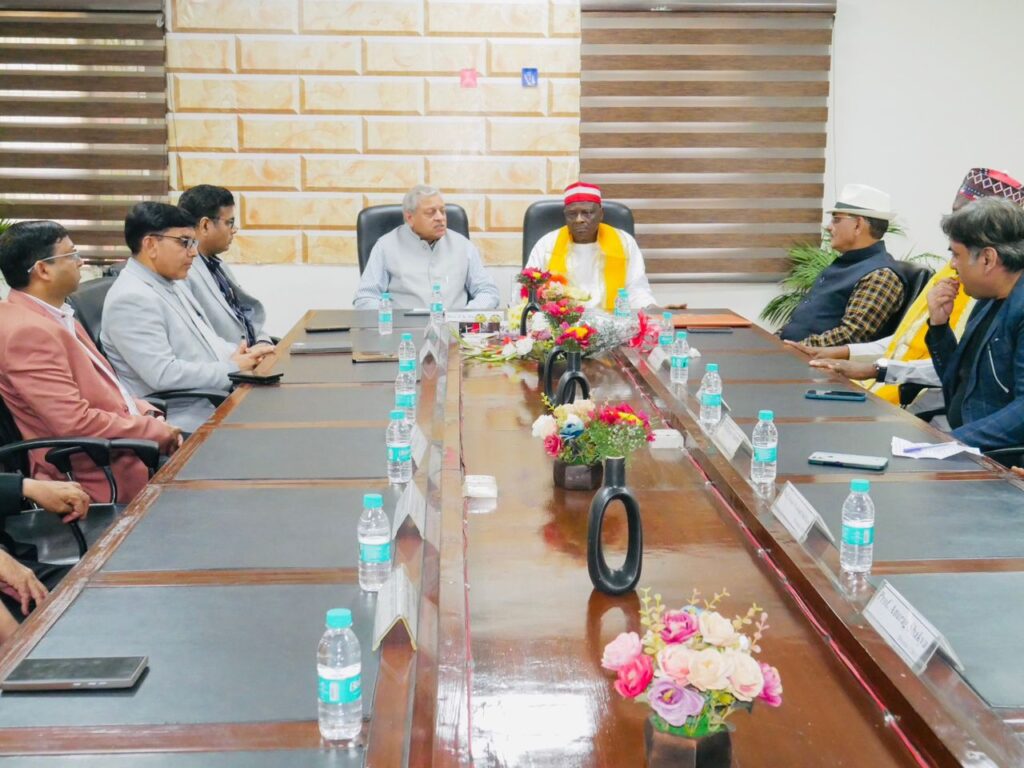
INDIA, UTTAR PRADESH – Rabiu Musa Kwankwaso has visited Mangalayatan University in Aligarh, Uttar Pradesh, India, to pursue academic collaboration opportunities for Nigeria.
Kwankwaso disclosed the development on his official X handle Wednesday, stating that the visit aligns with efforts to elevate educational standards nationwide.
Truth Live News sighted the post on his verified account, where he outlined plans for research partnerships and academic exchange programmes.
The former Kano State governor said the engagement seeks to expand access to quality learning opportunities for Nigerian students and institutions.
Kwankwaso, a former Minister of Defence and 2023 presidential candidate, emphasized mutual growth through structured institutional collaboration.
“As part of ongoing efforts to elevate educational standards and expand access to quality learning opportunities in Nigeria, I had the privilege of visiting Mangalayatan University,” he stated.
He explained that the visit aims to foster meaningful collaborations in research, technology, and academic exchange between Nigerian and Indian institutions.
“This visit seeks to foster meaningful collaborations in research, technology, and academic exchange between Nigerian institutions and their Indian counterparts,” Kwankwaso added.
He stressed that such partnerships would promote innovation and strengthen higher education systems in both countries.
Kwankwaso thanked the university’s leadership for their reception during the visit to the Indian academic institution.
“I extend my heartfelt appreciation to the entire Mangalayatan University community, particularly the Chancellor, Vice Chancellor, Senate, and staff, for their exceptional warmth and hospitality,” he wrote.
The statement signals his continued focus on education policy, a central theme in his political engagements.
Observers note that Nigeria’s tertiary education sector faces persistent challenges, including inadequate funding, infrastructure deficits, and limited research capacity.
Stakeholders argue that international academic partnerships can bridge technological and research gaps in developing systems.
Peace Ambassador described the visit as visionary and forward-looking in a reaction posted online.
“This visit reflects your long-standing commitment to education, innovation, and global collaboration,” the commentator wrote.
He added that partnerships like this would strengthen research, technology transfer, and opportunities for Nigerian students and institutions.
“True leadership is thinking beyond today and investing in the future. Well done, Sir,” he stated.
Zaharaddeen Ibrahim also welcomed the initiative, describing education as central to national stability.
“At this time of the falling apart of local communities, the provision of education is the best key to addressing our problems,” Ibrahim stated.
He expressed support for collaboration in research, technology, and academic exchange between Nigeria and India.
Ibrahim Abdul Akeem commended the initiative and linked it to presidential leadership expectations.
“This is the step who want to be a president of our country should be taken,” he wrote, criticizing leaders who project negative images internationally.
He argued that leadership should focus on constructive engagement rather than public criticism abroad.
- Aiyedatiwa Sacks All Political Aides, Plans Fresh Appointment of 1000
- US Lawmaker Raises Alarm Over Plateau, Kaduna Killings, Warns of Diplomatic Fallout
- Fuel Hike Sparks Protest in Benin as Drivers Block Roads, Increase Fares
- HURIWA Urges DSS to Probe Igboho Over Alleged Threats
- Céline Dion Announces Epic Stage Performance Comeback
However, not all reactions endorsed the visit without reservations.
A group identified as Youths in Process urged that international engagements must produce measurable domestic reforms.
“International visits are fine, but real reform starts at home,” the group stated.
They insisted that partnerships should translate into improved laboratories, funding mechanisms, and academic access within Nigeria.
“Education thrives when citizens demand results, not applause,” the group added.
Another respondent, Dubem, referenced an alleged United States report concerning possible sanctions.
“Sir, you don’t look happy from what I see,” Dubem wrote, linking the visit to alleged external political pressures.
He claimed that enabling extreme religious laws could conflict with secular legal frameworks, potentially attracting international scrutiny.
Kwankwaso did not address the sanctions claim in his official statement.
Buva described the visit as a fantastic initiative capable of opening new academic opportunities.
“Building strong academic partnerships between Nigeria and India can open incredible opportunities for research, innovation, and student exchange,” Buva stated.
Samurai echoed similar sentiments, asserting that the former governor focuses on beneficial international partnerships.
“He only visits nations for partnerships that will be beneficial to his people. Nothing more,” Samurai wrote.
Education analysts say Nigeria-India academic cooperation could enhance technology transfer and postgraduate research exposure.
India remains a major destination for Nigerian students seeking affordable tertiary education and professional training.
Policy experts argue that structured memoranda of understanding can formalize exchange programmes and joint research initiatives.
They also stress the importance of accountability frameworks to ensure agreements translate into tangible outcomes.
Kwankwaso’s visit comes amid broader debates on education reform, funding sustainability, and global competitiveness.
Federal universities have faced repeated strikes in recent years over funding and welfare concerns.
Private institutions continue expanding, but affordability remains a concern for many families.
Analysts observe that cross-border partnerships often attract grants, scholarships, and faculty exchange opportunities.
They caution, however, that local implementation determines long-term impact.
Kwankwaso has consistently positioned education as central to national development and youth empowerment.
During the 2023 presidential campaign, he pledged to prioritize human capital development and research innovation.
The India visit reinforces that narrative and signals sustained international academic outreach.
Stakeholders say the next phase will involve formal agreements and clear implementation roadmaps.
Observers will monitor whether Nigerian universities secure research grants, joint publications, or technology-sharing platforms.
For now, the visit has generated both commendation and scrutiny across digital platforms.
The discourse underscores growing public demand for transparent, results-driven leadership in Nigeria’s education sector.
As debates continue, the focus shifts to measurable outcomes from the proposed Nigeria-India education partnership.
Most Viewed Posts
- President Tinubu’s Achievements That Strengthen Case For Second Term – Amuna
- Supporting Siminalayi Fubara: Why Rivers People Deserve Continuity Of Purpose In 2027 – Dr William Omuna
- William Omuna Declares Bid For Rivers East Senate, Says It Deserves Senator Who Shows Up
- Budget Without Representation: Outrage as Senator Natasha Alleges Institutional Marginalisation – By Darlington Okpebholo Ray
- Praying for Survival: Inside Nigeria’s Unchecked Violence Against Christians — By Darlington Okpebholo Ray