

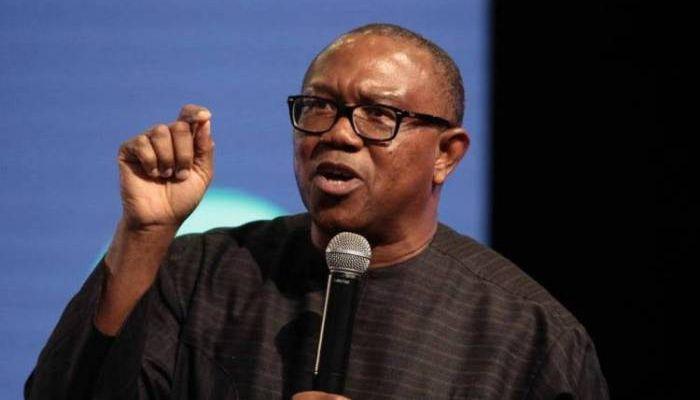
NIGERIA, ABUJA – Fresh allegations of mass abduction in Kaduna State have reignited national concerns over Nigeria’s deepening insecurity, following a strongly worded statement by former Labour Party presidential candidate, Mr. Peter Obi.
In a post sighted by Truth Live News on Mr. Obi’s verified X handle, the former Anambra State governor reacted to reports that about 172 worshippers were allegedly abducted from churches in Kaduna at the weekend.
“What is happening in our country?” Obi asked, expressing alarm over what he described as another disturbing incident in a nation where insecurity has continued to spread “unchecked and unchallenged.”
According to Obi, the reported abduction represents an unfortunate consequence of a society where repeated violent attacks, kidnappings, and mass abductions are gradually becoming normalized in everyday national life.
The former presidential candidate argued that Nigeria should not accept such incidents as routine, insisting that the frequency of reported attacks reflects a deeper crisis of leadership, safety, and national cohesion.
Obi’s reaction comes amid conflicting narratives, as government officials and the Nigeria Police Force reportedly stated they were not aware of any such abduction in Kaduna State.
Despite the official denials, Obi urged Nigerians to interrogate the broader implications of repeated reports of mass kidnappings, disputed casualty figures, and consistent gaps between citizen accounts and official statements.
“Even with the government and police stating they are not aware of this incident, we must ask ourselves hard questions,” Obi wrote, questioning whether Nigerians can continue waking up to such alarming reports.
He noted that whether the Kaduna incident is ultimately confirmed or contested, the sheer frequency of similar reports across the country underscores a grave and unresolved security emergency.
Obi further linked the Kaduna allegations to recent violent incidents in other parts of the country, citing Benue, Zamfara, Kano, Niger, and Plateau states as communities facing persistent insecurity.
“Nigeria is not at war,” Obi stated, yet lamented that the country continues to record victim figures and human losses that, in his view, surpass those of some nations experiencing open conflict.
The former governor criticized what he described as a misplacement of government priorities, arguing that resources appear readily available for waste, propaganda, and foreign lobbying, while communities remain unsafe.
According to Obi, a government that fails to protect lives while funding non-essential expenditures cannot claim to prioritize the welfare and security of its citizens.
- Kenya Authorities Arrest Chinese Man Over Queen Ant Smuggling Attempt
- Seven-Day Ultimatum In Cross River State Heightens Labour Tension
- Nigerians To Share Cost Of Electricity Subsidies, Pay More Tariff For Improved Services – FG
- Nigeria Civil Society Group Urges President to Intervene in Abuja Crisis
- Five Nigerian Soldiers Killed in Boko Haram Suicide Attack in Borno
Security analysts contacted by Truth Live News say Obi’s comments echo growing public frustration over inconsistent security narratives and the absence of timely, transparent information from authorities during crisis situations.
One Abuja-based security expert, who requested anonymity, said repeated denials without detailed investigations risk eroding public trust and worsening fear among already traumatized communities.
In his statement, Obi directly addressed residents of Kaduna State, assuring them of national solidarity and empathy in the face of fear, uncertainty, and grief surrounding the reported abductions.
“To the people of Kaduna, you are not alone. We stand with you,” Obi wrote, extending his message to families whose loved ones were allegedly taken during the attack.
He also expressed prayers and hope that those reportedly abducted would be located and returned safely, while urging swift medical attention for anyone injured during the incident.
Obi acknowledged the possibility that official denials could be accurate, stating that if the reports are untrue, Nigerians should be thankful and grateful to God Almighty.
However, he stressed that if the denials are false, authorities must act decisively, transparently, and urgently to locate victims and bring perpetrators to justice.
Civil society groups have similarly called on security agencies to provide clear, verifiable updates on alleged mass abductions, particularly when such claims involve vulnerable groups like worshippers.
Human rights advocates warn that uncertainty and silence often worsen trauma for families, who are left navigating fear, rumors, and conflicting information in the aftermath of reported attacks.
Kaduna State has, in recent years, remained a flashpoint for banditry and kidnapping, with rural communities and travelers frequently targeted along highways and remote settlements.
Church attacks and mass abductions, when they occur, often generate national outrage due to their symbolic assault on religious freedom and communal safety.
Obi concluded his statement with a broader call for urgent national action, insisting that Nigeria deserves a government that treats human life as sacred and non-negotiable.
“The time to confront this insecurity is now,” he declared, reiterating his long-standing campaign message that meaningful change remains achievable.
He ended the statement with his signature refrain, “A New Nigeria is POssible,” reinforcing his political vision amid ongoing debates about governance, security reform, and national leadership.
As Nigerians await further clarification from security agencies, the Kaduna allegations have once again placed the spotlight on the country’s fragile security architecture and the urgent demand for accountability.
For many citizens, the episode underscores a painful reality: whether confirmed or denied, the fear of abduction has become a defining feature of daily life, demanding urgent and credible solutions.