

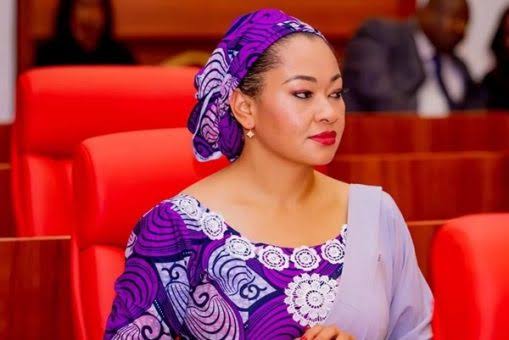
As a journalist and editor in chief with Truth Live News International, I watched with deep concern as this troubling narrative (video) appeared on the verified Facebook page of Natasha Akpoti Uduaghan, the distinguished Senator representing Kogi Central.
What transpired, if accurately presented, is not merely an internal parliamentary misunderstanding. It is a dangerous signal about how dissenting or courageous voices may be treated within the highest legislative chamber of the land.
According to her account, the Senate Committee on the North Central Development Commission was convened under the chairmanship of Titus Zam to deliberate on the Commission’s 2026 budget proposal. Yet, a serving senator from the North Central geopolitical zone, directly elected to represent Kogi Central, was neither notified nor invited. More troubling is the claim that her name was not even listed among senators from the region in the committee register.
If this is true, it is not clerical oversight. It is institutional erasure.
In any functioning democracy, budget deliberations that affect a region must be inclusive of elected representatives from that region. To exclude a senator whose constituency falls squarely within the North Central zone from discussions concerning the North Central Development Commission raises legitimate questions about transparency, fairness, and political intent.
Senator Akpoti Uduaghan’s assertion that she has been systematically frustrated since her return to the Senate paints a picture of a broader pattern. Nigeria has long struggled with a political culture where independence of thought is sometimes mistaken for rebellion, and where assertive representation is treated as inconvenience.
But representation is not a favour granted by committee clerks or chairmen. It is a constitutional mandate derived from the ballot.
The alleged seizure of a staff member’s phone during the confrontation further deepens public concern. In a chamber that prides itself on parliamentary privilege and procedure, resorting to such actions undermines the dignity of the institution. The Senate must never appear threatened by documentation or transparency.
Let it be clearly stated: sidelining an elected senator from budgetary oversight is, by extension, sidelining the people who elected her.
Kogi Central did not send a placeholder to Abuja. It sent a voice. A voice many have come to regard as fearless, outspoken, and unyielding in the pursuit of accountability. Whether one agrees with her style or not, democratic institutions must accommodate, not suppress, strong representation.
The Senate must urgently clarify:
- Why was a North Central senator excluded from a North Central Development Commission session?
- Why was her name absent from the register?
- Under what “protocols and instructions” was this exclusion justified?
Silence or bureaucratic dismissal will not suffice.
Nigeria’s democracy cannot afford the optics, or the reality, of internal marginalisation within its legislature. The chamber must resist becoming a theatre where procedural technicalities are weaponised against independent voices.
As observers and citizens, we must insist on fairness. We must demand transparency. And we must reject any attempt, subtle or overt, to reduce the mandate of the electorate to a mere formality.
Exclusion does not strengthen institutions. It weakens them.
If indeed there are “senate eggheads” orchestrating selective participation, then they must remember: history does not remember gatekeepers kindly. It remembers those who stood firm for their constituents.
Kogi Central deserves representation at every table where its future is discussed. And no democratic structure should ever operate as though that representation is optional.
Deacon Ambassador Darlington Okpebholo Ray, MSc CIPD, BAJ, is a UN Ambassador for Global Peace, journalist, socio-political commentator, and human and civil rights activist. He is a member of the British Association of Journalists and writes on governance, security, religious freedom, and social justice, with a focus on Nigeria and Africa. He writes from South-East London, United Kingdom