
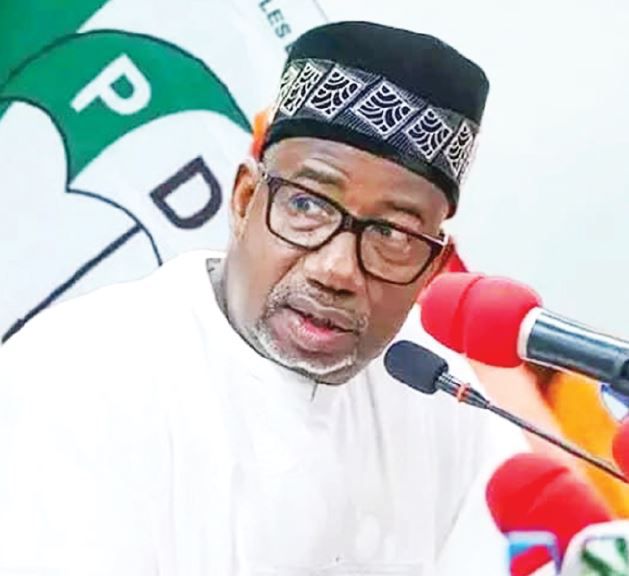
The Bauchi State chapter of the All Progressives Congress (APC) is deeply divided over moves to admit Governor Bala Mohammed into the party, exposing internal cracks amid shifting political alignments ahead of the 2027 general elections.
The rift became evident during a caucus meeting held in Abuja on Wednesday, where party leaders expressed differing views on the implications of the governor’s proposed defection.
In a bid to manage the disagreement, the caucus resolved to constitute a high-powered committee to articulate its position and engage with the party’s national leadership. Acting Secretary of the caucus, Dabo Ismail, said the committee would outline conditions for the governor’s possible admission and ensure that stakeholders in the state are not sidelined.
He noted that while Mohammed is not being excluded from the APC, the process must reflect internal democracy and inclusiveness. The panel, he added, is expected to consult key actors, represent the caucus in negotiations, and provide regular updates on developments.
Despite this, concerns over lack of consultation dominated discussions. The chairman of the state APC caucus and senator representing Bauchi North, Sama’ila Dahuwa, criticised what members described as the exclusion of local stakeholders from ongoing talks.
“The omission is unacceptable,” the caucus said, warning against imposing decisions without broad engagement at the state level.
According to the caucus, sidelining established party structures could undermine internal democracy and destabilise the APC in Bauchi. Dahuwa disclosed that the committee includes prominent figures such as a serving minister, former governors, and two senators, underscoring the significance of the issue.
The caucus also resolved to formally communicate its concerns to the APC national leadership, stressing the need for due process in integrating new entrants. It warned that a poorly handled defection could alienate loyal members and weaken party cohesion.
Mohammed’s reported move comes amid evolving political alliances ahead of 2027. A former Minister of the Federal Capital Territory and a key figure in the Peoples Democratic Party (PDP), he has remained an influential voice in the North-East.
On March 31, 2026, the governor publicly indicated plans to leave the PDP for the African Democratic Congress (ADC), a declaration widely seen as part of broader opposition realignments. However, his position appeared to shift following a closed-door meeting at the Bauchi Government House involving APC National Chairman, Prof. Nentawe Yilwatda, and Kano State Governor, Abba Yusuf.
The meeting intensified speculation that the APC may be exploring a pathway to bring Mohammed into its fold, despite his earlier stance.
Speaking on the situation, Mohammed said, “We have found ourselves in a very serious situation. I have done everything possible to ensure reconciliation, but it has not worked. We set up committees at both the national and state levels to explore all options, including even the APC, but sadly, we discovered that we are not wanted there.”
On April 4, the governor met with loyalists and PDP stakeholders, leading to the formation of an exit committee by the state PDP chairman, Sama’ila Burga.
PDP Publicity Secretary, Dayyabu Chiroma, said the committee had three more days to conclude its assignment, adding that party members would support whatever decision the governor takes.
“Whatever the decision is, we are with our governor. This is not just for loyalty; it is a debt we have to pay. He has shaped Bauchi to a modern face, and we must stand by him,” Chiroma said.
Also commenting, Yusuf Makama, Dass Local Government Coordinator of the Kaura Media Forum, described the development as typical of political dynamics, expressing confidence in the governor’s political influence regardless of his eventual platform.
For the APC in Bauchi, the prospect of welcoming a sitting PDP governor presents both an opportunity and a challenge. While it could strengthen the party’s electoral prospects, it also raises concerns about disrupting existing power structures and the fate of long-standing members.