
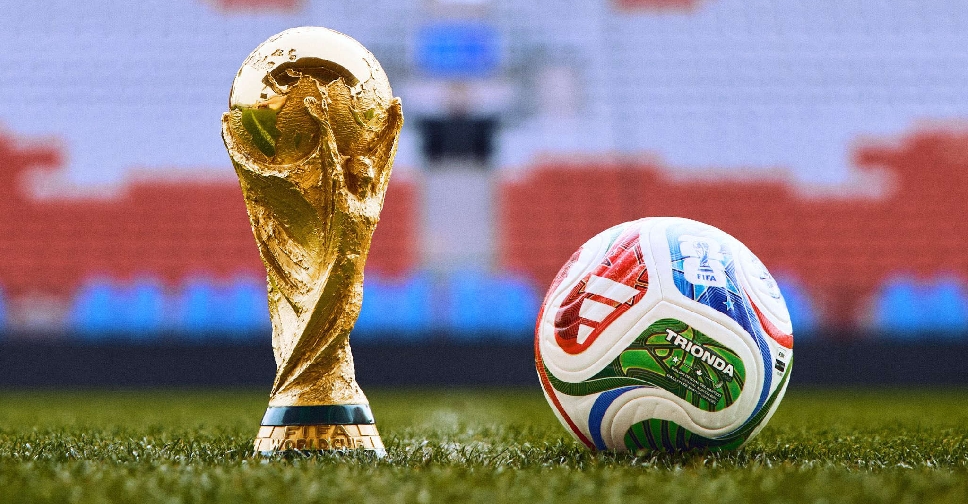
FIFA WORLD CUP – Global football governing authorities have unveiled stricter match management rules for the 2026 FIFA World Cup, targeting time-wasting and on-field delays.
2026 FIFA World Cup organizers confirmed the measures will regulate substitutions, medical stoppages, and restarts to preserve match tempo.
.
According to BBC Sport, officials will strictly enforce countdowns and temporary suspensions to discourage deliberate delays.
The new framework introduces a ten-second limit for substituted players to exit the field of play.
Referees will immediately activate timing once a player’s number appears on the substitution board.
.
If the outgoing player walks slowly or attempts to waste time, the incoming substitute must wait at least one minute before entering.
Officials believe the measure will prevent teams from manipulating stoppages in the closing stages of tightly contested fixtures.
A senior tournament official explained that referees will apply the rule uniformly across all participating teams.
“We want fairness and fluid football,” the official stated, emphasizing that time management remains critical to competitive integrity.
Medical interventions will also attract stricter control under the revised competition regulations.
Any player who requests treatment on the pitch must remain off the field for one full minute after medical attention.
The rule exempts serious injuries or exceptional circumstances determined by the referee and medical team.
Organizers said the decision followed repeated concerns about players exaggerating injuries to disrupt opposition momentum.
An international match assessor told reporters the rule balances player welfare with match continuity.
.
He noted that genuine injuries will always receive priority, but games must not suffer manipulation through minor stoppages.
Throw-ins and goal kicks will equally face new countdown enforcement mechanisms.
Referees will initiate a visible five-second countdown when they suspect intentional delay during restarts.
Failure to return the ball into play within the allocated time will result in immediate sanctions.
If a team delays a throw-in, possession automatically transfers to the opposing side.
In cases involving goal kicks, referees will award a corner kick to the opposing team.
Analysts argue that the penalty structure represents one of the most decisive anti-time-wasting reforms in recent tournaments.
Football development experts say the approach aligns with broader efforts to modernize officiating standards globally.
Supporters have reacted with mixed feelings across social media platforms and fan forums.
Some fans welcomed the rules, insisting that persistent time-wasting undermines the sport’s credibility.
Others cautioned that rigid enforcement could create controversial moments during high-stakes matches.
However, competition authorities maintain that clarity and consistency will guide implementation.
.
Tournament organizers insist referees will undergo additional training before the global showpiece begins.
They added that technological support tools will assist match officials in applying countdown procedures accurately.
The 2026 tournament, jointly hosted by the United States, Canada, and Mexico, will mark an expanded competition format.
Officials believe the new disciplinary framework will ensure uninterrupted entertainment for millions of viewers worldwide.
- AIG Decorates Newly Promoted Police Officers in Anambra
- Soludo Orders Suspension of Absentee Workers After Surprise Visit to Anambra Secretariat
- Varsity Don Decries High Level Of Deforestation, Says 10 Million Hectares Lost Globally Annually
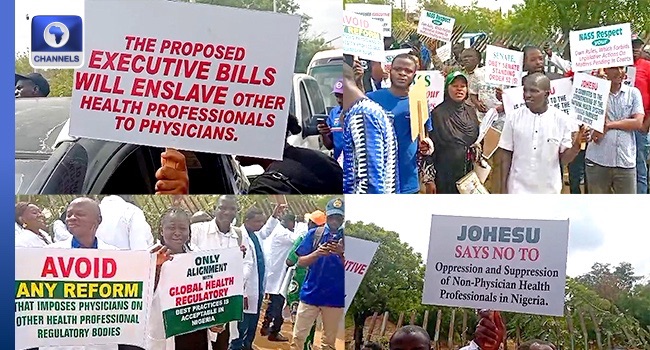
- Health Workers Protest at Unity Fountain Against Regulatory Bill
- Health Workers Protest at Unity Fountain Against Regulatory Bill
Cross River Reconstitutes Ikom Stadium Management Committee
Meanwhile, the Cross River State Sports Commission has constituted a seven-member Management Committee for Ikom Stadium.
The Commission announced the development in a formal press release signed by its Chairman, Etta Lawrence Itanya.
Authorities said the decision aligns with ongoing reforms aimed at strengthening sports administration across Cross River State.
The Commission emphasized its commitment to facility maintenance and grassroots sports development in the region.
According to the statement, the Committee will oversee effective management and optimal utilization of Ikom Stadium.
It will ensure proper preservation of infrastructure and compliance with approved operational guidelines.
Officials charged members to supervise both sporting and non-sporting activities within the stadium premises.
The Committee must also promote revenue generation initiatives consistent with state government policies.
Security enhancement and safety compliance form critical components of its operational mandate.
The Commission further directed members to foster community engagement through inclusive grassroots programs.
Mr. Henry Asima will serve as Chairman of the newly inaugurated Committee.
Other members include Pastor Elias Ajah Uduo, Mr. Amba Egbe Tasen Jnr, and Mr. Sunny Livinus Ogorja.
Ms. Helen Charles Kingsley will function as Secretary of the Committee.
Mr. Sunny Atu and Mr. Erim Jacob Inyang complete the seven-member structure.
The Commission selected members based on competence, integrity, and demonstrable commitment to sports development.
In the press statement, the Chairman expressed confidence in the Committee’s ability to deliver measurable improvements.
“We expect diligence, transparency, and accountability in managing this important public facility,” he stated firmly.
He added that the stadium must evolve into a vibrant hub for excellence and community integration.
Sports stakeholders in Ikom welcomed the initiative and described it as timely.
A local football coach said structured management would attract competitions and youth tournaments to the area.
Community leaders urged collaboration between residents and Committee members to guarantee sustainability.
The Commission called on sports enthusiasts and the public to cooperate fully with the new leadership.
Officials stressed that sustainable stadium operations require shared responsibility and transparent governance.
Observers note that improved facility oversight could position Ikom Stadium for regional tournaments and development programs.
Authorities reaffirmed that accountability mechanisms will monitor the Committee’s performance.
They assured citizens that periodic evaluations will assess operational efficiency and financial transparency.
The dual developments in global football governance and local sports administration signal a renewed focus on discipline and structure.
Both reforms emphasize fairness, efficiency, and responsible management within competitive and administrative spheres.
As preparations intensify for the 2026 FIFA World Cup, stakeholders anticipate stricter officiating and uninterrupted action.
In Cross River, residents look forward to improved management standards and revitalized community sports engagement.
Most Viewed Posts
- President Tinubu’s Achievements That Strengthen Case For Second Term – Amuna
- Supporting Siminalayi Fubara: Why Rivers People Deserve Continuity Of Purpose In 2027 – Dr William Omuna
- William Omuna Declares Bid For Rivers East Senate, Says It Deserves Senator Who Shows Up
- Budget Without Representation: Outrage as Senator Natasha Alleges Institutional Marginalisation – By Darlington Okpebholo Ray
- Praying for Survival: Inside Nigeria’s Unchecked Violence Against Christians — By Darlington Okpebholo Ray