
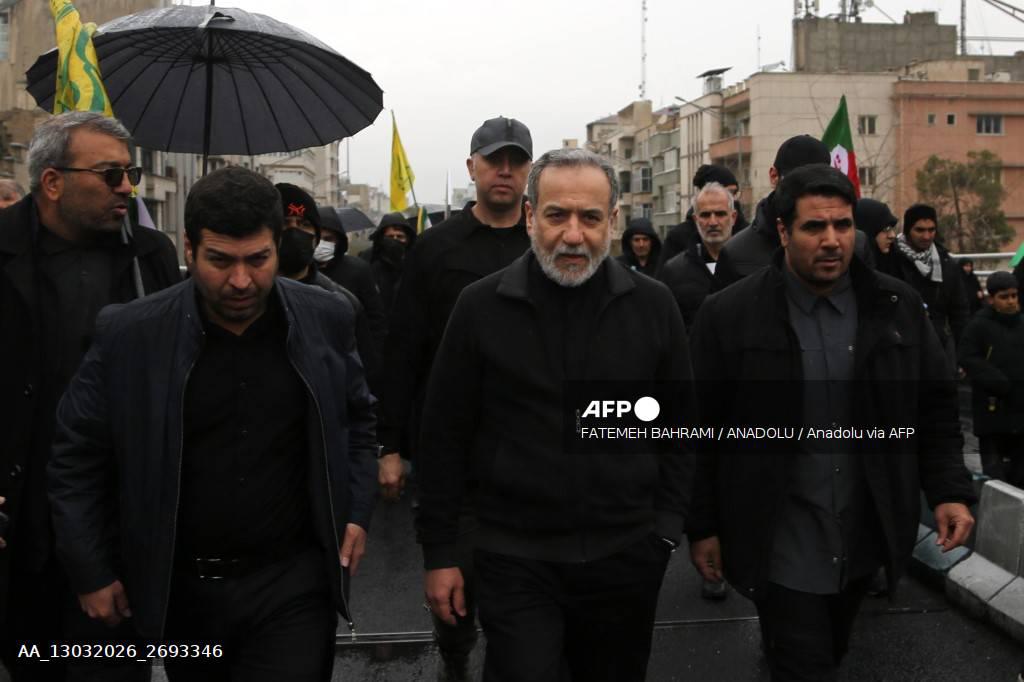
Iran’s Foreign Minister, Abbas Araghchi, has said there are no ongoing negotiations with the United States, insisting that Tehran has not responded to a reported 15 point proposal from Washington aimed at ending the war.
Speaking in an interview with Al Jazeera aired on Wednesday, April 1, 2026, Araghchi said Iran only exchanges messages with the US when necessary but ruled out any formal talks.
“We receive messages from the American side, some direct and some through our friends in the region, and whenever necessary, we respond to these messages,” he said.
“There are no grounds for negotiations,” he added, noting, however, that some communication had taken place with US special envoy, Steve Witkoff.
Iran has been at war with the United States and Israel since February 28, following strikes that killed the country’s supreme leader and triggered a wider regional conflict.
Diplomatic efforts led by countries including Turkey, Egypt, and Pakistan have recently been initiated to end the war. Last week, two senior Pakistani officials said Islamabad conveyed a 15-point US proposal to Tehran.
While some Iranian media reports suggested that Tehran had submitted a five-point counterproposal calling for an end to what it described as “aggression” and guarantees against renewed hostilities, Araghchi dismissed the claims.
He said Iran “has not offered anything in response” to the US plan, describing the reported counterproposal as mere speculation.
The conflict erupted amid ongoing negotiations between Iran and the United States over Tehran’s nuclear programme. It also mirrors a 12-day war in June last year, when Israel launched strikes shortly before a scheduled round of talks between both countries, with the US later joining the attacks on Iranian nuclear facilities.
Araghchi further stated that Iran has “zero” trust in the United States and would not accept a ceasefire, instead demanding a complete end to the war and reparations.
Since the conflict began, now in its second month, Iran has restricted access through the strategic Strait of Hormuz, allowing only limited shipping and disrupting about 20 per cent of global oil flows. Tehran maintains that the waterway is closed to what it calls “enemy” vessels.
Meanwhile, Iranian officials have raised concerns over a possible US ground offensive following the deployment of the USS Tripoli, an amphibious assault ship carrying about 3,500 Marines and sailors, to the region.
Warning of potential escalation, Araghchi said, “We are waiting for them… they will incur heavy losses.”