
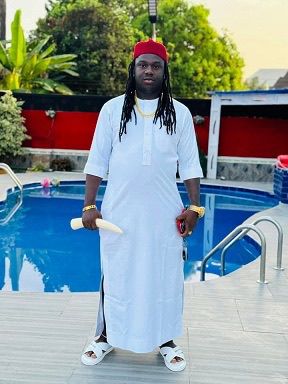
The recent conviction and imprisonment of Chidozie Nwangwu, a traditional spiritual practitioner in Anambra State, has ignited debate over religious freedom and the fairness of laws regulating supernatural claims in Nigeria.
Nwangwu was prosecuted under laws designed to regulate spiritual practices and protect the public from fraudulent claims. However, critics argue that the case highlights a deeper constitutional issue, raising concerns about whether the law is being applied equally across different religious traditions.
Legal analysts say the controversy stems from what appears to be selective enforcement. While certain laws criminalise rituals or spiritual services linked to prosperity or protection in traditional shrines, similar practices in other religious settings, particularly in churches and mosques, often go unchallenged.
Under Sections 38 and 42 of the 1999 Constitution, Nigerians are guaranteed freedom of religion and protection from discrimination. Observers argue that these provisions require the state to treat all belief systems equally, regardless of whether they are indigenous or widely practiced global religions.
Across Nigeria, many religious gatherings involve financial contributions such as tithes, offerings, or seed-sowing. These donations are frequently accompanied by messages that emphasise divine blessings, prosperity, or favour for those who give.
Scholars of religion note that the idea of giving with the expectation of divine reward is not unique to any particular faith. In Christianity, biblical passages such as Malachi 3:10 and Luke 6:38 encourage believers to give with faith in divine blessings. Similarly, Islamic teachings in the Qur’an (2:261 and 65:2–3) highlight the spiritual rewards of charity.
Because of these parallels, some legal commentators say the focus should not be on the belief itself but on whether fraud, deception, coercion, or exploitation occurs. They argue that criminal liability should arise only where there is clear evidence of wrongdoing, rather than assumptions based on cultural bias.
Concerns have also been raised about the argument that individuals seeking spiritual help are especially vulnerable. Experts in psychology and religion say emotional vulnerability is common in many religious settings, including churches, mosques, shrines, and healing centres. As a result, they argue that no single religious group should be singled out for regulation without clear evidence of harm.
Court rulings both within Nigeria and internationally have often emphasised the need for neutrality in matters of faith. In Medical and Dental Practitioners Disciplinary Tribunal v. Okonkwo (2001), Nigeria’s Supreme Court affirmed that constitutional protections extend even to beliefs that others may consider irrational.
Similarly, courts in other jurisdictions have reinforced the principle of protecting minority religious practices. For example, the United States Supreme Court in Church of the Lukumi Babalu Aye v. City of Hialeah (1993) ruled against laws that appeared neutral but effectively targeted a specific religious group.
Legal experts say the central issue in the ongoing debate is whether functionally similar religious practices are being treated differently because of the religion involved.
They maintain that if prosperity-related teachings in mainstream religious institutions are considered lawful expressions of faith, then similar practices in indigenous spiritual traditions should be evaluated under the same legal standards.
Ultimately, the discussion raises broader questions about equality before the law, religious pluralism, and the role of the state in regulating spiritual practices in a diverse society.