

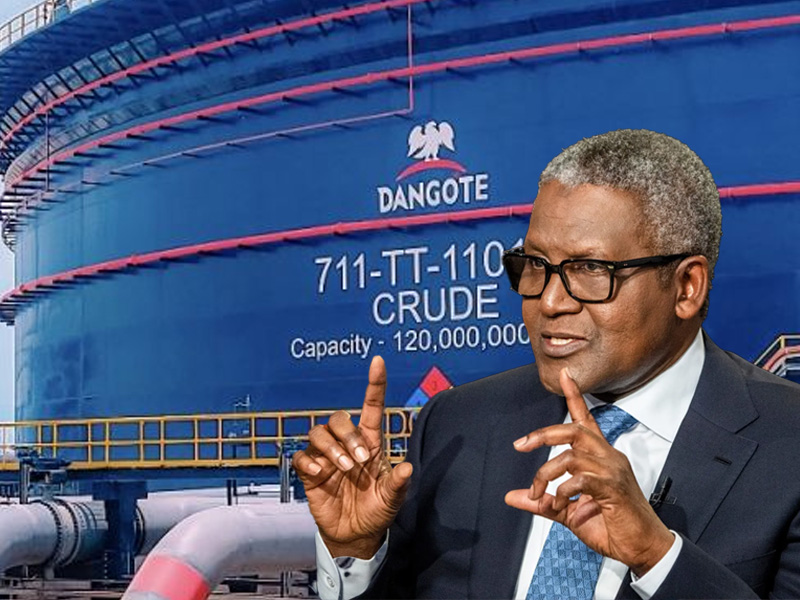
Nigeria’s largest oil refinery has raised concerns about difficulties in securing crude oil from international producers operating in the country, warning that the situation could affect fuel prices and supply.
The President of Dangote Industries Limited, Aliko Dangote, said international oil companies (IOCs) were reluctant to sell crude directly to the refinery, choosing instead to sell to traders.
Speaking during a visit by the United Nations Deputy Secretary-General, Amina Mohammed, at the company’s industrial complex in Ibeju-Lekki, Lagos, Mr Dangote said this practice forces the refinery to repurchase crude at higher prices.
Despite these challenges, he said the refinery has continued operations by importing crude oil from the United States and other African producers, while also benefiting from increased local supply under Nigeria’s naira-for-crude initiative.
Mr Dangote commended the Nigerian National Petroleum Company Limited (NNPCL) for boosting deliveries in March, noting that the refinery received 10 cargoes — six paid for in naira and four in dollars.
He added that the refinery, which has a capacity of 650,000 barrels per day, has exported about 17 cargoes of petrol to other African countries to help stabilise supply across the region.
“What I can do is assure Nigerians and most of West Africa, Central Africa, and East Africa — we have the capacity to supply them,” he said.
The company is seeking increased access to domestically priced crude under local currency arrangements, in a bid to reduce fuel costs and strengthen long-term energy security.
Some economists have suggested alternative approaches to address the issue. One proposal includes supplying crude to local refineries at controlled prices, with the aim of reducing the cost of refined products for consumers.
However, industry analysts say the situation is complex. Economist and oil and gas analyst Dr Marcel Okeke said international oil companies operate within a global market system and are not easily compelled to sell locally.
He explained that many crude oil sales are determined by market forces and existing agreements, including forward sales used by the government to secure loans.
“The market is open and driven by demand and supply,” he said, adding that companies are likely to sell where they can obtain the best price.
Meanwhile, Mr Dangote said the company is also increasing fertiliser exports to support agricultural production across Africa.
During the visit, Ms Mohammed highlighted the broader importance of the company’s operations, particularly in addressing food security challenges. She said the United Nations would support efforts to scale up initiatives capable of reducing the impact of food shortages across the continent.
“I think the UN’s role is to amplify solutions that can help mitigate the food security crisis, and this is one of them,” she said.