

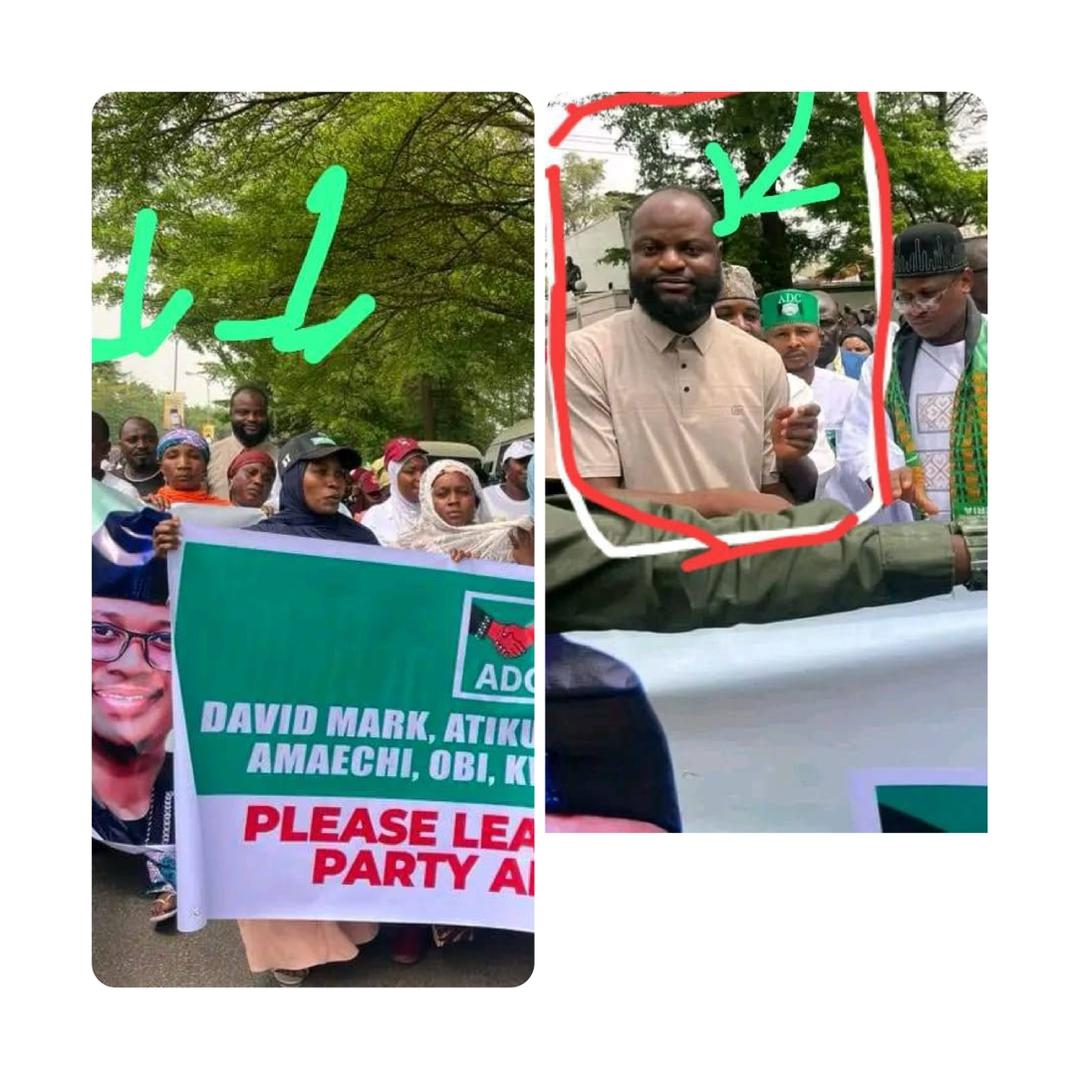
The African Democratic Congress (ADC) has sounded a strong warning over what it describes as “disturbing signs” of external political interference in the party’s internal affairs, particularly amid ongoing controversies surrounding its leadership.
In a statement that underscores growing tension within Nigeria’s opposition space, the party expressed concern over what it called deliberate attempts to manufacture confusion and destabilise its structure. At the centre of the controversy is Ibrahim Lawal Muhammed, popularly known as Dubagari Jnr, whose recent actions have sparked intense scrutiny among party loyalists.
According to information circulating among ADC supporters, Muhammed is allegedly linked to multiple roles within the All Progressives Congress (APC) framework in Nasarawa State. Despite these affiliations, he was reportedly seen spearheading a protest at the headquarters of the Independent National Electoral Commission (INEC) in support of Nafiu Bala—an action the ADC says raises critical questions about political motives and allegiances.
The party insists that such developments cannot be dismissed as mere coincidence. It argues that the involvement of a figure reportedly associated with the APC’s “Renewed Hope” agenda and the Nasarawa State Government in a matter concerning ADC leadership suggests a deeper, more coordinated political strategy.
“This is no longer an internal disagreement,” the party noted. “What we are witnessing bears the hallmarks of a calculated operation designed to undermine and destabilise a growing opposition force.”
ADC supporters further contend that the pattern of events points to a broader agenda. They argue that a ruling party with significant control of state machinery would have little reason to meddle in opposition politics unless it perceives a credible threat.
Consequently, the party has called for full transparency, urging that all individuals, financiers, and political actors linked to the unfolding situation be identified and subjected to public scrutiny. It maintains that Nigerians have a right to know who is behind what it describes as a “sponsored campaign” and the objectives driving it.
Reaffirming its commitment to democratic principles, the ADC declared that no level of pressure, infiltration, or proxy activism would weaken its resolve. The party vowed to continue exposing questionable alliances, demanding institutional accountability, and resisting any attempt to weaponise state power against opposition voices.
“The Nigerian people deserve a fair contest of ideas,” the statement concluded, “not a political environment where power is deployed to silence dissent and manipulate democratic processes.”