
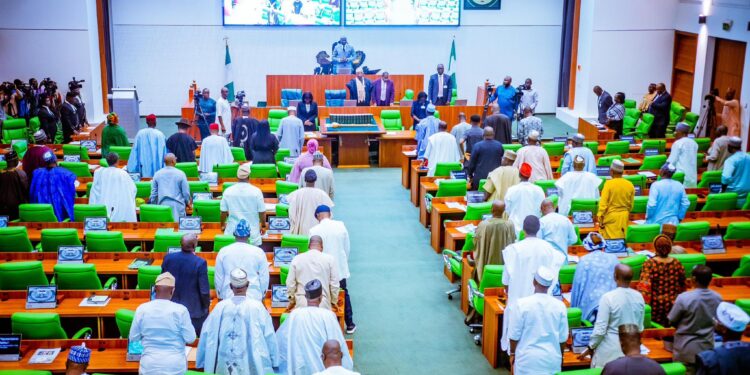
The Nigerian House of Representatives has criticised the country’s telecommunications regulator, the Nigerian Communications Commission (NCC), over what lawmakers describe as persistent poor quality of service in the sector.
The decision followed a motion raised during yesterday’s plenary session by Ahmadu Jaha, who represents the Chibok/Damboa/Gwoza Federal Constituency.
Lawmakers expressed concern over frequent dropped calls, slow internet speeds, and failed message delivery, which they said have continued to frustrate millions of users across the country.
Mr Jaha told the House that telecommunications services have become essential to Nigeria’s economy and daily communication, but argued that there is a growing gap between what subscribers pay for and the quality they receive.
He also criticised the high cost of services, saying it does not reflect the standard of service delivery, and highlighted poor customer support as a recurring problem faced by users.
“We cannot continue to tolerate a situation where citizens pay more but receive less in return,” he said during the debate.
Deputy Minority Whip George Ozodinobi accused telecom operators of prioritising profits over investment in infrastructure, while also faulting the NCC for what he described as weak regulatory enforcement.
“It is like these companies have made enough profits in billions and no longer care about improving the network,” he said, adding that the regulator had become “complacent”.
Following the debate, the House called on telecom companies to invest in modern infrastructure, expand network coverage, particularly in rural areas and improve customer service standards. Lawmakers also urged fairer pricing that reflects service quality.
The House further directed the NCC to strengthen its oversight role, enforce stricter quality standards, and hold service providers accountable for poor performance.
It also resolved to set up an ad hoc committee to investigate the root causes of the ongoing challenges in the telecom sector and recommend possible legislative solutions.
Telecommunications remains one of Nigeria’s fastest-growing sectors, but users across the country have long complained about inconsistent service quality despite repeated regulatory interventions and tariff reviews.
Industry stakeholders say infrastructure gaps, rising demand for data services, and power supply challenges continue to affect network performance, particularly in rural and semi-urban areas.
However, no official response from the NCC or telecom operators had been issued at the time of this report.