
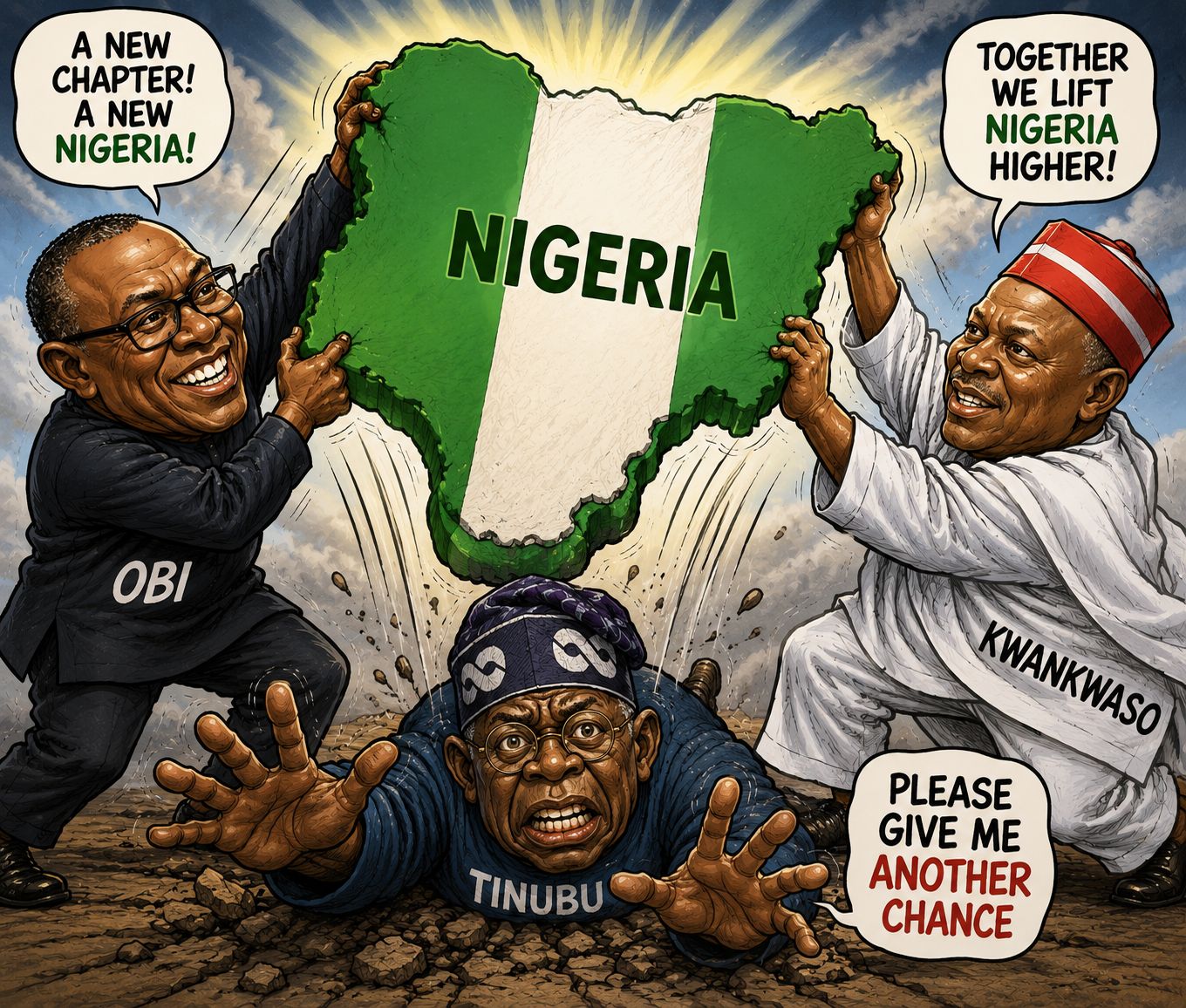
Nigerian politics may be standing at the threshold of a new era, one that could fundamentally alter the nation’s political direction ahead of 2027. The coming together of Peter Obi and Rabiu Musa Kwankwaso under a common political platform is not merely another alliance of convenience. It is fast becoming a movement with the potential to redefine opposition politics in Nigeria and reshape the national conversation on leadership, governance, and democratic renewal.
What makes this development significant is not simply that two major political figures have found common ground, but that their union represents the fusion of two of the strongest grassroots political movements in recent Nigerian history. In the last presidential election, both men commanded substantial electoral support across different regions of the country. Their separate strengths, when viewed collectively, reveal a political force capable of presenting one of the strongest alternatives to the current ruling establishment.
That arithmetic is politically significant.
But beyond numbers lies something far more powerful, momentum, belief, and national yearning for change. Obi commands remarkable appeal among urban youths, first time voters, professionals, and millions of Nigerians frustrated by economic hardship, insecurity, and declining confidence in governance. Kwankwaso maintains deep political roots across Northern Nigeria, with tested grassroots structures and a loyal support base that has remained consistent over time.
Together, they potentially create what Nigerian politics has long lacked, a bridge between North and South, between youthful reform energy and established grassroots mobilization, between fresh ideas and tested political organization.
That is why this alignment is drawing national attention.
The movement of lawmakers, political blocs, and influential stakeholders toward this new political direction has transformed what many initially viewed as an emerging force into a serious national platform with growing influence and legislative presence. In Nigerian politics, defections and realignments often signal where power may be heading. Politicians are naturally drawn toward platforms they believe possess genuine electoral viability.
That is what makes this moment politically consequential.
While many within the ruling establishment publicly dismiss the alliance, political watchers understand that developments of this nature are never ignored in private. The speed of reactions, the increasing political commentary surrounding the alliance, and the growing interest from different quarters suggest that the emerging coalition is commanding attention at the highest levels.
Public dismissal in politics does not always mean private indifference.
Quite often, it means the opposite, careful observation, strategic calculations, and quiet concern over shifting political tides.
However, history offers caution.
Nigeria’s opposition has repeatedly weakened itself, not because of lack of popularity, but because of ego battles, internal sabotage, litigation, zoning disputes, personality clashes, and the inability of leaders to place national interest above personal ambition. If Obi and Kwankwaso truly seek to write a new chapter in Nigeria’s political history, they must resist the old political culture that has destroyed many promising alliances before they matured.
They must build institutions, not personal empires.
They must champion ideas, not merely personalities.
They must inspire trust beyond emotional support.
Most importantly, they must convince Nigerians that they represent not just opposition politics, but a credible and competent governing alternative.
The larger story unfolding is not merely about a political party.
It is about whether Nigeria is witnessing the birth of a formidable democratic movement capable of challenging entrenched political power, or another promising coalition that may eventually collapse under the weight of its own contradictions.
For millions of Nigerians battling hunger, inflation, insecurity, unemployment, and declining faith in public institutions, the hunger is not simply for another political platform.
The hunger is for capable leadership.
The hunger is for accountability.
The hunger is for national rebirth.
If Obi and Kwankwaso can harness that collective hunger, discipline their coalition, and build a truly national movement rooted in justice, competence, and inclusion, then 2027 may no longer be politics as usual.
It may become the election that rewrites Nigeria’s political history.