
The Nigeria Customs Service has intercepted and handed over several stolen luxury vehicles traced to Canada after uncovering an international vehicle smuggling operation at the Tin Can Island Port in Lagos.
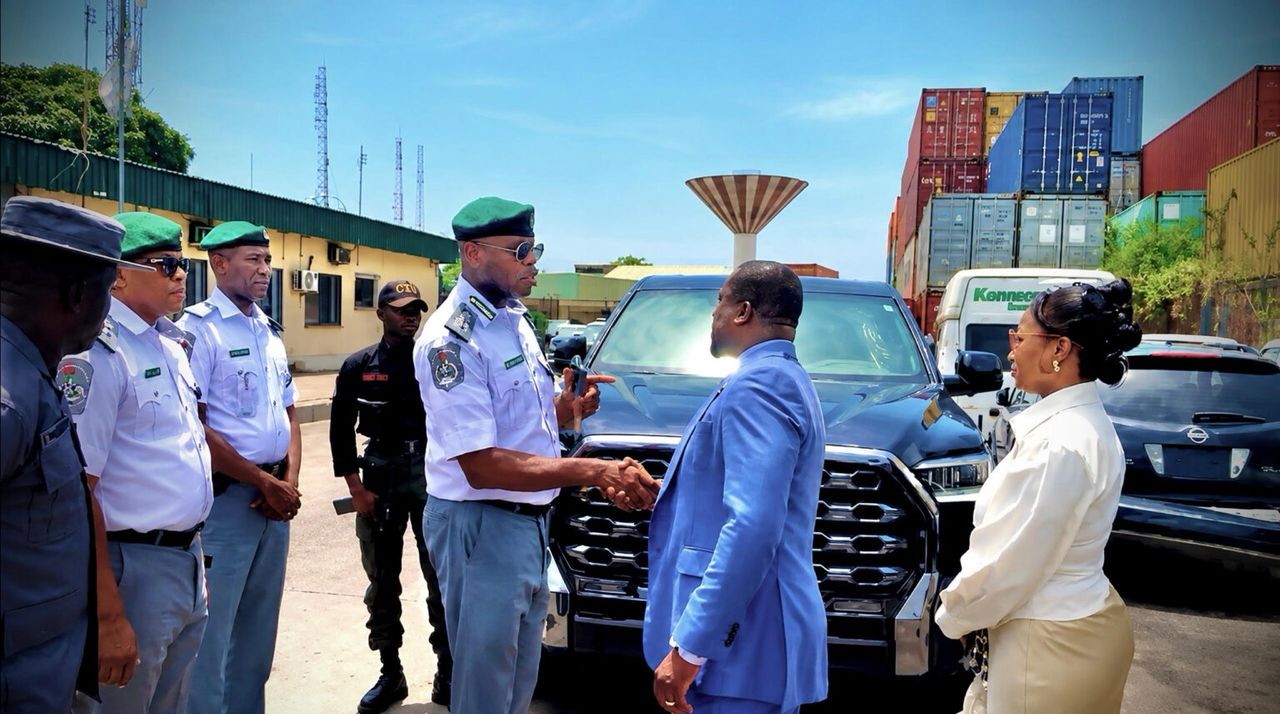
The recovered vehicles, including exotic brands such as Lamborghini, Rolls-Royce and Mercedes-Benz, were formally returned to Canadian authorities during a handover ceremony held on Monday, May 4, 2026.
The Deputy High Commissioner of Canada to Nigeria, Nasser Salihou, received the vehicles from the Customs Area Controller of the Tin Can Island Command, Comptroller Frank Onyeka.
In a statement issued on Sunday, May 10, 2026, the National Public Relations Officer of the NCS, Abdullahi Maiwada, said the operation was made possible through months of intelligence sharing and collaboration between the Nigeria Customs Service and the Royal Canadian Mounted Police.
According to the statement, Canadian authorities had traced several luxury vehicles stolen in Canada and illegally shipped through international smuggling networks before they surfaced in Nigeria.
Customs documents dated May 5, 2026, identified the intercepted vehicles as a 2019 Lexus RX350, 2019 Mercedes-Benz G550, 2023 Land Rover Range Rover, 2019 Lamborghini Huracán, 2021 Rolls-Royce Dawn Convertible, 2018 Lamborghini Aventador and a 2026 Toyota Tundra.
The service confirmed that all the vehicles were stolen abroad before being smuggled into Nigeria.
Maiwada stated, “As part of ongoing efforts to strengthen international confidence in Nigeria’s anti-smuggling and cargo intelligence system, the Nigeria Customs Service has formally handed over intercepted stolen luxury vehicles traced to Canada.”
Speaking during the handover ceremony, Onyeka revealed that one of the vehicles, a Toyota Tacoma, had been secretly concealed inside a container transporting other vehicles before Customs officers intercepted it.
“What appeared to be a routine cargo movement quickly turned into an international criminal investigation,” Onyeka said.
“Once intelligence reached us, we immediately placed the consignment under enforcement watch and secured the vehicle pending confirmation from Canadian authorities.”
He explained that Customs officers isolated the container after receiving intelligence reports and shipping documents from Canadian authorities through official diplomatic and enforcement channels.
According to him, the vehicles were deliberately withheld from release until Canadian officials arrived in Nigeria to verify and recover them.
“We had people who wanted to intervene on behalf of others, but the matter was too sensitive.
“We insisted the handover must be directly to the Canadian government to preserve the integrity of the process,” he added.
Onyeka described the operation as a strong indication of Nigeria’s growing capacity to combat transnational organised crime and stolen vehicle trafficking.
He noted that criminal syndicates increasingly exploit global shipping routes to move stolen vehicles across continents while disguising them as legitimate cargo.
The Customs boss added that the successful operation underscored the service’s commitment to strengthening cargo profiling, intelligence gathering and maritime enforcement.
He said the development also highlighted the growing security cooperation between Nigeria and Canada in tackling organised cross-border crimes involving stolen assets and illicit trade.
The interception comes amid rising global concerns over international vehicle theft syndicates exploiting weak shipping controls to smuggle stolen luxury vehicles into emerging markets.
Security experts have warned that African ports are becoming attractive destinations for such criminal networks due to the high demand for exotic automobiles and weak verification systems in some jurisdictions.
However, Nigerian authorities maintain that recent improvements in cargo intelligence and international collaboration are helping to tighten surveillance across the country’s seaports.
Tin Can Island Port remains one of Nigeria’s busiest gateways for imported vehicles and containerised cargo, processing thousands of shipments annually.