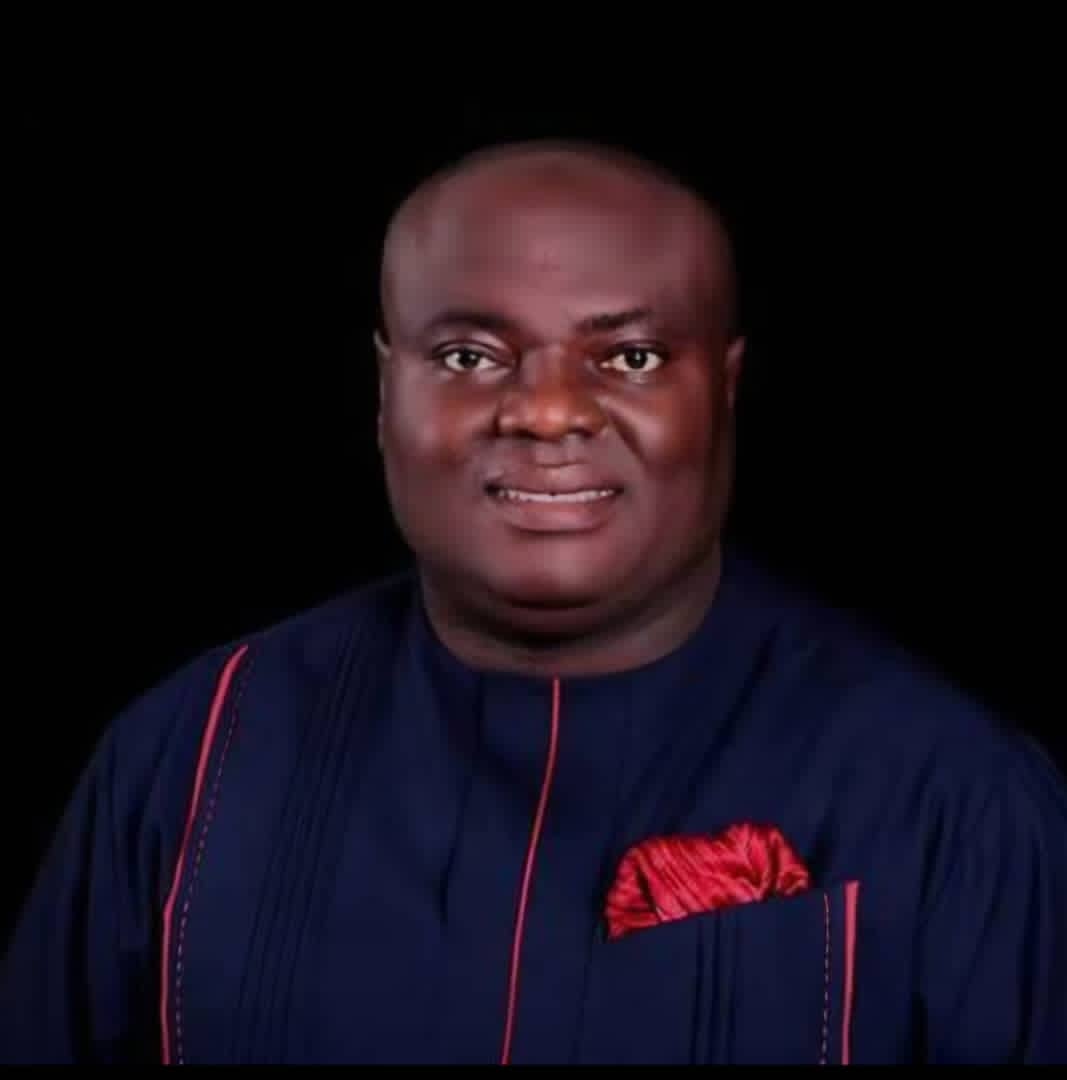


There is something profoundly ironic about the sudden emotional solidarity now being extended to Pastor Osagie Ize-Iyamu by many of the same political forces that spent years opposing him, ridiculing him, undermining him, and celebrating his political setbacks.
Today, social media is awash with dramatic essays, philosophical outrage, and carefully manufactured sympathy, all supposedly in defence of a man many of these actors never genuinely supported when it truly mattered.
Politics can be intensely theatrical.
Edo politics, in particular, suffers from selective memory and convenient morality.
Many of the loudest voices now pretending to be defenders of Pastor Osagie Ize-Iyamu were among the most passionate supporters of Godwin Obaseki during the years Pastor Ize-Iyamu was demonised, mocked, politically isolated, and portrayed as unacceptable. These were the same people who weaponised propaganda, elite sentiment, state influence, and social hostility against him.
Where exactly was this emotional loyalty in 2016?
Where was it in 2020?
The answer is obvious.
What we are witnessing today is not love for Pastor Osagie Ize-Iyamu. It is the familiar opposition strategy of exploiting perceived tensions within the APC in order to manufacture instability inside the ruling party.
That is the real issue.
Let us also be honest enough to confront another uncomfortable truth. If Pastor Osagie Ize-Iyamu himself were Governor of Edo State today, does anyone sincerely believe he would permit competing centres of authority around him or tolerate the kind of open resistance and unrestrained insolence now being directed at Governor Monday Okpebholo?
Nobody who has followed Edo politics since 1999 believes that.
Pastor Osagie Ize-Iyamu is too experienced a political strategist not to understand the necessity of central authority within a governing structure. He understands power. He understands political coordination. He understands discipline. Indeed, part of his enduring political relevance comes precisely from his deep understanding of political control and structure management.
That reality is precisely why some of the present outrage appears deeply artificial.
Politics cannot function where every influential actor insists on becoming a parallel authority to the sitting Governor. Every serious political structure naturally gravitates toward the Governor as the stabilising centre of power. That is not wickedness. That is institutional logic.
It is equally important to remember that Pastor Osagie Ize-Iyamu himself benefited immensely from party loyalty and institutional support at critical moments in his political journey. In 2016 and again in 2020, the PDP and later the APC rallied massively behind him over several other aspirants and interests. Many people buried personal ambitions, subordinated preferences, and endured disappointments in the collective interest of party cohesion.
With the greatest respect to him, things cannot perpetually go one man’s way in politics.
That is not how political institutions survive.
If we are being completely truthful, Pastor Osagie Ize-Iyamu’s political trajectory reveals a recurring pattern. Whenever events fail to align with his expectations, the political temperature rises dramatically around him. He roars. His supporters roar. Tensions escalate. Pressure mounts.
Imagine, however, if every major political actor behaved similarly each time outcomes failed to favour them.
There would be permanent conflagration within the political system.
No structure can survive under such conditions.
Maturity in politics sometimes demands restraint, even in disappointment. It demands the wisdom to preserve the larger house rather than set it ablaze simply because one room no longer pleases us.
Ironically, many of those now amplifying tensions within the APC are individuals who would probably never support Pastor Osagie Ize-Iyamu electorally if he contested tomorrow under the APC platform again. Their present activism therefore appears less like loyalty and more like opportunistic investment in potential APC instability.
Edo people are politically intelligent enough to recognise this choreography.
Let me also state this clearly. Respecting Governor Monday Okpebholo as the present leader of the APC in Edo State does not amount to hatred for Pastor Osagie Ize-Iyamu. The two realities are not mutually exclusive. A mature political structure must possess sufficient wisdom to honour its elder statesmen while simultaneously consolidating around present authority.
That is how enduring political movements survive.
The old Unity Party of Nigeria under Obafemi Awolowo understood this principle. The enduring political structure built over decades in Lagos around Bola Ahmed Tinubu equally reflects the importance of cohesion, discipline, and recognition of a coordinating authority.
Without discipline, political parties decay from within.
Without restraint, ambition becomes institutional sabotage.
Without cohesion, governance eventually loses rhythm.
Pastor Osagie Ize-Iyamu remains an important figure in Edo politics. His contributions are undeniable. His experience is valuable. His place in Edo political history is secure.
The APC, however, like every governing political structure, must necessarily consolidate around its sitting Governor if stability, continuity, and long-term viability are to endure.
That is not persecution.
That is political reality.