

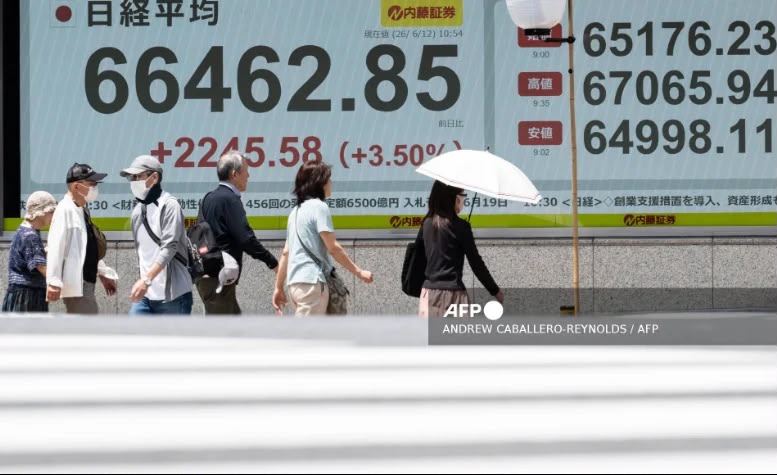
Global oil prices fell sharply while stock markets surged on Monday after the United States and Iran announced a deal to end their three-month conflict and reopen the Strait of Hormuz, easing fears of prolonged disruptions to global energy supplies.
The agreement, first announced by mediator Pakistan, is expected to be formally signed in Switzerland on June 19, marking a major breakthrough in efforts to end a conflict that had driven up oil prices and reignited concerns about global inflation.
The Strait of Hormuz, one of the world’s most critical energy shipping routes through which about 20 per cent of global crude oil supplies pass, was effectively closed by Iran following US-Israeli strikes that triggered the conflict.
US President Donald Trump confirmed the agreement on Sunday, declaring on social media that the deal with Iran had been completed.
“I hereby fully authorise the toll-free opening of the Strait of Hormuz,” Trump wrote. “Ships of the World, start your engines. Let the oil flow!”
Iran’s Deputy Foreign Minister, Kazem Gharibabadi, also confirmed the breakthrough, saying the agreement brought an “immediate end” to the war, while negotiations on a final settlement would continue over the next two months.
Although details of the agreement have yet to be made public, financial markets reacted positively to the development.
Crude oil prices dropped by more than five per cent, with West Texas Intermediate crude trading near $83.30 per barrel. The benchmark contracts have steadily retreated after initially surging above $110 per barrel at the onset of hostilities.
The decline in oil prices helped calm fears that rising energy costs could fuel inflation and force central banks to resume interest rate hikes.
Recent US economic data showing stronger-than-expected consumer prices and robust job growth had increased expectations that the Federal Reserve could tighten monetary policy before the end of the year.
Stephen Innes of SPI Asset Management said the easing of geopolitical tensions had quickly changed market sentiment.
“Oil down takes the inflation impulse down. Lower inflation risk takes some of the Fed-hike premium out of the curve. Lower yields give duration and growth equities room to breathe,” he said.
He added that investors were now shifting from “bunker pricing to reopening pricing” as concerns about the conflict eased.
However, analysts cautioned that the durability of the agreement would depend on the details of the final deal and the commitment of all parties involved.
Michael Wan of MUFG said the development was encouraging for the global economy but warned that its long-term success remained uncertain until the negotiated terms become clear.
Asian stock markets rallied strongly on the news, with Tokyo and Seoul each closing about five per cent higher. Technology stocks led gains, supported by continued investor optimism following SpaceX’s record-breaking $75 billion initial public offering last week.
Major indices in Shanghai, Sydney, Singapore and Taipei also advanced by more than one per cent, while Hong Kong posted modest gains. European markets, including London, Paris and Frankfurt, opened higher.
Indonesia’s stock market jumped more than four per cent as easing concerns over energy prices boosted confidence in the country’s currency, with the rupiah strengthening to its highest level since May.
Investors are now closely watching preparations for the official signing ceremony in Switzerland, as well as further developments regarding maritime security in the Strait of Hormuz and regional stability in the Middle East.
AFP