
Lucky Obukohwo, Reporting
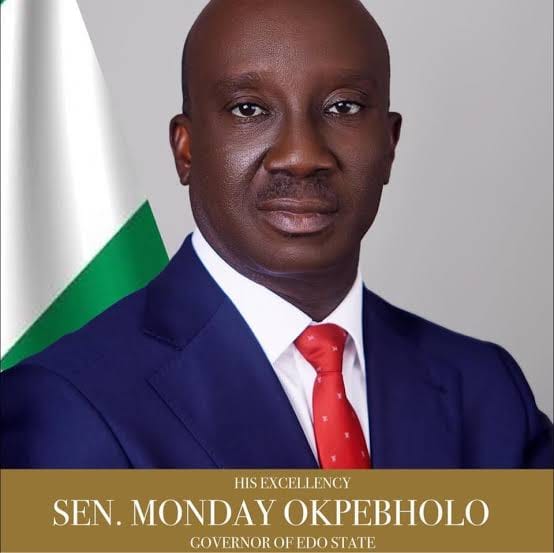
The Edo State Government has rejected the interpretation of the 2026 Phillips Consulting States Performance Index (pSPI), insisting that the ranking largely reflects challenges inherited by Governor Monday Okpebholo’s administration rather than its own performance.
In a statement issued by the Commissioner for Information and Strategy, Prince Kassim Afegbua, the government stressed that Okpebholo assumed office on November 12, 2024 after a substantial portion of the period covered by the assessment had already elapsed.
The government maintained that the timing was crucial to any fair assessment of the report, arguing that several of the indicators used in the ranking were influenced by policies, budgets, expenditure decisions and institutional conditions established before the current administration took office.
It therefore cautioned against attributing the reported outcomes entirely to the Okpebholo administration, describing such an interpretation as misleading and disconnected from the realities inherited by the government.
According to the state government, a proper evaluation of the administration’s performance should take into account the conditions it met on assumption of office, the reforms it has initiated since then, and the time required for those interventions to produce measurable results.
The statement, titled “Phillips Consulting and the Politics of Figures: An Edo State Government Response to the 2026 Phillips Consulting States Performance Index (pSPI),” said the government welcomed independent governance assessments as instruments for promoting accountability, transparency and continuous improvement.
It, however, cautioned against conclusions that went beyond what the report could reasonably establish, particularly in relation to Edo State.
According to the government, indicators such as citizen satisfaction, internally generated revenue, revenue self-reliance, debt sustainability, fiscal management, audited financial information and governance outcomes are useful in assessing state performance, but many are cumulative and develop over extended periods.
It therefore maintained that such indicators could not be fundamentally altered within weeks of a new administration assuming office.
“The central issue raised by the Edo State Government is not whether governance should be measured. Rather, it is whether historical outcomes should automatically be attributed to a government that did not formulate or implement the policies that produced those outcomes,” the statement said.
The government further argued that democratic accountability requires administrations to be assessed based on policies implemented during their constitutional tenure.
It said the present administration had since assumption of office embarked on reforms aimed at changing what it described as the developmental trajectory inherited from its predecessor.
The government said it had strengthened revenue administration and introduced measures to improve internally generated revenue while reducing leakages.
It also listed road construction and rehabilitation across the three senatorial districts as part of its infrastructure interventions, saying the projects were aimed at improving connectivity, economic activity and public access.
In the education sector, the administration said it had regularised the appointments of more than 5,000 teachers and renovated or rehabilitated over 80 public schools.
The government also claimed that more than 70 primary healthcare centres had been constructed, upgraded or rehabilitated, while additional healthcare personnel had been recruited to improve access to healthcare services.
On security, the administration said it had deployed about 2,500 Security Corps personnel and 500 Forest Guards to work alongside conventional security agencies in tackling kidnapping, cultism and other violent crimes.
Other areas highlighted by the government included urban renewal, market reconstruction, public service reforms and youth development programmes undertaken through partnerships with federal institutions and development partners.
The government said future editions of governance assessments would provide a more direct basis for evaluating the performance of the Okpebholo administration, as more of its policies and programmes become reflected in the data.
It urged the public to interpret the 2026 pSPI within the context of its methodology, assessment period and the constitutional timeline of governance.
“The 2026 Phillips Consulting States Performance Index should be understood as an important analytical exercise that substantially reflects historical conditions preceding the present administration,” the government said.
It added that the report should not be regarded as a definitive assessment of an administration that assumed office on November 12, 2024, after most of the assessment period had elapsed.
The state government expressed confidence that future independent assessments conducted over the full tenure of the present administration would provide a more comprehensive evaluation of the impact of its policies and reforms.
“Ultimately, governance should be judged not merely by inherited circumstances but by the vision, leadership and measurable progress achieved in transforming them,” it said.