
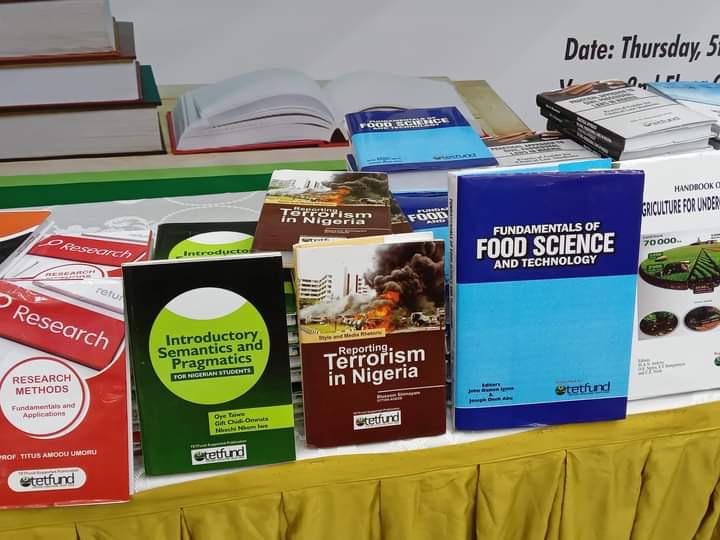
In a major policy shift aimed at ending the proliferation of substandard educational materials, the Federal Government of Nigeria has officially introduced a National Textbook Ranking System for all primary, junior, and senior secondary schools.
The initiative, announced on Monday, April 27, 2026, marks a decisive move to strengthen quality assurance, enforce curriculum compliance, and alleviate the financial burden on parents across the federation.
The Minister of Education, Dr. Maruf Tunji Alausa, alongside the Minister of State for Education, Prof. Suwaiba Sai’d Ahmad, unveiled the new framework in Abuja, emphasizing that the current system had become unsustainable. Under the previous regime, the Nigerian Educational Research and Development Council (NERDC) would approve textbooks based on minimum standards, often resulting in as many as 50 different approved titles for a single subject.
This lack of differentiation allowed lower-quality instructional materials to circulate alongside superior ones, creating confusion for educators and varying standards of learning for students.
Under the newly inaugurated system, the NERDC retains its statutory role but will now oversee a rigorous secondary evaluation process. Expert-led Standing Subject Committees will be constituted to assess textbooks against strict academic benchmarks, assigning them a rank that reflects their quality and relevance.
Crucially, the government intends to cap the number of officially ranked textbooks with indications suggesting a limit of approximately seven per subject to streamline selection for schools. Any textbook that fails to secure a spot on this national ranking list will be prohibited from classrooms nationwide, regardless of any prior licensing or approval status it may have held.
Beyond academic standardization, the reform targets exploitative publishing practices that have historically pressured Nigerian families. Minister Alausa specifically criticized the “bundling” of workbooks and consumables with core textbooks, a tactic that often forced parents to purchase entirely new sets of books every year. To combat this, the new policy mandates that ranked textbooks remain in use for a minimum of three years, barring major curriculum overhauls.
Furthermore, the committee is tasked with ensuring pricing transparency and the clear separation of durable textbooks from consumable materials.
Implementation of the ranking system is scheduled to commence with the September 2026 academic session. The Federal Ministry of Education, through its spokesperson Folasade Boriowo, stated that the intervening months will be dedicated to finalizing the evaluation framework, establishing the subject committees, and conducting nationwide sensitization campaigns.
This ensures that publishers, teachers, and school administrators are fully aligned with the new standards before the mandatory enforcement begins.