

Lucky Obukohwo, Reporting
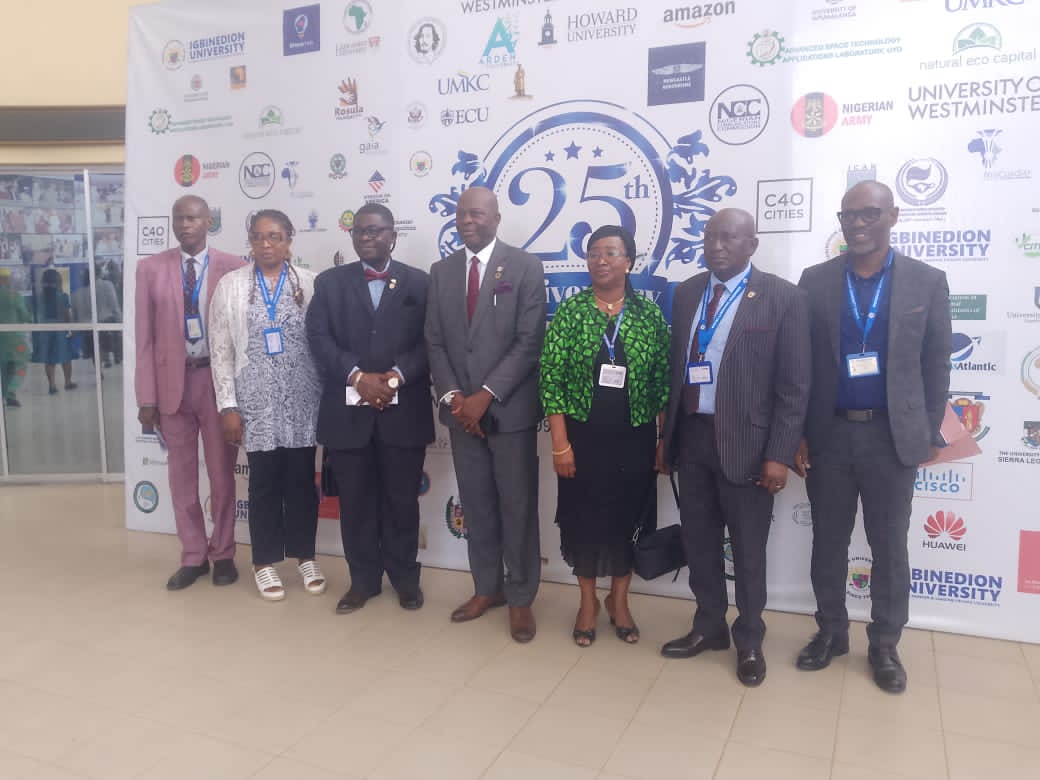
EDO, BENIN CITY – The Vice Chancellor of Igbinedion University, Okada, Prof. Lawrence Ezemonye, has called on universities across Nigeria to dismantle academic silos and deepen interdisciplinary research collaboration as part of efforts to address the continent’s complex social and economic challenges.
Prof. Ezemonye made the call while delivering a keynote address titled, “Advancing Research Through Collaboration as a Connected Capability, Institutional Strength and Societal Impact,” at a one-day high-level postgraduate seminar held in a hybrid format at the university’s main auditorium.
The seminar was themed, “Re-enacting Research Culture: From Curiosity to Innovation.”
He noted that pressing challenges, including climate change, food insecurity, public health concerns, energy transition and digital transformation, are too complex to be addressed by individual disciplines.
He therefore urged experts across different fields to pool their knowledge and expertise to develop innovative and sustainable solutions.
Ezemonye added that the strength of modern research lies in “connected capabilities” combining knowledge, expertise, technology, data and resources to produce solutions with real-world impact.
He noted that many societal challenges are interconnected “system problems” involving several factors, including technology, finance, policy, regulation, markets and community behaviour. As a result, no single researcher or discipline can effectively address them alone.
He highlighted the importance of research integrity, clear research policies, sound research design, appropriate methodology, ethical conduct and effective communication of findings, warning that poor methodology and unethical practices could undermine public confidence in universities.
The VC also called on supervisors to develop good working relationships with their postgraduate students and to see them as emerging researchers and partners in knowledge creation.
He further advocated the establishment of research clusters, communities of practice, seminars, laboratories and digital platforms to promote collaboration within and beyond universities.
He added that international partnerships could also provide African researchers with access to expertise, equipment, data and research funding.
He, however, noted that challenges such as low trust, cultural and language differences, bureaucracy, heavy workloads and weak technological systems must be addressed.
He therefore urged university leadership to create an environment that enables researchers to collaborate responsibly and productively.
The keynote speaker advised that the success of universities should not be measured only by the number of publications or degrees awarded, but also by how effectively research is translated into solutions that improve society.
He added that, for Africa, the future of impactful research depends increasingly on how well people with different knowledge and expertise can work together.
On the part of Jerome Afeikhena, he highlighted a significant disconnect between academic output and real-world application, noting that approximately 70 percent of academic research findings are not utilized outside of academic circles, often remaining unused after completion.
He also noted that there is a notable delay between the discovery of research findings and their implementation into policy or practice, typically ranging from two to seven years.
Most Viewed Posts
- Supporting Siminalayi Fubara: Why Rivers People Deserve Continuity Of Purpose In 2027 – Dr William Omuna
- President Tinubu’s Achievements That Strengthen Case For Second Term – Amuna
- Just In: APC Announces Date For Presidential Primary, Fixes Nomination Form At ₦100m
- EFCC Arraigns Gombe Magistrate Over Alleged ₦1.4m Bribery
- Court Schedules Trial of Former Anambra Governor in ₦4bn Case