
Lucky Obukohwo, Reporting
Traffic through the Strait of Hormuz has jumped nearly 400 per cent in just two weeks, suggesting that Iran’s control over the strategic waterway may be weakening amid its ongoing standoff with the United States.
Nearly 200 vessels passed through the strait last week, up from 150 the previous week and just 40 two weeks earlier, according to data from the UK Maritime Trade Operations Centre.
The sharp increase has brought traffic through the vital passage to around 20 per cent of pre-war levels.
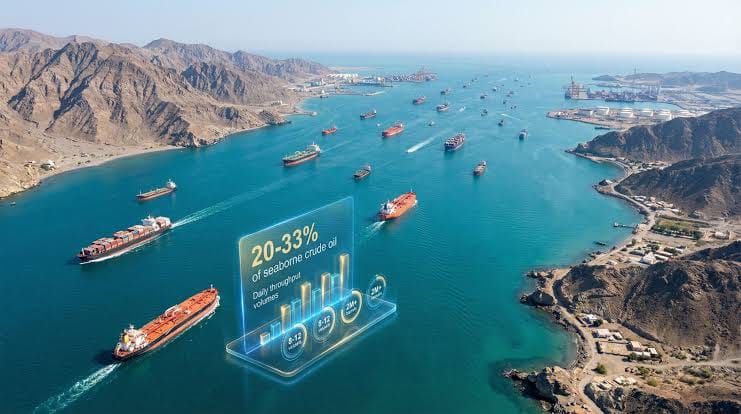
The Strait of Hormuz is a critical artery for global energy supplies, carrying roughly one-fifth of the world’s seaborne oil during peacetime.
Shipping activity almost came to a standstill after the war with Iran began in late February.
However, vessels have gradually resumed using the waterway despite persistent tensions between Tehran and Washington.
Maritime intelligence firm Kpler said more than 80 per cent of liquid cargoes that crossed the strait in the past two weeks either used the Omani route or appeared to have gone “dark”, potentially indicating that they used the same corridor.
The Omani route is a United States-backed channel authorised by the International Maritime Organisation, but rejected by Iran.
“It increasingly looks like Iran has at least partially lost control of the strait,” Homayoun Falakshahi, head of crude oil analysis at Kpler, told CNN.
Dan Pickering, founder of Pickering Energy Partners, said the Oman route was increasingly attractive to shipping operators because it could allow vessels to avoid potential tolls imposed by Tehran.
Shipping data showed that 103 vessels entered the strait and 89 exited over the past seven days, representing a 27 per cent increase from the previous week, when 76 ships entered and 75 exited.
The increase is even more significant compared with two weeks earlier, when only 18 vessels entered and 21 exited the waterway.
Most of the vessels were registered in Panama and Liberia, although the registration flags do not necessarily indicate where their owners are based. About half were oil tankers, while the rest carried dry cargo.
However, the route remains dangerous.
Five vessels were hit by Iranian projectiles during the past week, with two people reported injured or killed. The vessels sustained damage but were not lost.
The United States has also reportedly been quietly escorting oil tankers through the strait since May, using tactics associated with so-called shadow fleets, including switching off radar systems and sailing close to Oman’s coastline.
The development comes as efforts to negotiate an end to the conflict and resolve the dispute over control of the Strait of Hormuz remain uncertain.
US President Donald Trump recently said the waterway had been de-mined and reopened, declaring that “The Hormuz Strait is open and operating.”
Trump has also threatened tougher sanctions on Iran, describing the planned measures as the “most crushing economic operation ever undertaken” against the country.
Iran, however, has warned that it would retaliate against any further US economic action.
“If Trump wants to take action, we will retaliate in an earthquake-like manner,” Supreme National Security Council Secretary Mohsen Rezaei said in a televised interview.
He also warned neighbouring countries against supporting Washington’s economic measures.
“We tell all the countries around us not to join the United States in its economic war, otherwise we will consider them enemies. If they cooperate with the Americans in the economic war, we will strike their interests,” he threatened.