

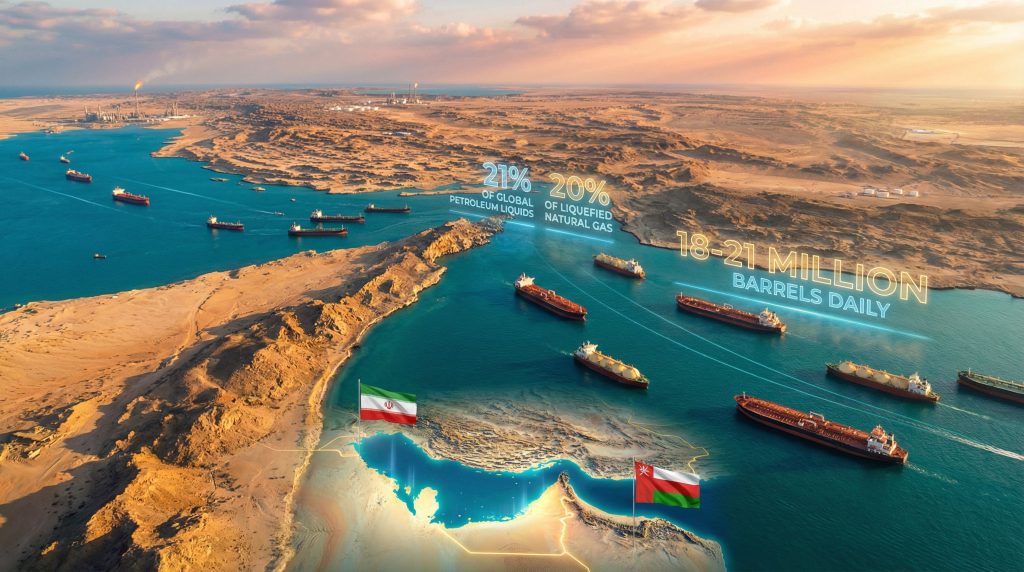
Iran has announced that the Strait of Hormuz is now “completely open” to commercial shipping, in a move seen as easing tensions in a volatile region.
Foreign Minister Abbas Araghchi said the key waterway would remain accessible for the duration of the current ceasefire in Lebanon.
According to ABC News, Mr Araghchi said in a statement released on Friday that the decision was “in line with the ceasefire” and aimed at ensuring the smooth flow of maritime traffic.
“In line with the ceasefire in Lebanon, the passage for all commercial vessels through the Strait of Hormuz is declared completely open for the remaining period of the ceasefire,” he said.
The announcement marks a shift from earlier disruptions, when shipping through the strait faced restrictions amid escalating regional hostilities.
The Strait of Hormuz is one of the world’s most important routes, handling around 20% of global oil shipments. Any disruption there can significantly affect global energy supplies and prices.
Following Iran’s declaration, oil markets reacted quickly. Both Brent crude and US benchmark West Texas Intermediate (WTI) fell sharply, dropping by as much as 10%, as concerns over supply disruptions eased.
Analysts say reopening the route could help stabilise oil prices, reduce shipping insurance costs, and restore confidence in global energy markets after weeks of uncertainty.
The development comes as a 10-day ceasefire between Israel and Lebanon takes effect after a period of intense fighting.
According to Lebanon’s National News Agency, more than 2,100 people have been killed and over 7,000 injured in recent violence.
Despite supporting the current truce, Iran has indicated it prefers a more permanent resolution to the wider regional conflict, including broader agreements involving Lebanon.
Reacting to the development, US President Donald Trump welcomed Iran’s announcement, posting “THANK YOU!” on his social media platform. However, he also warned that US restrictions would remain in place.
“The naval blockade will remain in full force and effect as it pertains to Iran, only, until such time as our transaction with Iran is 100% complete,” Mr Trump said, referring to ongoing diplomatic efforts.
Separately, Benjamin Netanyahu said Israel was easing wartime restrictions, allowing civilian movement and economic activity to resume. However, he warned that military operations were not yet over.
“We have not yet finished the job. There are things we plan to do to address the remaining rocket threat and the drone threat,” he said, adding that a key objective remained the “dismantling of Hezbollah”.